A Possible Same-Sex Intercourse Scene from Ancient Egypt — An Erotic Ostracon
Two men, or a man and a woman?
Contents
What an Ostracon Is
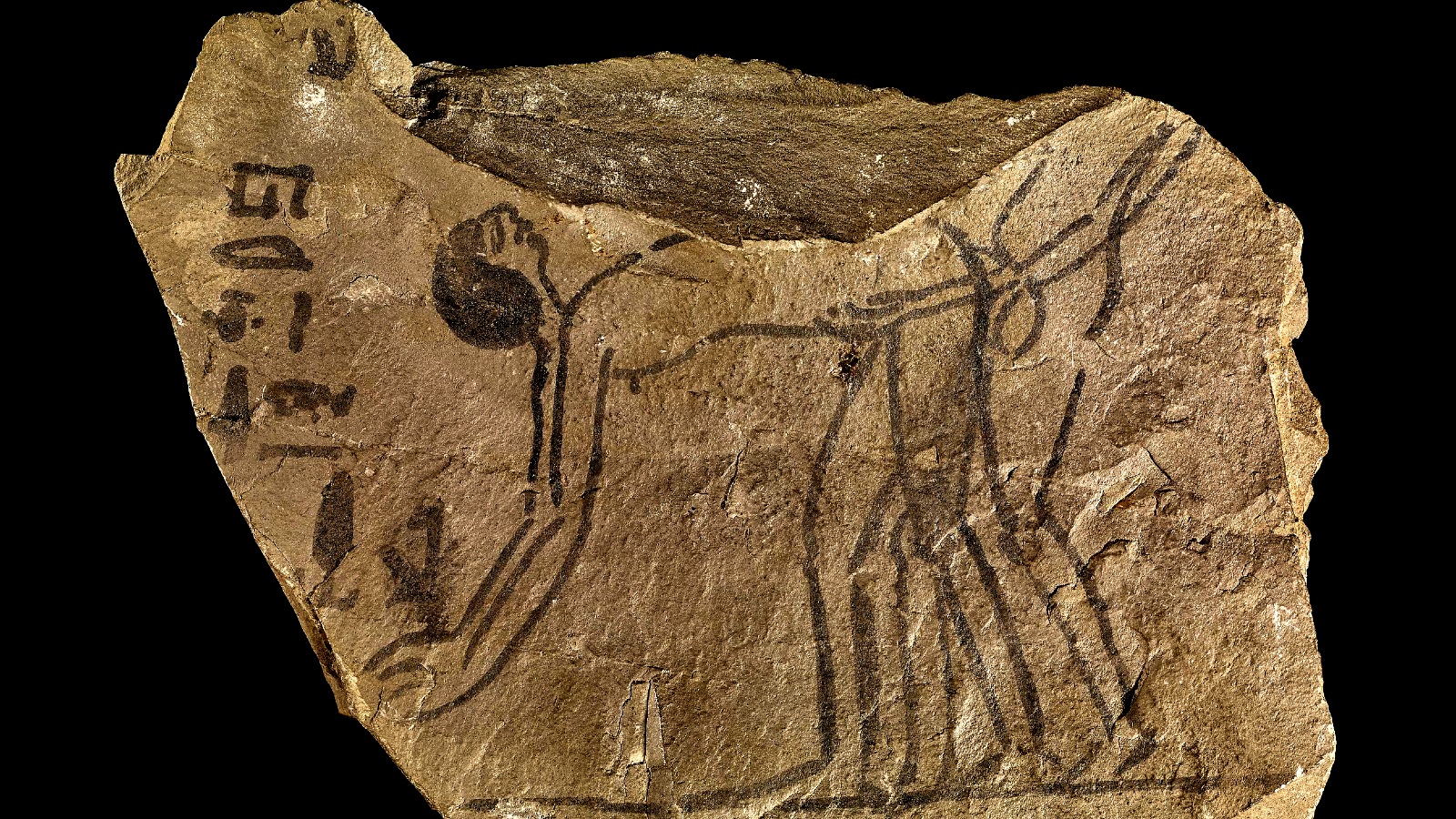
An ostracon is a small piece of stone or pottery (most often a potsherd from a clay vessel) used in antiquity for writing and drawing. Because papyrus was costly and not always available, people relied on inexpensive materials for notes, drafts, and school exercises. Ostraca are known from Egypt, Ancient Greece, and other parts of the ancient world.
Such objects can preserve many kinds of texts and images: household accounts, scribal exercises, sketches of gods and animals, and, at times — comic or obscene scenes.
The ostracon discussed here is housed in the British Museum. It is made of limestone and is dated to roughly 1295–1070 BCE. This is the New Kingdom period — an era associated with large-scale building activity and Egyptian political power, linked to the pharaohs of the 19th and 20th Dynasties.
The ostracon was found at Deir el-Medina — a small settlement of artisans near ancient Thebes (in the area of modern Luxor). Painters, carvers, and scribes lived there and worked on the decoration of royal tombs. The inhabitants of Deir el-Medina are notable for relatively high levels of literacy, familiarity with religious texts, and strong drawing skills. In their free time, they produced sketches and notes on stones and potsherds, using them as a practical medium for training and entertainment.
A Scene of Same-Sex Intercourse
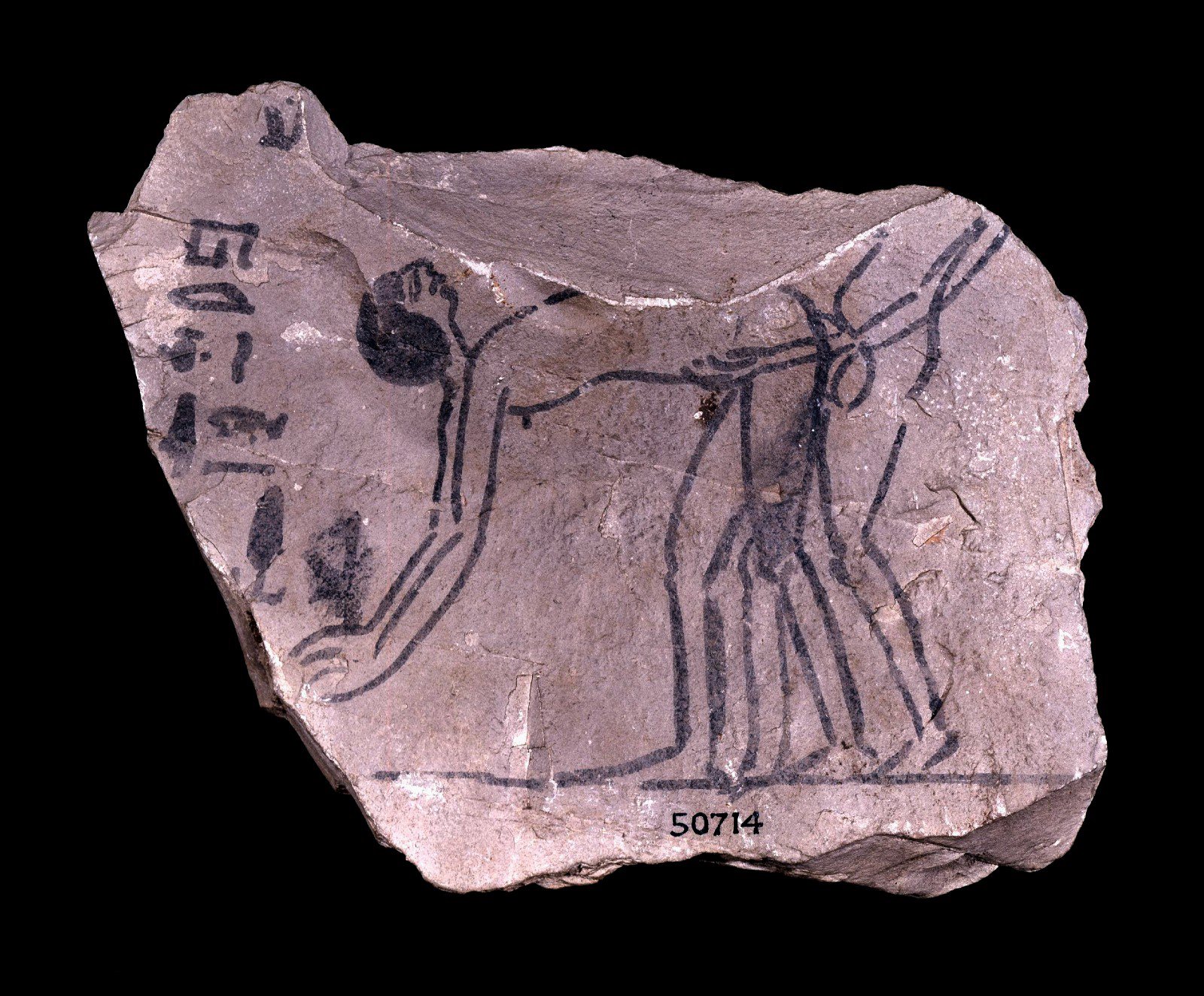
The ostracon shows two people engaged in sex, drawn in black paint. A short inscription in Ancient Egyptian appears beside them: “A satisfied foreskin — a satisfied man.” The wording reads like a joke, suggesting that references to the body and sex could be relatively direct and ironic.
Who exactly is depicted in the drawing remains debated. One group of researchers argues that the figures represent a man and a woman. In this interpretation, the “female” figure appears androgynous — combining traits that could be read as both male and female. She has almost no indicated breasts and short hair. The artist may not have considered it necessary to emphasize femininity, assuming the pose and context made the meaning clear. Within this view, the logic is that the male anatomy is rendered explicitly, while a more neutral partner would likely be understood as female.
Another group of researchers suggests that both figures are men, making the scene homoerotic. The receiving partner may be a youth, shown without a beard and without strongly emphasized musculature. However, the image is schematic, and a single drawing does not allow the sex of the figures to be determined with confidence.
Most likely, the question — a man and a woman, or two men — will remain unresolved. It could only be clarified if comparable images or additional captions were discovered. This kind of uncertainty is common in archaeology: the older the object, the less contextual information survives, and the wider the range of plausible interpretations.
🏺 LGBT History of Ancient Egypt
- A Queer Lexicon of Ancient Egypt
- Divine Homosexuality in the Ancient Egyptian Myth of Horus and Seth
- Khnumhotep and Niankhkhnum: The First Same-Sex Couple in History
- A Homoerotic Plot in Ancient Egyptian Literature: Pharaoh Pepi II Neferkare and General Sasenet
- Idet and Ruiu: Lesbian Lovers in Ancient Egypt?
- A Possible Same-Sex Intercourse Scene from Ancient Egypt — An Erotic Ostracon
- Goddess Nephthys — a lesbian?
 Subscribe to our Telegram channel (in Russian): Urania. With Telegram Premium, you can translate posts in-app. Without it, many posts link to our website, where you can switch languages — most new articles are published in multiple languages from the start.