A Possible Same-Sex Intercourse Scene From Ancient Egypt – The Erotic Ostracon
Two men, or a man and a woman?
Contents
What an Ostracon Is
An ostracon is a potsherd, most often from a clay vessel, or a small fragment of stone on which people wrote and drew in antiquity. Papyrus was expensive and not always available, so readily available materials were used for notes, drafts, and school exercises. Ostraca are known in Egypt, Ancient Greece, and other regions of the ancient world.
Ostraca feature administrative records, scribal exercises, images of gods and animals, and sometimes humorous or obscene scenes.
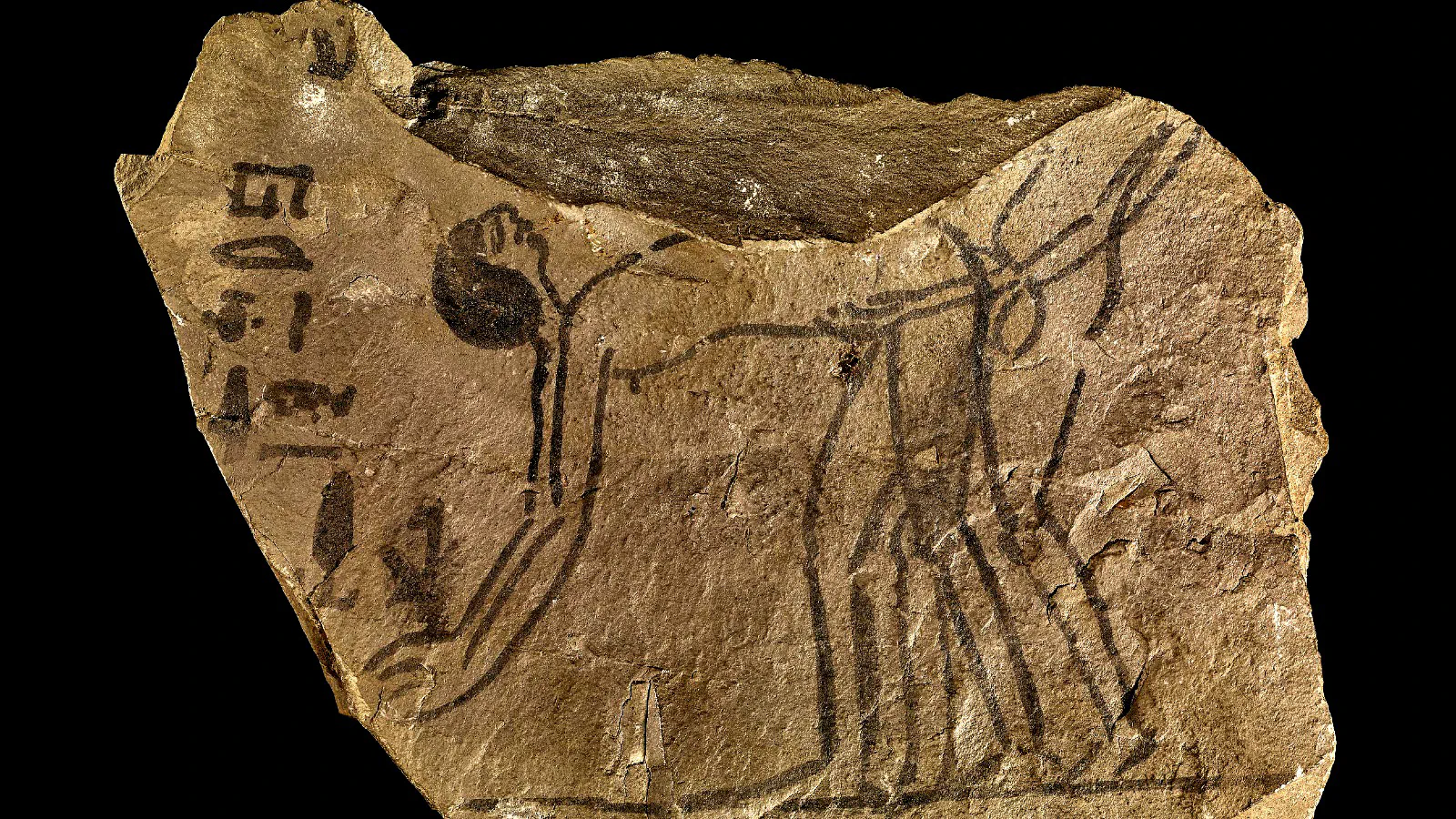
The ostracon in question is kept in the British Museum. It is made of limestone and dates to approximately 1295–1070 BC. This is the era of the New Kingdom, a time of major construction projects and the political power of Egypt under the pharaohs of the 19th and 20th dynasties.
The ostracon was found in Deir el-Medina, a settlement of artisans near ancient Thebes, in the area of modern Luxor. It was home to painters, carvers, and scribes who worked on the decoration of royal tombs.
The residents of Deir el-Medina were highly literate, knew religious texts, and had drawing skills. They often used stones and potsherds for practice and daily notes.
Scene of Same-Sex Intercourse
The ostracon depicts two people having sex, drawn in black paint. The figures on this ostracon (EA 50714) are depicted completely naked. Researchers Jiří Janák and Hana Navrátilová emphasize that this distinguishes such ostraca from the famous Turin erotic papyrus, where male characters are often dressed in short kilts, and one doesn’t even let go of his bag (which is often interpreted as a hasty visit by a client to a brothel). Beside them is a short inscription: “A satisfied foreskin – a satisfied man.” This sounds like a joke and shows that the ancient Egyptians could talk about sex directly and with irony.
Who exactly is depicted in the drawing is a subject of debate. Some researchers believe it is a man and a woman. But the “female” figure looks androgynous: she has short hair and almost no breasts. Perhaps the author simply did not draw female features, deciding that everything was clear from the context.
Other scholars believe that two men are drawn on the ostracon. In this case, the scene becomes homoerotic. The receiving partner looks like a youth: he is without a beard and without musculature. But the drawing is schematic, so it is impossible to accurately determine the sex of the figures.
We are unlikely to know the exact answer until we find similar drawings or inscriptions. For archaeology, this is normal: the older the object, the less context there is and the more room for guesswork.
Literature and sources
- Janák J., Navrátilová H. People vs. P. Turin 55001. // Sex and Gender in ancient Egypt. Edited by Carolyn Graves-Brown. 2008.