Homosexuality Among Neanderthals
Is it possible? Indirect scientific evidence suggests yes.
Contents
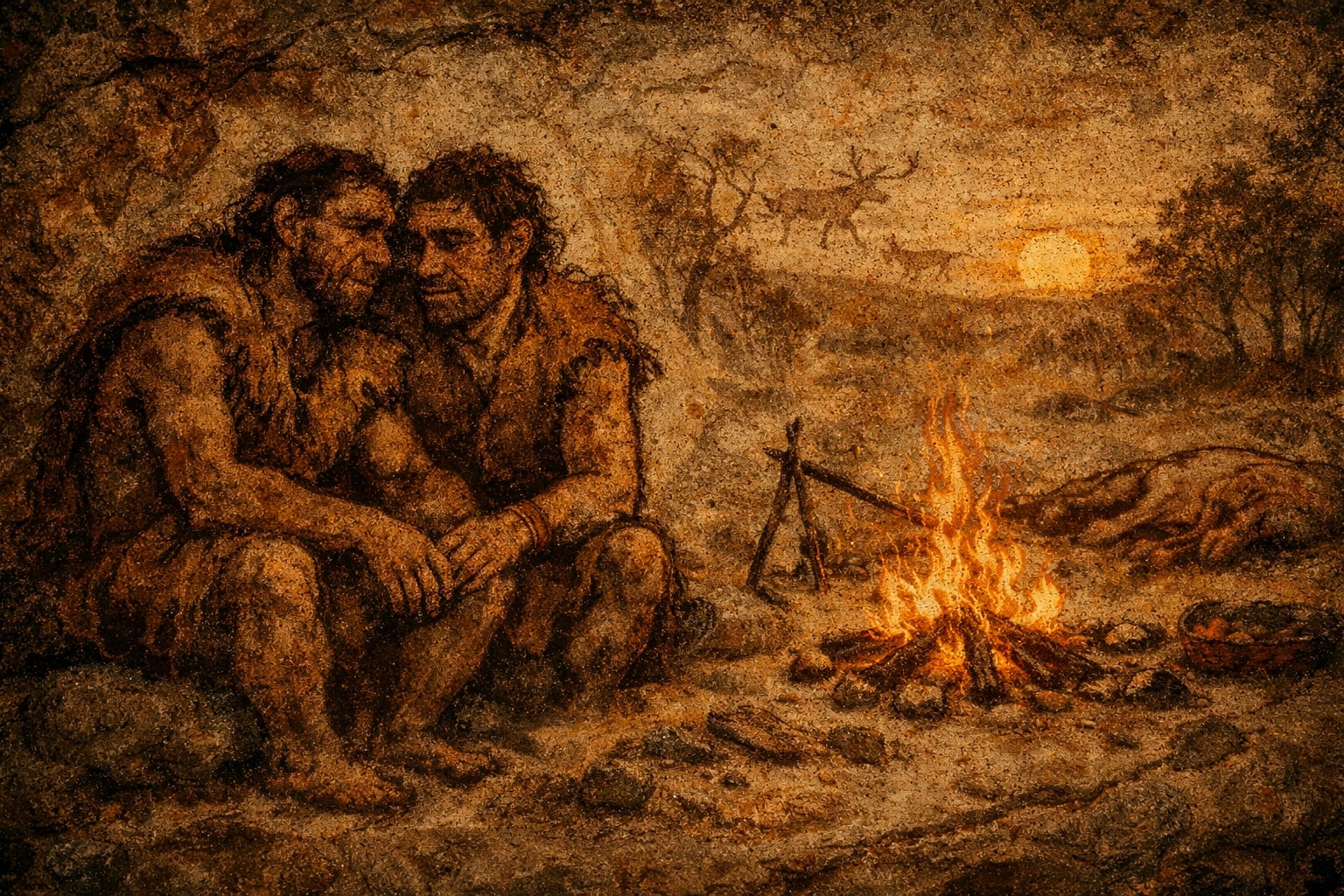
Researchers still lack direct evidence that Neanderthals engaged in same-sex relationships. In archaeology and paleoanthropology, there are very few reliable indicators that could allow such practices to be identified with confidence; it may, in fact, be impossible to obtain this type of evidence at all.
Nevertheless, indirect considerations make it reasonable to suppose that same-sex contact among Neanderthals could have occurred. This article examines the question in more detail.
Who Were the Neanderthals
Neanderthals (Homo neanderthalensis) were a human species that lived in Western Eurasia roughly from 340 to ~40 thousand years ago. They shared a common ancestor with modern humans (Homo sapiens); according to researchers’ estimates, this ancestor lived about 550–770 thousand years ago.
Neanderthals experienced several glacial cycles — periods of climatic cooling during which ice sheets advanced southward. Their ability to sustain populations under such conditions indicates substantial adaptability. Their geographic range was extensive, spanning Western Europe, the Middle East, and Central Asia.
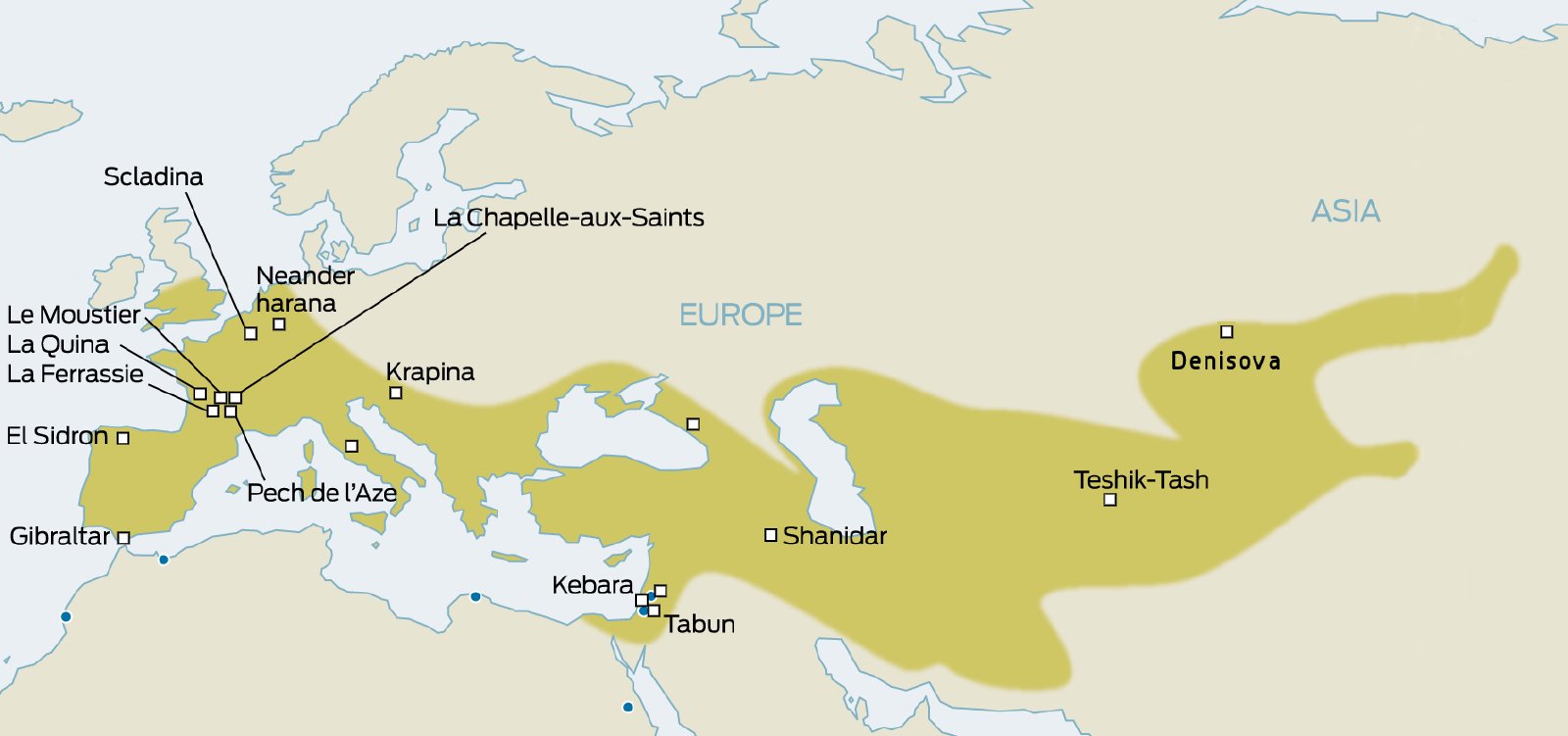
Genetic analyses of ancient DNA indicate that Neanderthals not only interacted and interbred with anatomically modern humans (Homo sapiens), but also with another archaic human group — Denisovans (a distinct group of ancient humans first identified from DNA found in Denisova Cave in Siberia). Neanderthals disappeared roughly 41–39 thousand years ago. However, some of their genes persisted in modern humans, especially in populations whose ancestors lived outside Africa.
In popular culture, Neanderthals are often depicted as “brutish cave people with clubs.” This image was shaped partly by early errors in paleoanthropology — the field that studies ancient humans. Current evidence suggests that Neanderthals were cognitively capable, socially organized, and inventive hunter-gatherers.
In terms of brain volume, Neanderthals were comparable to modern humans and sometimes even exceeded them. They produced complex composite tools and likely sewed clothing. Archaeological finds also suggest care for the injured and the sick, pointing to stable social bonds and developed forms of mutual support.
Anatomy and Physical Appearance
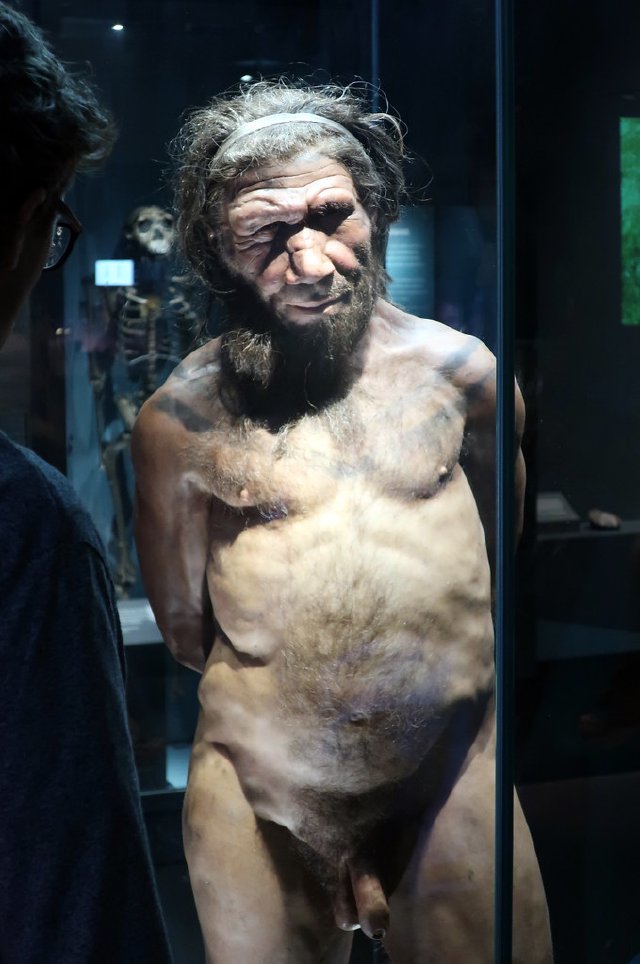
Neanderthals differed visibly from Homo sapiens. Their skulls were long and low, with a projecting midface; they had pronounced brow ridges, large nasal openings, and no chin. They were generally stocky and robust, with a broad ribcage and relatively short limbs. This body form likely supported heat retention and sustained heavy physical activity in cold environments.
Like all humans, Neanderthals lacked a baculum — a penile bone present in many primates. They also lacked keratinized penile “spines.” These traits are sometimes associated with longer copulation, reduced male–male sperm competition, and more stable partner bonds in humans, including Neanderthals.
Neanderthals displayed moderate sexual dimorphism: differences between males and females in overall size and external traits were not extreme. The morphology of the female pelvis and the inferred size of the male genital organ were anatomically compatible with Homo sapiens. This is consistent with evidence that Neanderthal–sapiens offspring were fertile.
Lifestyle and Pair Bonds
Neanderthals were mobile hunter-gatherers. They likely moved regularly in response to animal migrations and seasonal climatic shifts. Groups were typically small — roughly 8–30 adults. At campsites, archaeologists often identify hearths used for cooking and warmth, as well as areas that can be described as “domestic”: spaces for resting, processing hides, and producing tools.
Their subsistence depended largely on cooperative hunting of medium and large game — such as deer, bison, and mammoths. They also used plant materials, fibers, and hides, likely for clothing and for items such as ropes and straps. Some evidence suggests that Neanderthals may also have used medicinal plants to reduce pain or treat illness.
Neanderthal childhood appears to have been relatively prolonged, broadly comparable to that of modern humans. Pregnancy, birth, and child-rearing would therefore have required substantial energetic investment. Under such conditions, communities may have relied on alloparenting — shared caregiving not only by mothers, but also by other adults, including fathers, relatives, and other group members.
Stable pair relationships between men and women were likely common, resembling long-term unions. At the same time, social arrangements may have varied across regions and ecological contexts. In harsher environments with limited resources, social monogamy may have been more prevalent, with longer-lasting pairs. In more favorable settings with greater resource availability, a mild form of polygyny may have occurred — in which one man had multiple female partners, without strict or strongly enforced social rules.
Why There Is No Direct Evidence of Neanderthal Homosexuality
At present, science has no direct way to determine whether Neanderthals engaged in same-sex sexual relationships. Skeletal remains do not preserve information about behavioral preferences: osteology cannot indicate who a specific individual had sex with.
Material culture is similarly limited. Artifacts and site organization do not encode a partner’s sex, and they do not allow researchers to distinguish same-sex contact from opposite-sex contact. In addition, far fewer Neanderthal remains have survived than remains from early anatomically modern humans, which further narrows what can be interpreted.
Neanderthal genomes have been sequenced and compared, but even high-quality ancient DNA data cannot reveal an individual’s sexual preferences. Across thousands of years, these constraints leave no direct traces of interpersonal interactions that could be observed and interpreted without ambiguity.
It is also important to note that modern terms such as “gay,” “lesbian,” and “sexual orientation” emerged in specific cultural and historical contexts in the recent past. Applying them mechanically to deep prehistory risks replacing descriptions of behavior with modern social identities. For this reason, it is more precise to discuss same-sex sexual activity as a behavioral category, without projecting contemporary concepts of identity onto ancient populations.
The absence of direct evidence is not evidence of absence. The lack of archaeological “markers” of same-sex sex does not imply that it did not occur. More broadly, archaeology rarely captures non-reproductive practices, because they tend to leave little or no distinctive material trace. Therefore, we cannot infer that a behavior did not exist simply because no clear evidence has been found.
As a result, discussion of this topic necessarily relies on indirect arguments. These may draw on evolutionary approaches to behavior, comparisons with primates, and evidence concerning the ecology and social organization of ancient populations. Such lines of reasoning do not constitute direct proof, but they do make same-sex activity among Neanderthals a plausible subject within the broader range of primate behavioral variation.
Indirect Reasons to Consider Same-Sex Activity Among Neanderthals
Indirect considerations from multiple fields suggest that same-sex sexual behavior among Neanderthals could have existed.
First, Neanderthals were closely related to modern humans, and observations of other primates — especially bonobos — are informative. In bonobos and some other apes, same-sex contact is a normal element of social life. It can reduce aggression, strengthen trust within groups, support alliances, and act as a form of “social lubricant” that helps maintain stable affiliative relationships. Young individuals also use such contact to practice courtship and social interaction.
Second, evidence from Homo sapiens — modern humans — indicates that same-sex relationships and sexual practices occur across all documented cultures. This pattern suggests that variation in human sexuality has deep evolutionary roots and likely developed well before our species emerged, particularly given that modern humans and Neanderthals shared a common ancestor.
Third, aspects of Neanderthal social life may have favored non-reproductive sex — that is, sex not primarily aimed at producing offspring. Neanderthals likely lived in small groups in which survival depended on cooperation and the management of internal conflict. Under such conditions, behaviors that strengthened bonds and reduced tension could have been adaptive even without an immediate reproductive payoff.
Finally, external pressures may have promoted flexible patterns of sexual behavior and pair-bonding: seasonal changes in resources, shifts in local sex ratios, partner loss, and the exchange of members between groups. Such circumstances can increase behavioral flexibility, and non-reproductive contacts may have been one mechanism for maintaining social stability.
In sum, although direct evidence is lacking, perspectives from primatology, anthropology, and evolutionary psychology support the view that same-sex interaction could have been a natural component of Neanderthal social life.
Possible Forms of Homosexuality Among Neanderthals
Among females, it is plausible to imagine female–female contacts of the GG type. In primatology, GG (from the English genital–genital) refers to genital rubbing, well documented in bonobos. Among Neanderthal females, such behavior could have supported horizontal cooperation — support among females of equal status — facilitated shared childcare, and functioned as a means of coalition-building in response to male aggression.
Among males, same-sex contact may have been less frequent or less intense and could have taken the form of “reconciliation rituals” after stressful episodes — hunts, injuries, or status conflicts. In primate groups, brief sexualized actions sometimes operate as “social lubricant”: they reduce aggression, restore trust, and lower the risk of renewed escalation.
Among adolescents, same-sex interactions may have provided a comparatively safe “training” context for elements of courtship and sex. Practicing relevant signals, postures, and informal rules in same-sex scenarios could, in principle, have increased the likelihood of more successful opposite-sex encounters later.
Finally, when opposite-sex partners were locally scarce, social same-sex unions may have emerged. Here, “union” refers to a stable bond and mutual support, but not necessarily continuous sexual activity. Such bonds would not exclude extra-pair opposite-sex mating for conception — that is, seeking partners outside the union when possible and necessary.
All of these scenarios are heuristic: they function as working hypotheses, developed by analogy with other primates and informed by general principles of social organization.
Contacts Between Humans and Neanderthals: Kisses, Pathogens, Hybrids
Contacts between Neanderthals and early humans were likely closer and more varied than earlier assumptions suggested. Multiple episodes of interbreeding occurred. This implies that members of the two species not only met and interacted, but also produced offspring who could themselves reproduce. These findings indicate biological compatibility and relatively permeable social boundaries — in other words, Neanderthals and humans did not necessarily treat one another as entirely “alien.”
Ancient variants of the bacterium Methanobrevibacter oralis have been identified in Neanderthals, and the same species is present in modern humans. Similar microbial strains in Neanderthal and human genetic data suggest direct exchange of oral microbiota — through shared food, saliva exchange, and likely kissing.
Evidence from the distribution of certain pathogen lineages, particularly human papillomavirus (HPV) type 16, is also consistent with the hypothesis of ancient interspecies contact. Similar variants of this virus in Neanderthals and humans suggest that sexually transmitted infections could have moved between the two groups. Given the small size of Neanderthal populations, the introduction of a novel pathogen could, in principle, have had serious consequences.
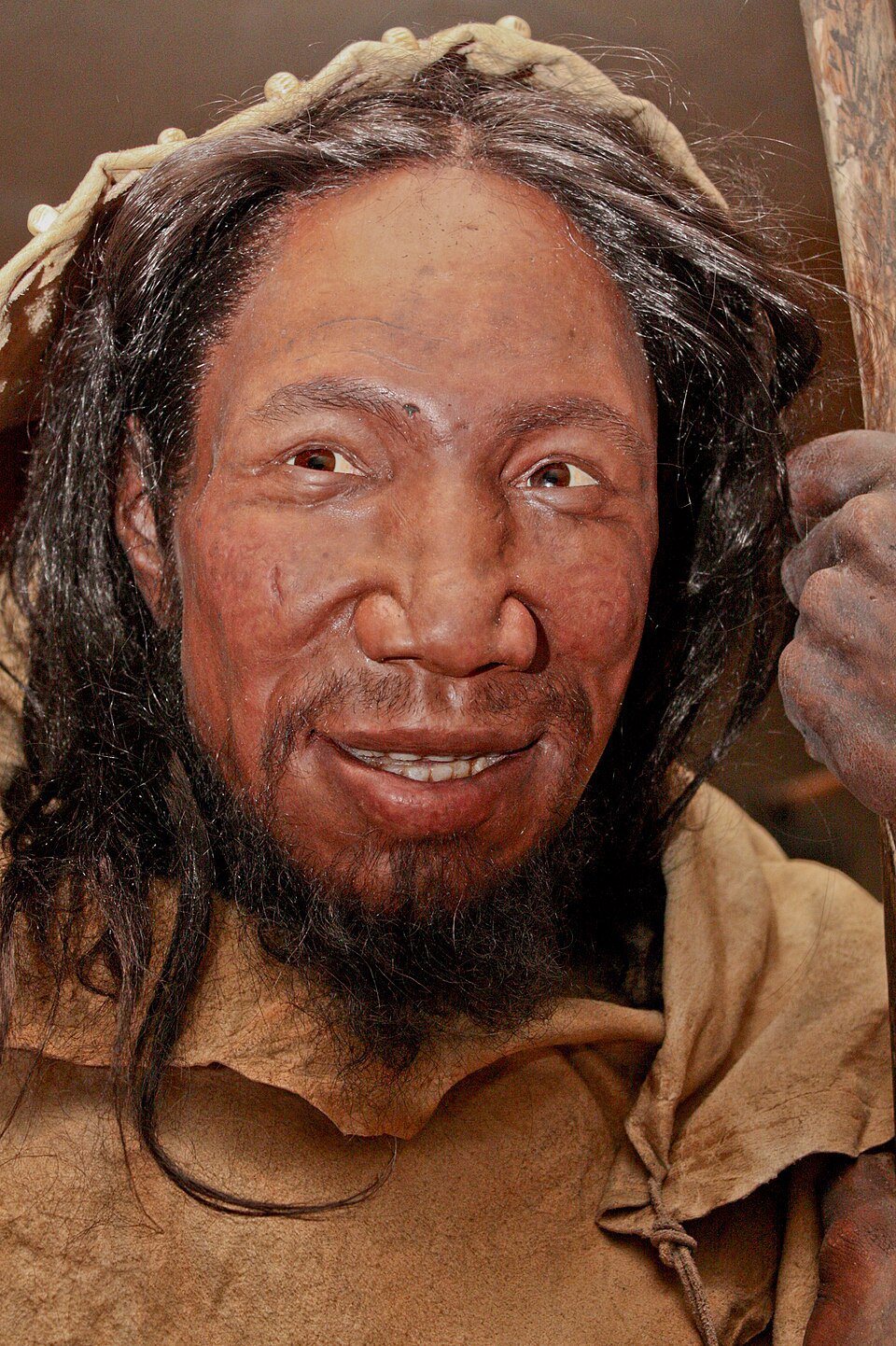
There is no direct evidence of same-sex contact between Neanderthals and early humans, but the possibility cannot be excluded. We know that sexual contact between the species occurred and produced hybrids; accordingly, the spectrum of social and bodily interactions may have been broad — ranging from hostile ones (including rape, which is documented among Neanderthals) to cooperative or affiliative ones.
Within both groups, sexual behavior likely served not only reproductive but also social functions: strengthening alliances, reducing tension, signaling trust, and facilitating reconciliation after conflict. If such functions existed among Neanderthals and among Homo sapiens separately, then during long periods of coexistence — shared camps, overlapping territories, or temporary alliances — same-sex contact between members of the two species could also have occurred.
***
If we compare evidence from archaeology, osteology, paleogenomics, and primatology, a relatively coherent picture emerges. Neanderthals likely had complex social lives, cooperated in raising children, and formed stable pair bonds. At the same time, their mating systems may have been variable and responsive to local conditions.
Within such a flexible social organization, same-sex sexual activity could also have been present. However, it would be misleading to describe this as “sexual orientation” in the modern sense. Orientation implies a stable personal identity and socially recognized roles, and for an extinct species we cannot confirm — or test for — the existence of such categories.
References and Sources
- Bailey N. W., Zuk M. Same-Sex Sexual Behavior and Evolution, Trends in Ecology & Evolution 24(8), 2009.
- Kubicka A. M., Wragg Sykes R., Nowell A., Nelson E. Sexual Behavior in Neanderthals, in The Cambridge Handbook of Evolutionary Perspectives on Sexual Psychology, 2022.
🦴 Prehistoric LGBT History
- Homosexuality Among Neanderthals
- A Prehistoric Double Phallus From the Enfer Gorge
- The First Homoerotic Image in History — The Addaura Cave Rock Engravings
- A Homosexual Scene in Norway’s Prehistoric Art: The Bardal Petroglyphs
- A 4,600-Year-Old Burial of a “Third-Gender” Person: What We Know and What Is Disputed
 Subscribe to our Telegram channel (in Russian): Urania. With Telegram Premium, you can translate posts in-app. Without it, many posts link to our website, where you can switch languages — most new articles are published in multiple languages from the start.
Tags