The Russian Tsar Vasily III and Rumors of His Homosexuality
An Italian historian’s account of a Russian tsar’s attraction to men.
Contents
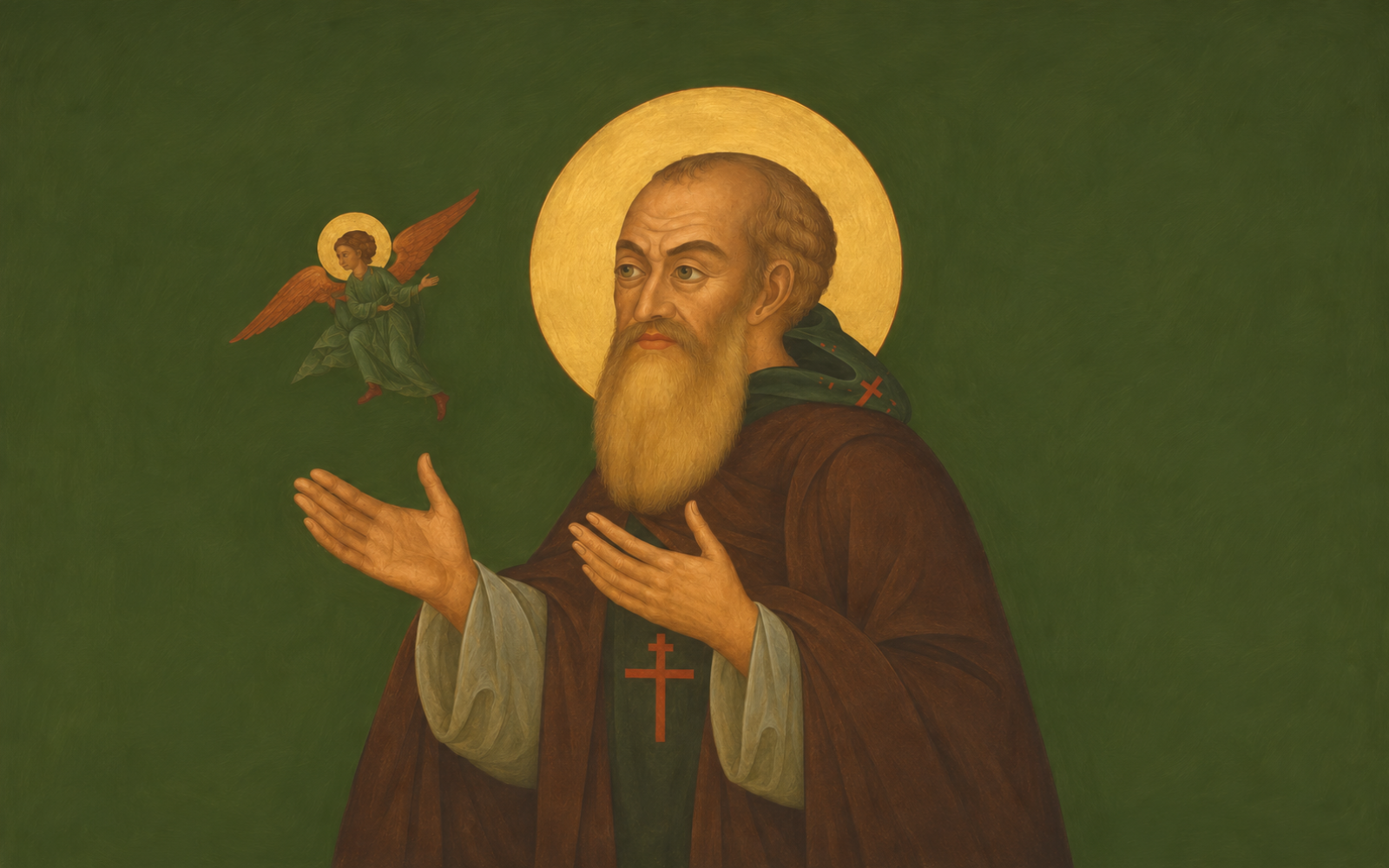
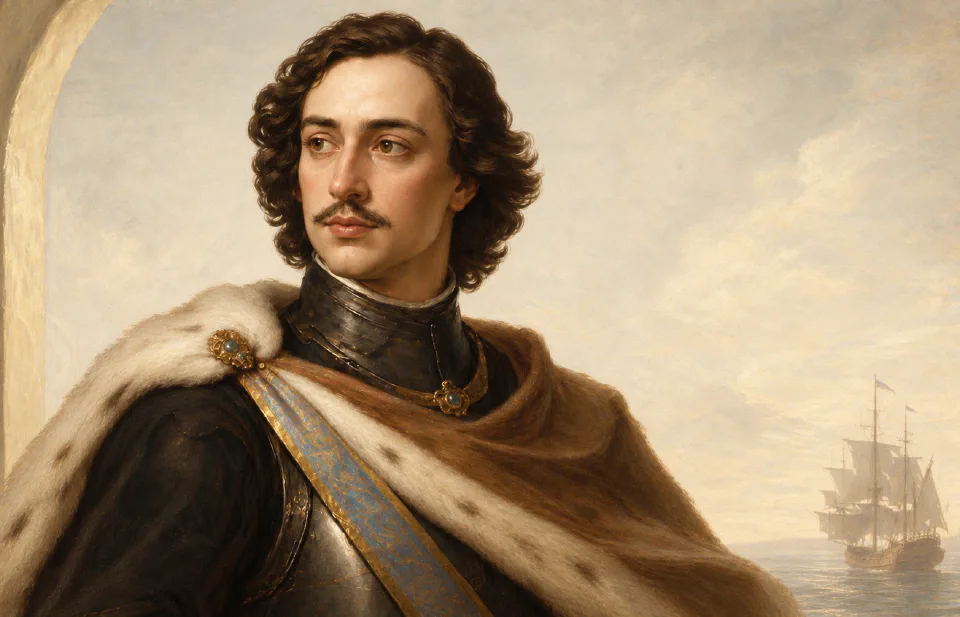
Vasily III, the father of Ivan the Terrible, ruled the Russian state from 1505 to 1533. He married twice. He and his first wife, Solomonia Saburova, had no children in twenty years of marriage.
The Italian historian Paolo Giovio later recorded a rumor that Vasily was attracted to men. The fact that Vasily’s first marriage had produced no children may have given rise to such talk. This article examines everything the historical record tells us about the Russian tsar’s sexuality.
An Italian Historian on Vasily III’s Homosexuality
Giovio, known in Russian as Pavel Yoviy, never visited Muscovy, the Russian state centered on Moscow. He learned about the country from people who had traveled from there. In 1525, Giovio met Vasily III’s envoy, Dmitry Gerasimov, in Rome. Their conversations formed the basis of his book about the Muscovite embassy.
Giovio wrote about the prince’s private life in another book, Descriptions of Men Renowned for Their Military Valor. It appeared in 1551, eighteen years after Vasily’s death. At the end of his account of Vasily, Giovio listed the reasons he thought people condemned the prince and repeated a rumor about his attraction to men.
“A little later, Vasily, always unlucky in war and [yet] always unscathed, died after wasting away from a severe suppurating illness. These divorces certainly brought him infamy, and his subjects held him in low esteem because he was inordinately greedy, ungenerous, and lacking in magnanimity.
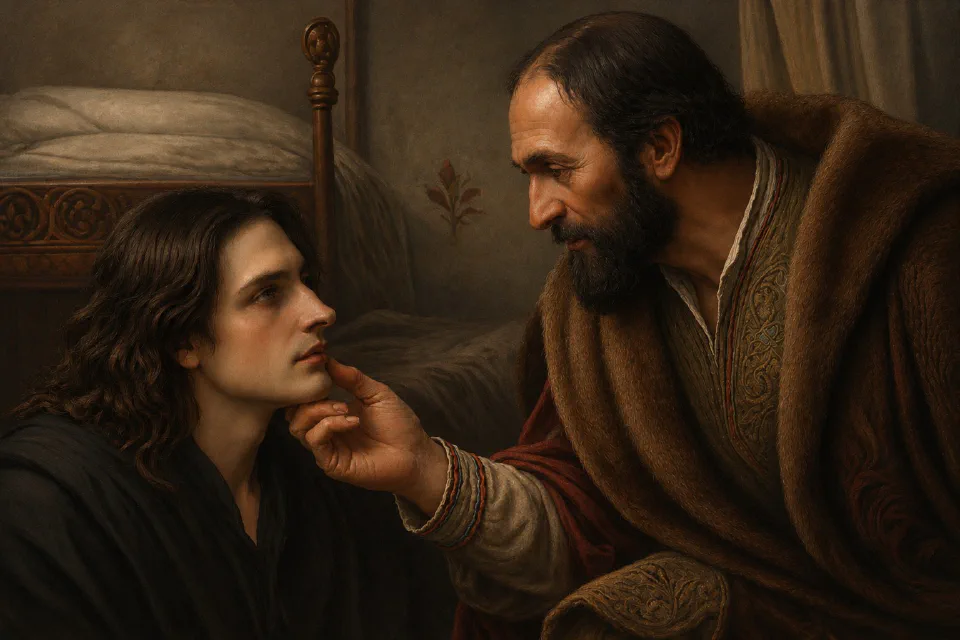
He was also burdened with his father’s vile vice, so that, as people say, he felt an aversion to women and turned his lust instead toward the other [sex]. For among the Muscovites, long-standing custom permits men to love young men in the Greek manner. The most prominent among them and men of every knightly rank are accustomed to taking the children of respectable townspeople into their service and training them in the art of war.”
— Paolo Giovio, Descriptions of Men Renowned for Their Military Valor, translated into Russian by O. I. Vagyani, p. 355
The original passage in Latin reads as follows.
“Nec multo post Basilius, bello semper infelix et semper sospes, gravi oppressus pituita, mortem obiit; his profecto repudiis infamis, et uti impotenter rapax et nusquam liberalis aut benignus apud suos inglorius; hoc etiam ab turpi Ioannis patris aemulatione probro oneratus, quod a foeminis abhorrere diceretur, alio scilicet translata libidine, quoniam inveterata consuetudine apud Moscos, more Graecorum, adolescentes amare fas esset; primores namque gentis et cuncti equestris dignitatis ordines, honestorum civium liberos in famulatum sibi asciscere militiaeque erudire consveuerunt.”
— Paolo Giovio, the same passage in Latin, p. 352
The words “as people say” render the Latin diceretur. Giovio used that word to signal that he was repeating what others had said.
The literal sense of alio scilicet translata libidine is that desire was turned “in another direction.” Here libido means sexual desire, rendered as “lust” in the translation.
The translation has Giovio speak of “his father’s vile vice,” while the original uses the word aemulatio, meaning “imitation.” Giovio was accusing Vasily of following the example of his father, Ivan III, in this respect. He gave no source for that accusation either.
The Grand Prince’s Two Marriages
Solomonia Saburova came from a noble Moscow family. She married Vasily in 1505.
Sigismund von Herberstein, a Habsburg diplomat who visited Moscow in 1517 and 1526, wrote about how Vasily married Solomonia and why he parted from her. According to Herberstein, Vasily decided he “would rather marry a daughter of one of his subjects than a foreign woman.” Herberstein attributed this decision to the expense of marrying a foreign woman and to the prince’s wish for a wife of his own faith. Vasily chose Solomonia, whom the diplomat called Salome, at a bride-show, a gathering where prospective brides were presented to him.
Vasily and Solomonia lived together for twenty years and had no children. The historian Vladimir Kuchkin believes Vasily decided to end the marriage so he could marry again and leave an heir. Otherwise, his brothers might have fought for the throne after his death.
In November 1525, Solomonia was tonsured as a nun, with her hair ritually cut to mark her entry into monastic life. She was given the name Sofia and then sent to the Intercession Convent in Suzdal.
In January 1526, Vasily married Elena Glinskaya. Her father, Prince Vasily Glinsky, had come from the Grand Duchy of Lithuania to enter Moscow’s service.
During his second diplomatic mission, Herberstein heard that Solomonia had resisted the tonsure and that one of the prince’s advisers had struck her with a whip.
“After this she lost heart and declared aloud before everyone that she was putting on the cowl against her will and under compulsion, and called upon God to avenge so great a wrong done to her.”
— Sigismund von Herberstein, Notes on Muscovy
One day, some time later, two women at court assured the tsar that Solomonia had told them she was pregnant. Vasily sent people to the convent to investigate the rumor. While Herberstein was in Moscow, he heard two different accounts.
“While we were in Muscovy on that occasion, some swore that Salome had given birth to a son named Georgy and had refused to show the child to anyone. […] Others firmly denied that she had given birth. Thus there are two accounts of the affair in circulation.”
— Sigismund von Herberstein, Notes on Muscovy
Giovio wrote about the same rumor. In his account, the passage comes just before his description of Vasily’s death and his attraction to men.
“Then Vasily repudiated his wife Solomonia for her barrenness and confined her to a convent, taking [in her place] Elena, the daughter of a man who was by no means of noble birth. It seemed he was about to take another Elena, of even less noble birth than his previous [wives], but then a rumor spread that Solomonia had borne a son within those sacred walls, a son who inherited the sovereign’s authority.”
— Paolo Giovio, Descriptions of Men Renowned for Their Military Valor
The identity of the “other Elena” whom Vasily supposedly intended to marry is unknown. Giovio was mistaken in describing Elena Glinskaya’s father as a man of low birth.
Elena and Vasily had a son, Ivan, the future Ivan the Terrible, in 1530, and another son, Yuri, in 1532.
During his reign, Vasily III continued to expand the Muscovite state. In 1510, Moscow brought Pskov under its control. Vasily abolished the veche, the city’s assembly, and appointed his own governors. In 1514, Muscovite troops took Smolensk in a war with the Grand Duchy of Lithuania, and in 1521 the Principality of Ryazan was annexed to Moscow.
The Story of the Sotnik
In 2017, the Russian popular history magazine Diletant published another story about Vasily’s private life, involving a sotnik, an officer in command of a hundred-man unit. Dmitry Karasyuk, a music journalist and author of books on the history of Sverdlovsk rock music, retold the story.
“Vasily was ready to perform his marital duty only if a naked sotnik of the palace guard lay down in the bed he shared with his wife.”
— Dmitry Karasyuk, “Sodom on the Tsar’s Throne,” Diletant, 2017
Karasyuk cited accounts by foreigners whom he did not name. He also gave no sixteenth-century source for the story of the sotnik.
The surviving evidence does not establish whether the prince had relationships with any particular men.
Sources and Further Reading
- Herberstein, Sigismund von. Записки о Московии [Notes on Muscovy]. Translated by I. Anonimov. St. Petersburg: V. Bezobrazov and Co. Printing House, 1866. Page 27.
- Herberstein, Sigismund von. Записки о Московии [Notes on Muscovy]. Translated by A. I. Malein and A. V. Nazarenko. Moscow: Moscow University Press, 1988. Pages 73, 86–87, 298–299.
- Yeltsin Center. “Дмитрий Карасюк. Презентация книги Как мы любили ‘Битлз’. История битломании в СССР” [Dmitry Karasyuk: Presentation of How We Loved the Beatles: A History of Beatlemania in the USSR]. April 8, 2022. Author biography.
- Giovio, Paolo. “Sub effigie Basilii, Moscoviae Principis” [Beneath the Portrait of Vasily, Sovereign of Muscovy]. Book 6, entry 14 in Elogia virorum bellica virtute illustrium [Descriptions of Men Renowned for Their Military Valor] (1551). Translated by O. I. Vagyani. In Россия в первой половине XVI в.: взгляд из Европы [Russia in the First Half of the Sixteenth Century: A View from Europe], compiled by O. F. Kudryavtsev, 352, 355–357. Moscow: Russkiy Mir, 1997.
- Karasyuk, Dmitry. “Содом на царском троне” [Sodom on the Tsar’s Throne]. Дилетант [Diletant], October 6, 2017.
- Kudryavtsev, Oleg. “Гуманист из Гипербореи: русский книжник Дмитрий Герасимов и его рассказ о своей стране в интерпретации итальянского гуманиста Павла Йовия (1525 год)” [A Humanist from Hyperborea: The Russian Man of Letters Dmitry Gerasimov and His Account of His Country as Interpreted by the Italian Humanist Paolo Giovio (1525)]. Новая и новейшая история [Modern and Contemporary History], no. 6 (2017): 110–117.
- Kuchkin, Vladimir. “Московские Рюриковичи (генеалогия и демография)” [The Rurikids of Moscow (Genealogy and Demography)]. Исторический вестник [Historical Herald] 4, no. 151 (2013): 6–73 (see 47–48).
- Matasova, Tatyana, and Yana Zelenina. “София (Сабурова Соломония Юрьевна)” [Sofia (Solomonia Yuryevna Saburova)]. In Православная энциклопедия [Orthodox Encyclopedia], vol. 65, 245–255. Moscow: Orthodox Encyclopedia Church Research Center, 2022.
- Filyushkin, Alexander. Василий III [Vasily III]. Moscow: Molodaya Gvardiya, 2010.