Did Swedes Really Take Sick Leave for Homosexuality to Protest or Get Out of Work?
What really happened?
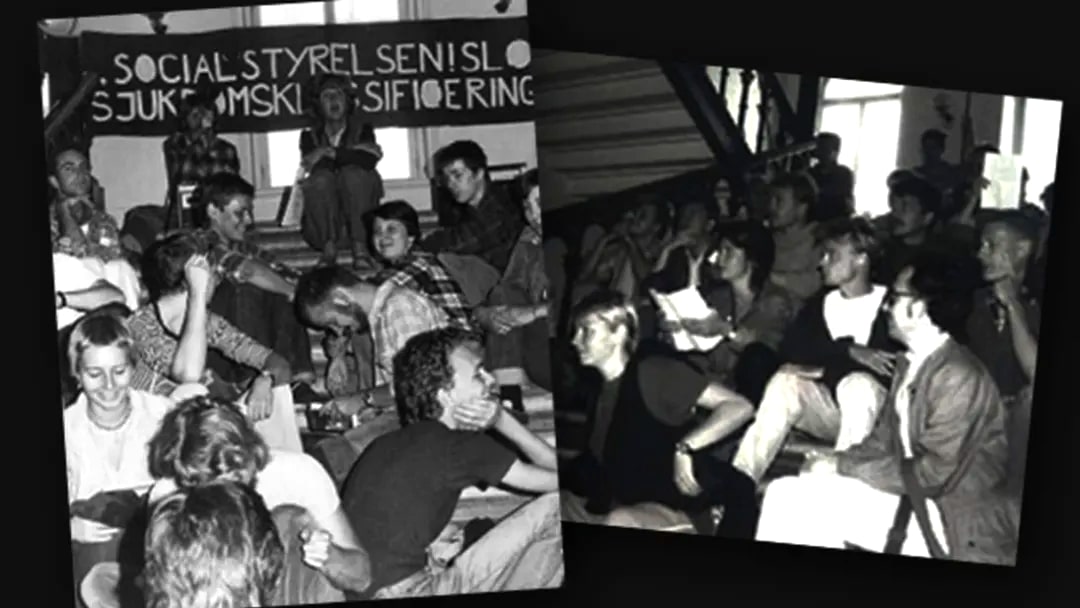
Until 1979, Sweden officially classified homosexuality as a mental illness, even though it had been legal since 1944. This historical detail is linked to a common misconception that spread online in the early 2010s. According to some posts, large numbers of Swedes supposedly took sick leave by claiming they “felt gay/lesbian,” either as a protest or simply to avoid work.
The claim can sound plausible because it aligns with familiar stereotypes about Sweden. The country is often associated with a strong welfare state and comparatively progressive attitudes toward sexuality. As a result, a story that combines political protest with the possibility of paid time off can seem “typically Swedish” to some audiences.
To evaluate these assertions, the English-language outlet Outward contacted Swedish journalists and activists. Archival sources and information from the Swedish Federation for Lesbian, Gay, Bisexual, Transgender and Queer Rights (RFSL) were also used to confirm what occurred.
What Actually Happened
In 1979, RFSL organized a large protest aimed at removing homosexuality from the list of mental illnesses. As part of this effort, activists occupied the National Board of Health and Welfare — the government agency responsible for medical classification.
The occupation was intended to continue for several days, potentially up to a week. Participants therefore needed a way to justify their absence from work. Many did not want to disclose their sexual orientation, but some adopted a different strategy: they applied for sickness benefits and listed homosexuality itself as the reason.
The most frequently cited case involves a woman who did receive sick pay on that basis. However, such instances were uncommon and were not part of the protest’s official strategy.
On August 29, 1979, the newly appointed head of the National Board agreed to review the classification. On October 19 of the same year, homosexuality was removed from the list of mental illnesses.
The main error in the online retelling is the assumption that sick leave claims were the primary form of protest. In fact, they functioned as an improvised solution used by a small number of participants to remain involved without risking their employment or income. RFSL has emphasized that these cases were isolated and did not represent the core of the protest.
Accordingly, the popular narrative about mass “vacations” under the slogan “I feel gay” is a myth — although it draws loosely on a small number of real incidents.
 Subscribe to our Telegram channel (in Russian): Urania. With Telegram Premium, you can translate posts in-app. Without it, many posts link to our website, where you can switch languages — most new articles are published in multiple languages from the start.