The Gay Romance Option in Kingdom Come: Deliverance 2: Are Same-Sex Relationships Possible in 15th-Century Bohemia? Reviewing the Historical Record
Historical Accuracy or Creative License?
- Editorial team
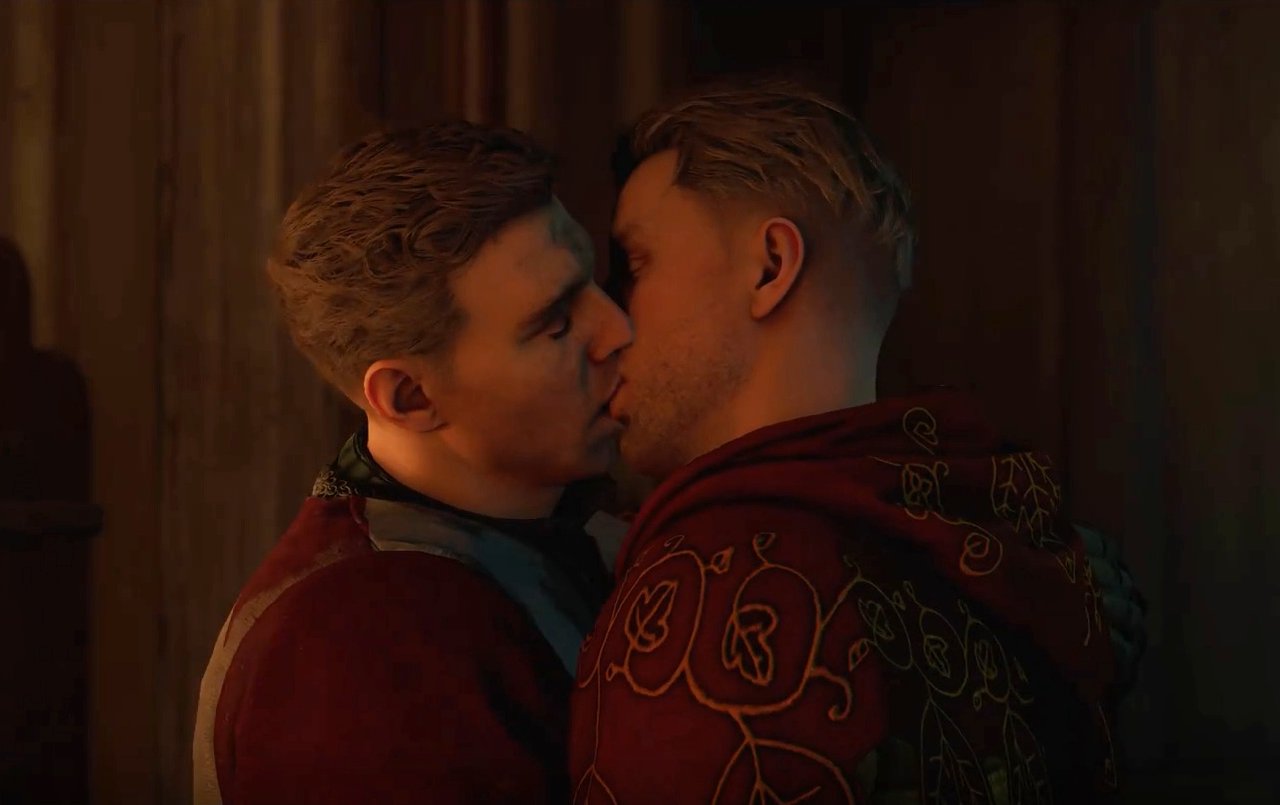
A public debate has emerged around the not-yet-released Kingdom Come: Deliverance 2. The new medieval RPG from Warhorse Studios, set in 15th-century Bohemia (today’s Czech Republic), has attracted attention due to reports of a possible homosexual scene.
According to these reports, the game may include an optional romantic episode between the main character, Henry, and his friend Hans. The player would decide whether to pursue this storyline. The first game, Kingdom Come: Deliverance, also included gay NPCs and suggested that people with non-heterosexual orientations often concealed their preferences to avoid consequences.
Some of the audience has reacted negatively. Critics cite concerns about “agenda-driven content” and argue that such an addition undermines historical authenticity. One of the game’s creators, Daniel Vávra, responding to these complaints, noted that those who speak out against an “agenda” often display the same intolerance they claim to oppose.
Historical Facts: Could This Have Happened in 15th-Century Bohemia?
In medieval Europe, including the Czech lands, same-sex relations were often prosecuted harshly. They were commonly categorized as “sodomy” — a broad label that covered sexual practices considered unacceptable, including masturbation. Those accused could face severe punishments, including execution.
The first recorded executions for “sodomy” in the territory of today’s Czech Republic date to the 14th century. By 1380, Prague already had court proceedings addressing such cases. At the same time, Bohemia did not have a single, uniformly fixed body of law until 1768: different regions relied on their own rules and traditions. Formal condemnation of homosexual relations was later associated with the Constitutio Criminalis Carolina of 1532, Koldín’s Municipal Code of 1569, and the laws of Ferdinand III and Joseph I.
Some sources preserve descriptions of individual trials. For example, in 1603, within the emperor’s army, a cavalry captain named Aslborn was sentenced to death for repeated relations with other soldiers during a campaign against the Turks. He escaped, but was later captured and beheaded. This episode appears in the memoirs of the nobleman Jindřich Michal Hýzrle. Another case dates to 1590: in Žehušice, a teacher named Sixt was burned at the stake for forcing students into sexual contact.
These cases indicate that same-sex intercourse existed in practice, even though it was treated as a criminal offense.
Did hidden homosexual relationships exist? Yes. Despite the risk of punishment, prohibited ties could arise in castles — among servants and lords, in monasteries, and in military settings, including on campaign. Some relationships likely went unnoticed, while others became targets of persecution.
Historical Accuracy and Creative License
Warhorse Studios has consistently emphasized its commitment to realism. In that context, a gay romance option can be interpreted not as a factual distortion, but as an artistic reconstruction. At the same time, if a player chooses this branch, the game will likely emphasize that the characters understand the stakes: by the standards of their era, they are committing a “sin.”
Ultimately, the decision remains with the player.
 Subscribe to our Telegram channel (in Russian): Urania. With Telegram Premium, you can translate posts in-app. Without it, many posts link to our website, where you can switch languages — most new articles are published in multiple languages from the start.