The Diary of Pyotr Medvedev, a Bisexual Moscow Merchant, 1854–1863
Poor relations with his wife, admiration for young men, onanism with friends, and political views.
Contents
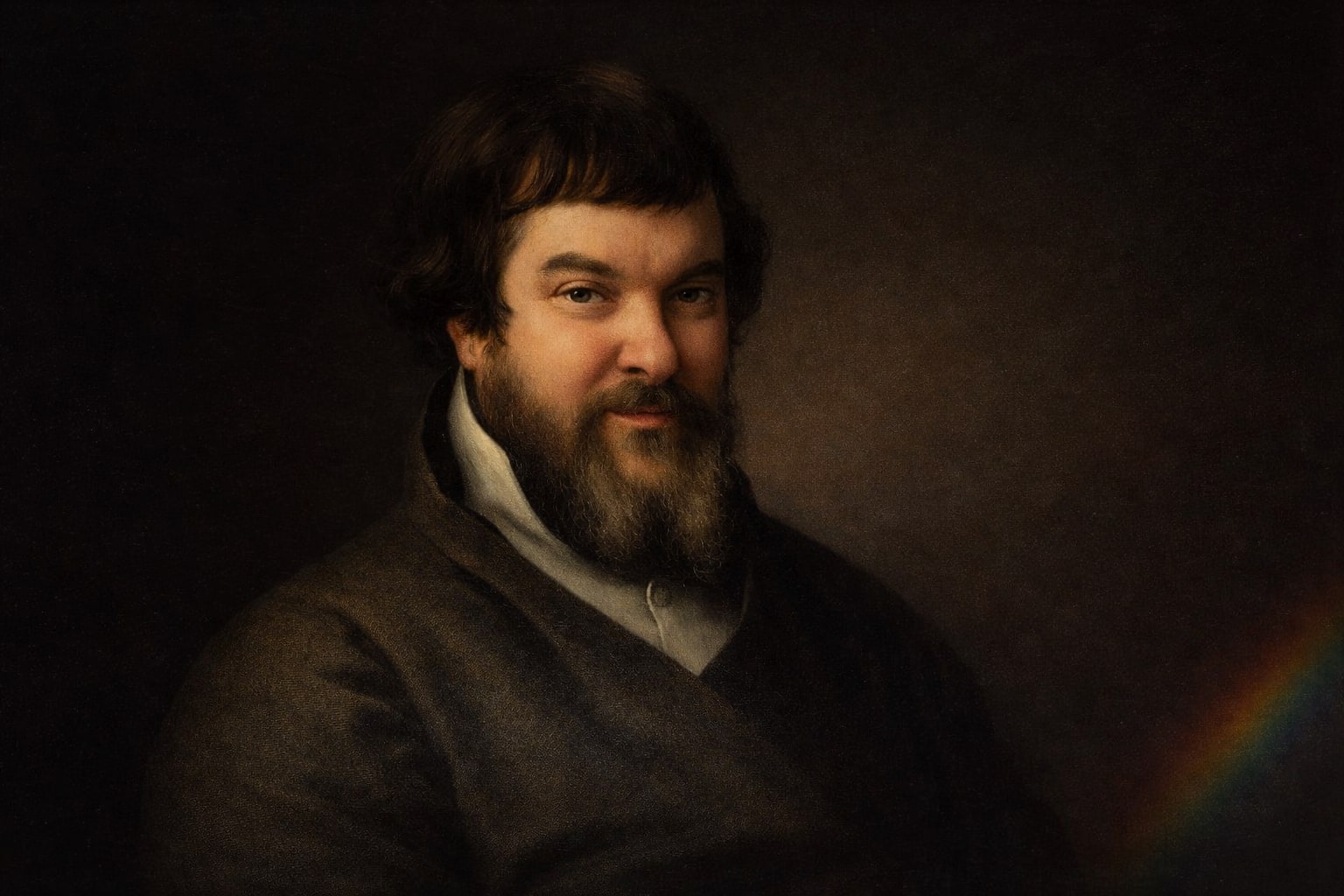
Records of intimate life in the 19th-century Russian Empire were left primarily by the nobility. The diary of the Moscow Third Guild merchant Pyotr Vasilyevich Medvedev is a rare exception. From 1854 to 1863, he recorded his thoughts on faith, marriage, the body, desire, and sexual experiences — with both men and women. This is the voice of a non-elite person: a former peasant, a small entrepreneur, and a resident of Moscow during the era of the Great Reforms.
The diary is kept in the Central State Archive of the City of Moscow (Russian: Tsentralny gosudarstvenny arkhiv goroda Moskvy; Центральный государственный архив города Москвы), in fond 2330. The manuscript notebooks survived in the massive collection of the Krasnoyarsk bibliophile Gennady Yudin, where they ended up along with the papers of Medvedev’s father-in-law, the wealthy merchant Pyotr Lanin. Notably, there is a glaring lacuna in the surviving records: the year 1860 is completely missing. It is likely that these pages were destroyed in a fit of religious remorse by the author himself, or removed by relatives after his death. This ego-document was first introduced into academic circulation by the historian Alexander Kupriyanov in 1997.
Who Was Pyotr Medvedev
Medvedev came from a Russian Orthodox peasant family, presumably from the village of Surmino in the Dmitrovsky Uyezd of the Moscow Governorate. He did not receive a formal education — he learned to read and write just enough to conduct business.
“Yesterday I sat at home all day, there is nothing to do in the city […] I wrote letters to friends, and made a heap of grammatical mistakes in them; it is a great pity that I did not study grammar in my youth — how useful it would be now, given my passion for writing.”
— April 6, 1854
In trade, he rose to a merchant of the Third Guild (the lowest rank of the privileged merchant estate) — by the empire’s standards, he was a small entrepreneur. He lived in Moscow, first in Semyonovskoye, then in the Bely Gorod area. He spent his free time walking, reading, and going to the theater. By his own words, he loved “reading books, listening to singing and music, the theater, and in the summer — nature, travel, and walks.”
The diary shows that Medvedev was a deeply religious, impressionable, and emotionally unstable person. He was easily irritated and then could not recover for a long time.
“How I suffer from my character — in a moment I fly into a temper, and for a week I cannot return to a normal state.”
— July 29, 1855
At the same time, he considered himself kind and warm-hearted — and regretted that he did not know how to show it.
Marriage and Family Conflict
Medvedev married at the age of 30, in 1851, to the daughter of a wealthy Moscow merchant — Serafima Petrovna Lanina. It was a marriage of convenience: Medvedev hoped for a dowry and stronger connections. Family life proved difficult: neither love nor mutual understanding emerged.
“Lord! I am a worm, not a man, and I have sinned greatly before Thee; it is bitter, so bitter. Why do I suffer so since I married? I see not a single happy day. Malice and quarrels happen daily in my household. Mother, sister, wife — it is simply hell. What am I to do, Lord!”
— March 23, 1854
An additional source of suffering was his wife’s infertility, while Medvedev himself wanted children:
“I am childless, and thus the line of my father will end, and the grief of the patriarch Abraham who grieved over his childlessness is known to me […] Bitter, sad. But may God’s will be done.”
— October 1, 1856
In the diary, he describes his wife with constant hostility — as a “stuffed fool” without education, without taste, capricious, and prone to quarrels. Conflicts escalated to physical violence. Medvedev beat his wife and immediately repented:
“I decided to punish my wife for some insolent words […] I gave her several slaps and blows, to which she answered with abuse and shouting, and even dared to strike me as well […] and more blows with a lestovka [leather prayer rope] and fists; the scene was most terrible […] Thinking it all over, my heart sank, and for more than an hour I wept bitterly.”
— March 23, 1854
Later he noted that he had given up violence:
“Sometimes in hours of irritability, I would fight, by way of instruction; now the years have passed — I no longer lay a finger on that blockhead in human form.”
— March 29, 1861
After beatings, he could lie in bed for several days, incapable of work or prayer. The diary indicates that intimate life in the marriage did not stop, but became formal.
“The time has come […] not out of desire, not out of passion, but just as a matter of habit the act of copulation takes place.”
— January 31, 1859
Later, Serafima began to cheat. One of the episodes led to a major scandal. Medvedev’s nephew, Alexander Biryukov, who lived in their house, confessed to an affair with his wife:
“He sincerely and in full detail confessed to the sin of repeated incest […] And I took all of this to heart, but I did not allow myself punishments and other outrageous scenes, abuse, or reproaches.”
— August 6, 1861
In the religious logic of that time, a wife’s affair with her husband’s relative could be perceived as a form of forbidden kinship through marriage — which is why Medvedev calls what happened “incest.” Two years later, however, he beat his nephew with a stick in front of the workers — to the point of blood and bruises — and then wept bitterly about it himself.
Medvedev did not dare to divorce. Dissolving a marriage in Russia at that time required a church decision and serious grounds. His wife had a higher status and connections, and Medvedev himself, as a believer, was inclined to perceive his fate as a punishment for his sins.
His idea of an ideal marriage was romantic: spouses should love each other and be close in age — be partners, not a boss and a subordinate.
Admiration for Men
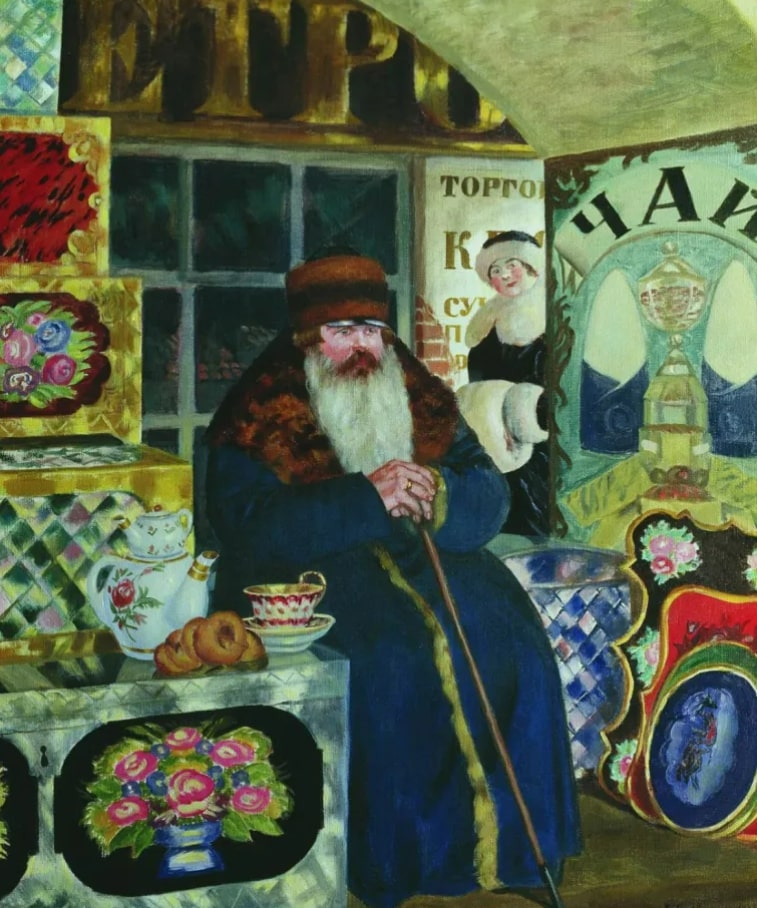
Even before records of sexual contacts with men appear in the diary, Medvedev notes his attraction to male beauty — with an openness unusual for his environment and era.
One of the first diary entries, dated January 9, 1854, is a rapturous description of young men on Moscow’s streets:
“So often I meet in the white-stone city young people with an angelic gaze, eyes with a languishing look, with a sweet little mouth, lips that beg for a kiss, and a delicate down on their cheeks […] you look at such people and cannot admire enough — how well-proportioned everything is: arms, legs, teeth, and chest, and every form, gait, movement, and especially when unclothed, and this beauty of nature. The perfection of man always captivates me with its grace.”
— January 9, 1854
He met handsome young men, and these acquaintances took on an emotional character for him. About meeting Alexander Ivanovich Smirnov, he wrote:
“I briefly met Alexander Ivanovich Smirnov, that fine young man whom I have always admired; we spent the whole evening together, and it turned out he has a kind and open heart — it would be very pleasant to grow closer to him.”
— May 31, 1854
A week later, at his sister-in-law’s wedding, they again spent the whole evening together: “Once again I was with Alexander Ivanovich Smirnov; we spent the evening pleasantly, talking openly with one another.” Smirnov shared his view on the “inequality of marriage” — for Medvedev, this was a confirmation of closeness.
He also took pleasure in Easter kisses. About the custom of khristosovaniye (Russian: христосование; the traditional triple kissing on the cheeks as an Easter greeting), he wrote:
“It is well established in Holy Rus to kiss during khristosovaniye; there is thought in it, and pleasure, and unity, everything is there.”
— April 11, 1854
And in an entry from March 24, 1858, he described kissing “according to custom” with “A. G. Gusarev and S. A. Mozhukhin, handsome young men whom I love dearly,” after which they drank tea in a tavern.
In 1861, the entries became more explicit. Medvedev admitted that youth “completely captivates” him:
“Youth completely captivates me; it is a marvelous thing — handsome, merry, nimble, and behaves properly, yet lives with the heedlessness of youth.”
— March 4, 1861
And three months later:
“Young people terribly confuse me with their setting, dexterity; and by their freshness, beauty, and youth they bring me to utter disappointment in myself.”
— June 7, 1861
He turned bathing into an aesthetic experience:
“What a delight bathing is, what freshness, young company, and the pleasure of seeing a person in all of nature’s beauty — every form, every movement — simply a delight. One’s imagination returns to the sculptural times of Greece. Here would be models for statues; when we admire beauty, grace, and form in marble and on canvas — then what must it be to admire, in the flesh, a fine young man in all his beauty and freshness, with muscles in motion, with the living color of the body.”
— June 8, 1861
In one entry, Medvedev linked his walks around the city with this feeling:
“At Yegorov’s I meet new faces […] I admire the young men and am carried away by the long-gone past, and they show affinity toward me.”
— June 17, 1859
This attraction to the male body and male beauty was a constant background in Medvedev’s life — and eventually transitioned into sexual practice.
Homosexual Relations
Three years into his difficult marriage, Medvedev, in his own words, “decided to act according to my desires and inclinations” and “give free rein to my passions.” In an entry from July 2, 1854, he already described a night adventure with a prostitute on Trubny Boulevard — and there, retrospectively, explained what happened:
“In my youth, my poetic direction and platonic love found no sympathy […] and when everything began to die out — love and poetry alike — passions began to rage in me.”
— July 2, 1854
From that moment on, he engaged in relations with both women and men — most often in a state of intoxication, in taverns or on the street. Alcohol served as a kind of mediator: vodka temporarily lifted the internal ban, allowed him to overcome class barriers, and move from “voluptuous stories” to action.
He rarely resorted to paid sex with women. He did not take a mistress for religious reasons. In his Orthodox moral scale, an affair with a mistress was the grave sin of adultery. Sex with his wife during fasting periods, masturbation, relations with a prostitute, or same-sex contact — he considered all these to be lesser sins.
Episodes with men appear particularly often in the diary starting in 1861. Medvedev frankly described both his desires and the circumstances of the meetings.
One of his regular partners was Alexander Petrovich Zamkov — a man from the same merchant-petty bourgeois circle, whom Medvedev met during walks and in the rooms of the famous Pechkin’s tavern. Medvedev called him a “passionate hunter for voluptuousness” — just like himself:
“I ran into Alexander Petrovich Zamkov; we agreed to sit for a bit in the rooms at Pechkin’s tavern. We know what that ‘a bit’ means! […] we drank vodka, talked, and afterward — in the rooms onanism, and in the baths kulism [from Latin culus — ‘ass’] […] We had not seen each other for a long time […] but whenever we meet, we always do something; we are both passionate hunters for voluptuousness.”
— November 15, 1861
With Zamkov, Medvedev had previously practiced “double malakiya” (Russian: сугубая малакия; sugubaya malakiya) — as he called mutual masturbation. He felt not only physical but also emotional attraction to Zamkov:
“I have a strong heartfelt attraction to Sasha. He is of fine appearance and character, and a kind soul. I often daydream, losing myself in thoughts of him […] and with him I am ready for anything.”
— March 4, 1861
The morning after the meeting with Zamkov at Pechkin’s tavern, Medvedev wrote:
“Pain in the head, pain in the limbs of the body, pain in the heart too, and pain in the conscience; truly, what vileness.”
— November 16, 1861
But he immediately added his usual explanation:
“And the whole reason is my unhappy marriage; had I found what I had hoped for and had my married life been more loving, this would never have happened and I would have been the best of men.”
— November 16, 1861
Among Medvedev’s possible partners was the Armenian Ivan Moiseyevich Dalmazov — a twenty-five-year-old young man, a native of the city of Gori, who lived in Moscow and studied music and languages. On November 8, 1861, Medvedev visited his room at the Voronezhskoye Podvorye (Russian: Воронежское подворье; a popular inn among merchants), where he was impressed by the furnishings: “Books, expensive paintings, furniture, flowers, two pianos.” Dalmazov treated him to vodka, played the piano — and then:
“The vodka took its toll, mutual onanism began to ferment in our thoughts, we played, tussled, and nothing more.”
— November 8, 1861
Medvedev also entered into intimate relations with friends. In late May 1861, after a walk and drinking with Kozma (Kuzma) Finogenovich Sidorov — a married friend from his circle:
“Kuzma got carried away and dragged me into the bedrooms […] Strangely, how to explain it?”
— May 29, 1861
Medvedev noted that Kozma — a married man with a “pretty young wifey” — initiated the contact himself.
After a quarrel with his wife on Ascension Day, Medvedev went with his friend Sinitsyn to Ostankino. City parks and outskirts served as a kind of blind spots where police and social surveillance weakened. In the diary, he described his growing desire:
“A desire formed in me to drink and surrender to debauchery; with strong passions there came an anxious desire to have a woman or a man for onanism, kulism, whatever you like […] the habit of lust and shameful debauchery reigned in me.”
— June 1, 1861
In the Ostankino garden, he was aroused by antique sculptures:
“The Apollo Belvedere in all its plastic beauty, standing on the hill, and the caryatids with bare shoulders, and the voluptuous figure of the Rape of Proserpina […] all were examined in detail, which stirred my ardent blood all the more.”
— June 1, 1861
Sinitsyn initially refused “voluptuousness” and suggested looking for “camelias” — prostitutes (the word refers to the popular image of a courtesan in 19th-century European culture from Alexandre Dumas fils’s novel The Lady of the Camellias (La Dame aux camélias)). They did not find prostitutes. Medvedev wrote that in despair he “even prayed” to the devil — and yet:
“Suddenly a crazy thought struck my comrade’s drunken head […] he cried out ‘Let’s f— each other’ […] without any urging or desire on my part […] senselessly, insensibly, we fell upon the ground and for a long time tried in vain, by means of mutual onanism, to produce voluptuousness, but without success.”
— June 1, 1861
The next morning, “soiled, all in mud and nausea,” Medvedev wrote a bitter self-accusation:
“What a goose I am. At my age, in my position, to do such filthy things — and to unwittingly drag others, by the force of lustful talk, into onanism.”
— June 1, 1861
According to Medvedev’s own feelings, his behavior also influenced those around him: people who had not previously participated in such practices began to propose them themselves.
Cab Drivers and the 18-Year-Old “Favorite”
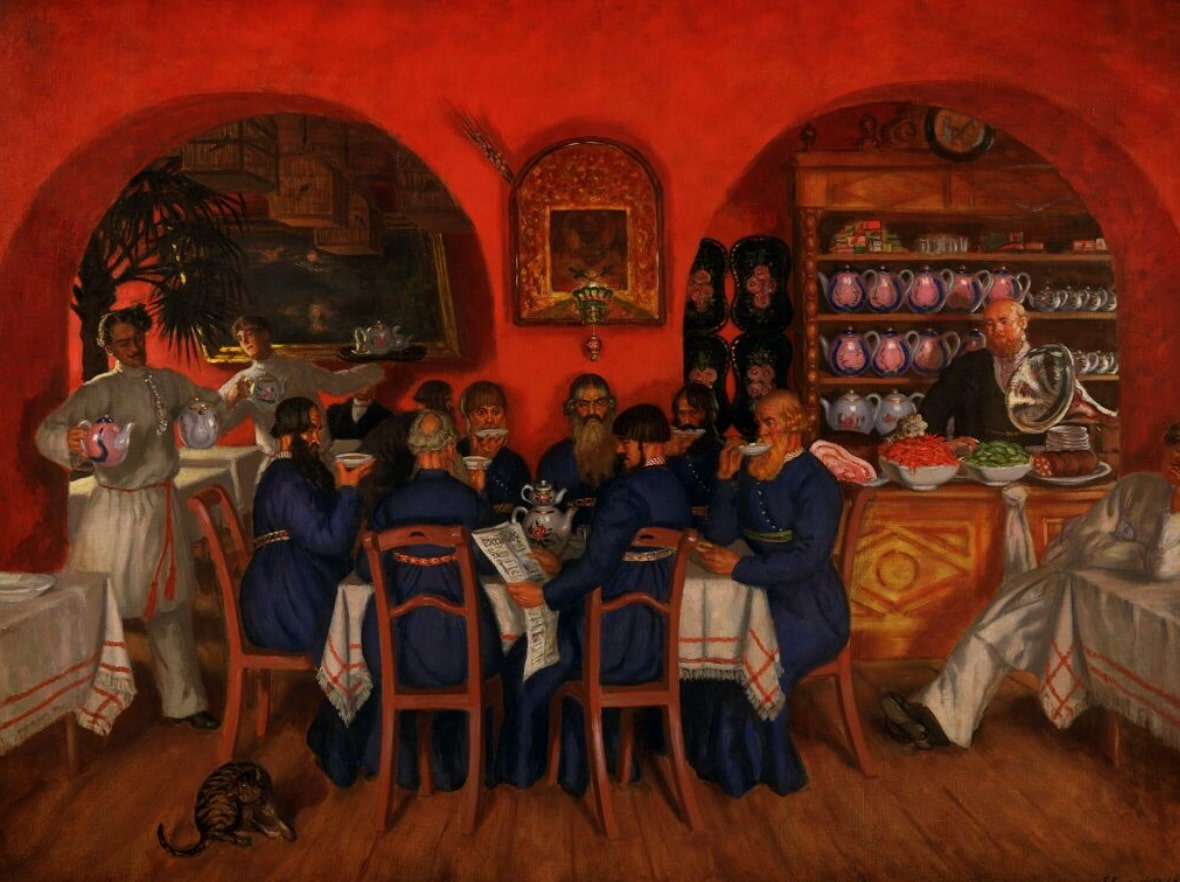
A constant feature of Medvedev’s sexual life became casual contacts with young cab drivers. He described it himself as a habit:
“For some time now, a passion has developed in me to choose younger cab drivers, with whom I joke on the way, and try to take roundabout advantage of mutual onanism, which almost always succeeds with the help of half a ruble or 30 kopecks, and there have even been those who agree just for the pleasure of it. Up to 5 times that month — however strong this ruinous passion is among us.”
— November 2, 1861
One of his regular partners became an 18-year-old youth who lived in Medvedev’s house — probably a hired servant. Medvedev emphasized that he was already “developed,” that is, not a child, but still saw a moral problem in the situation:
“But why am I accustoming a young boy (though, indeed, a developed one)? […] Three times, even in the previous apartment, I had with him a lustful encounter of mutual onanism; he is a little timid, but it seems he too enjoys it.”
— August 1, 1861
This youth is called the “favorite” in the diary. A week later, after a ball in Sokolnichya Roshcha (Russian: Сокольничья роща; Sokolniki Grove), Medvedev described the night:
“Electrified by the imagination of voluptuousness — it is midnight, and I cannot sleep; where to find satisfaction. My wife has gone to her father’s; poor as she is, she is at least my own, not bought, and buying is not in my character or habit. […] Cheap and close at hand — manual onanism? Dry and not warm. But the devil or his wiles push my thoughts and desire toward the 18-year-old favorite […] And so, for the sixth time — mutual onanism.”
— August 8, 1861
The logic of choice in this passage is characteristic: his wife has left, he does not want to pay for a prostitute, masturbation does not satisfy him — and he turns to the youth living in his house. Medvedev did not hide that the initiative came from him.
Repentance and the Internal Cycle
Every episode was followed by repentance. Medvedev did not justify his homosexual practices — he continued to consider them a sin. But not a sin of the highest order: in his internal hierarchy, adultery (an affair with a mistress) was worse.
To a modern reader, such a moral scale may seem paradoxical, but it relied strictly on Byzantine-Russian canon law — the Kormchaya Kniga (Russian: Кормчая книга; Book of the Pilot, a collection of church laws) and the rules of Patriarch John IV the Faster of Constantinople. For individual or mutual “malakiya,” a relatively moderate penance was prescribed: from forty days to two years of excommunication from communion with prostrations. Adultery, however — betrayal of a wedded wife — was viewed as the destruction of the family and the desecration of the sacrament of marriage, for which church canons prescribed excommunication for up to fifteen years.
“Of course, the sensation is pleasant, sweet, passionate, but it is all momentary. What it will be like to pay afterward — for all of this, in life through one’s deeds and health, and after death through hell and judgment […] Sinful against God; shameful before people; painful to the conscience before oneself.”
— August 8, 1861
The morning after this episode, he described his ritual of repentance:
“Having gotten up in the morning, I felt sorry for the good mood of my soul […] in a solitary room, alone, with no one at home, I read in a prayerful posture […] the prayers for defilement and canons of repentance to the Lord and the Mother of God, breathing with tears of contrition.”
— August 9, 1861
Medvedev’s life turned into a repeating cycle: relapse — repentance — prayer — new relapse. He realized this:
“However, I am completely losing myself morally; a kind of hardening has seized me, and I very often, without purpose or intent, give myself over to the vilest vices. It is as though some foul feeling pursues me, something like despair […] I have become more an automaton than a man. I act so — without reason, will, or heart.”
— November 20, 1861
In the same entry is a formula that concisely conveys the entire cycle:
“Onanism with a cab driver, and meanwhile […] afterwards went to vespers. A fine goose.”
— November 20, 1861
Sometimes he managed not to relapse. On November 5, 1861, after getting drunk with friends, he confessed in his diary:
“When drunk, I always intend to commit onanism or something else. But, thanks be to God, I got up for matins, heard them and the early liturgy […] and afterward worked in the office, with my hands and my head, as I had not worked for a long time.”
— November 5, 1861
Characteristically, Medvedev was proud that he “preserves himself from adultery” with women. When his married friends — Komarov, Bogdanov — went to mistresses and prostitutes, he observed this and recorded it with a sincere feeling of moral superiority. On November 10, 1861, arriving at Dalmazov’s, Medvedev found Pyotr Bogdanov — a married acquaintance who already had a son by that time — behind a screen “on a rendezvous” with a woman. Medvedev left:
“Conscious of the moral strength within myself, because he was ashamed to show himself to me.”
— November 10, 1861
Vasily Komarov — a merchant from Medvedev’s circle, a father of ten children — meanwhile “practically lived” at the Malchugin sisters’ (singers whom Moscow merchants visited), spending money on wine and dinners. About him, Medvedev wrote: “A fine goose. He says, I love, I sin.”
On November 25, 1861, Medvedev found himself with Sidorov and his mistress at the Suzdalskoye Podvorye (Russian: Суздальское подворье) — a place that, according to him, “serves as a place of nationwide development in the area of voluptuousness.” The entry ends briefly:
“Well, I have reached first-rate filth.”
— November 25, 1861
Self-Explanation: An Unhappy Marriage as the Cause
Medvedev consistently explained his behavior by his unhappy marriage. For him, this was not an excuse, but a sincere attempt to understand himself:
“Who would recognize me now among my former acquaintances — that youth, that faster, that virgin, that man of prayer, that modest and in every way exemplary young man. Who would recognize me? Ten years of loveless, discordant marriage — and I became an immoderate libertine and debauchee.”
— June 1, 1861
And further:
“Oh, I am miserable and that is all — I am a victim of my reckless, stupid marriage. Were it not for this stuffed fool, my companion, I would long ago have been enjoying happiness, love, and a good place in society.”
— June 1, 1861
This logic is repeated throughout the diary. Every episode — with Zamkov, with the cab driver, with the “favorite” — brings him back to the same conclusion: the marriage is to blame, not himself. At the same time, Medvedev did not notice the contradiction: the attraction to men appeared in the diary earlier than the complaints about “debauchery,” and was described as an independent feeling, not a consequence of an unhappy marriage.
From a psychological point of view, shifting the blame to his wife served as a defense mechanism of rationalization. Having realized his inability to meet the standard of patriarchal family happiness, Medvedev unconsciously shifted the responsibility to his spouse, writing himself a moral indulgence to seek satisfaction on the side.
Political Views
Medvedev was an Orthodox monarchist and a Slavophile. He supported tsarist power, valued Orthodoxy, and believed that Russia should develop based on its own traditions. He criticized Peter I for his cruelty:
“Now those were martyrs of their ideas, Peter I is a fine one too. To such a degree of cruelty. One’s hair stands on end from the tortures and torments.”
— November 21, 1861
At the same time, Medvedev despised the police. Having encountered them on business, he wrote:
“These officials are living sharks. It is not that they seek justice, but for money they are ready to do anything […] they trample conscience, shame, and the law daily, and yet they receive awards, ranks, and salaries from the government as well-intentioned guardians of order […] while they themselves are nothing but thieves and robbers.”
— January 9, 1859
Medvedev described the Emancipation Reform manifesto of March 5, 1861, in detail in his diary. He found out about it by chance, having overslept the morning liturgy: the cook said that “a soldier brought some newspapers.” He could not read the manifesto because of its verbosity, but he burst into tears: “Only tears flowed profusely from my eyes and I only uttered «Lord, glory to Thee».” Unwashed, in his nightclothes, in galoshes without boots, he ran to the Epiphany Church.
Medvedev assessed the people’s reaction soberly: there was no enthusiasm, the legal language of the manifesto was confusing. Military patrols in taverns “took away the last part of the joy.” “Is it pleasant to express joy and merriment under bayonets?” he asked.
The Diary as a Source for the History of Sexuality
Medvedev’s diary is an exceptionally rare document shedding light on the intimate life of urban merchants and meshchane (petty bourgeois) in the mid-19th century. While noble memoirs, court cases, and peasant life have been studied by historians in considerable detail, the merchant estate left a minimum of evidence about its sexuality.
Medvedev’s records destroy the myth of the exclusivity of his experience. The diary shows that the merchant did not involve people in something unfamiliar to them, but acted within an already formed environment. His partners were men from the same circle — married friends, small traders, as well as young cab drivers and servants. Such practices were accessible and, although condemned by the church, did not cause panic or horror in society.
For the history of sexuality, the language Medvedev used to describe his experiences is especially valuable. In his vocabulary, there are neither medical diagnoses nor legal terms like muzhelozhstvo (Russian: мужеложство; sodomy or buggery in a legal sense). He thought in categories of church repentance, calling his actions “malakiya,” “kulizm,” or “voluptuousness.” The diary completely lacks the modern concept of sexual identity: Medvedev did not consider himself a person of a special type. His attraction to men naturally coexisted with his attraction to women, and he saw a contradiction only in the sinfulness of the acts, not in his nature. Such a view is typical for the era before the medicalization of sexuality.
Life Between Sin and Freedom
Two orders clash in Medvedev’s diary: strict religious morality and a growing desire for personal freedom, at least within the bounds of private life. Medvedev constantly ran into the same question: where does the right of society and the state to control a person end, and where does the realm of the personal begin?
Towards the end of the diary, Medvedev appears as a man who has lost on both sides — the religious and the sensual. He found neither peace in faith nor joy in pleasure. Some of the last entries, made in the summer of 1862, sound tired:
“I have lived so many years, and what have I done for myself, society, and the fatherland? […] What did I live? I vegetated. What have I done? I have been a burden to myself and to others — I lived, I suffered, and I imposed on others. […] But to live, to breathe in Thy world a while longer — that I still very much want, by Thy mercy. Have mercy on me.”
— July 16, 1862
This existential crisis was exacerbated by a social catastrophe. On January 1, 1863, the government approved a guild reform that abolished the Third Merchant Guild. To remain in the merchant estate, small entrepreneurs were required to pay an unaffordable fee. Those who could not do so were automatically transferred to the meshchane. For Medvedev, this meant the loss of the status for which he had worked his whole life. Financial insolvency, multiplied by the awareness of his own otherness and a ruined marriage, created unbearable pressure.
The diary breaks off on February 23, 1863. Medvedev’s wife, Serafima, died on August 21, 1864. How the subsequent life of Medvedev himself, transferred to the meshchane estate, unfolded is unknown.
Today, Pyotr Medvedev’s diary remains not just a unique historical monument, but also an important testimony for modern Russian LGBT people. It proves that same-sex attractions and the search for oneself are not a “Western influence” or a sign of the newest times, but an integral part of Russian history. The voice of the Moscow merchant, echoing through the centuries, reminds us: queer people have always existed, loved, suffered, and sought intimacy even in the most patriarchal settings of the Russian Empire.
Literature and Sources
- From the Diary of the Merchant P. V. Medvedev (1854–1861): Documents from the Central Historical Archive of Moscow // Moskovskiy arkhiv: Istoriko-dokumentalny almanakh. Book 2. Moscow, 2000.
- Kupriyanov A. I. “Pagubnaya strast” moskovskogo kuptsa // Kazus. Individualnoye i unikalnoye v istorii. Issue 1. Moscow, 1997. Pages 138–155.
- Kupriyanov A. I. Gorodskaya kultura russkoy provintsii. Moscow, 2007.
- Healey D. Homosexual Desire in Revolutionary Russia: The Regulation of Sexual and Gender Dissent. Chicago, 2001.
- Healey D. Masculine Purity and ‘Gentlemen’s Mischief’: Sexual Exchange and Prostitution between Russian Men, 1861–1941 // Slavic Review. 2001. Volume 60. Number 2. Pages 233–265.
🇷🇺 LGBT History of Russia
General history
- The Story of a Medieval Arabic Source in Which the Women of the 'Rus' Were Called the World's First Lesbians
- Homosexuality in Ancient and Medieval Russia
- The Homosexuality of Russian Tsars Vasily III and Ivan IV the Terrible
- Homosexuality in the 18th-Century Russian Empire – Homophobic Laws Borrowed From Europe and How They Were Enforced
- Ruler Anna Leopoldovna and the Maid of Honour Juliana: Possibly the First Documented Lesbian Relationship in Russian History
- Peter the Great’s Sexuality: Wives, Mistresses, Men, and His Relationship with Menshikov
- A History of Kissing Between Men in Russia
- Polmuzhichye and Razmuzhichye in the Russian North: A History of Female Masculinity
- The 1916 Corruption Case of a Secret Society of Gay Officials Who Wore a Golden Winged Penis Badge
Folklore
Biographies
- Grigory Teplov and the Sodomy Case in 18th-Century Russia
- Alexander Golitsyn: A Homosexual Man at the Head of Church and Education in the Russian Empire
- The Diary of Pyotr Medvedev, a Bisexual Moscow Merchant, 1854–1863
- Sergei Alexandrovich Romanov: A Homosexual Member of the Imperial Family
- Ivan Dmitriev, Young Favourites, and Same-Sex Desire in the Fables 'The Two Doves' and 'The Two Friends'
- Andrey Avinoff: A Russian Émigré Artist, Gay Man, and Scientist
- The Possible Homosexuality of Grand Duke Nikolai Mikhailovich of the Romanov Family
- Saint Moses the Hungarian – One of the First Queer Figures in Russian History?
- Aleksey Apukhtin: Homosexual, Poet, and Friend of Tchaikovsky
 Subscribe to our Telegram channel (in Russian): Urania. With Telegram Premium, you can translate posts in-app. Without it, many posts link to our website, where you can switch languages — most new articles are published in multiple languages from the start.