The Diary of the Moscow Bisexual Merchant Pyotr Medvedev in the 1860s
His escapades and self-reflection.
Contents
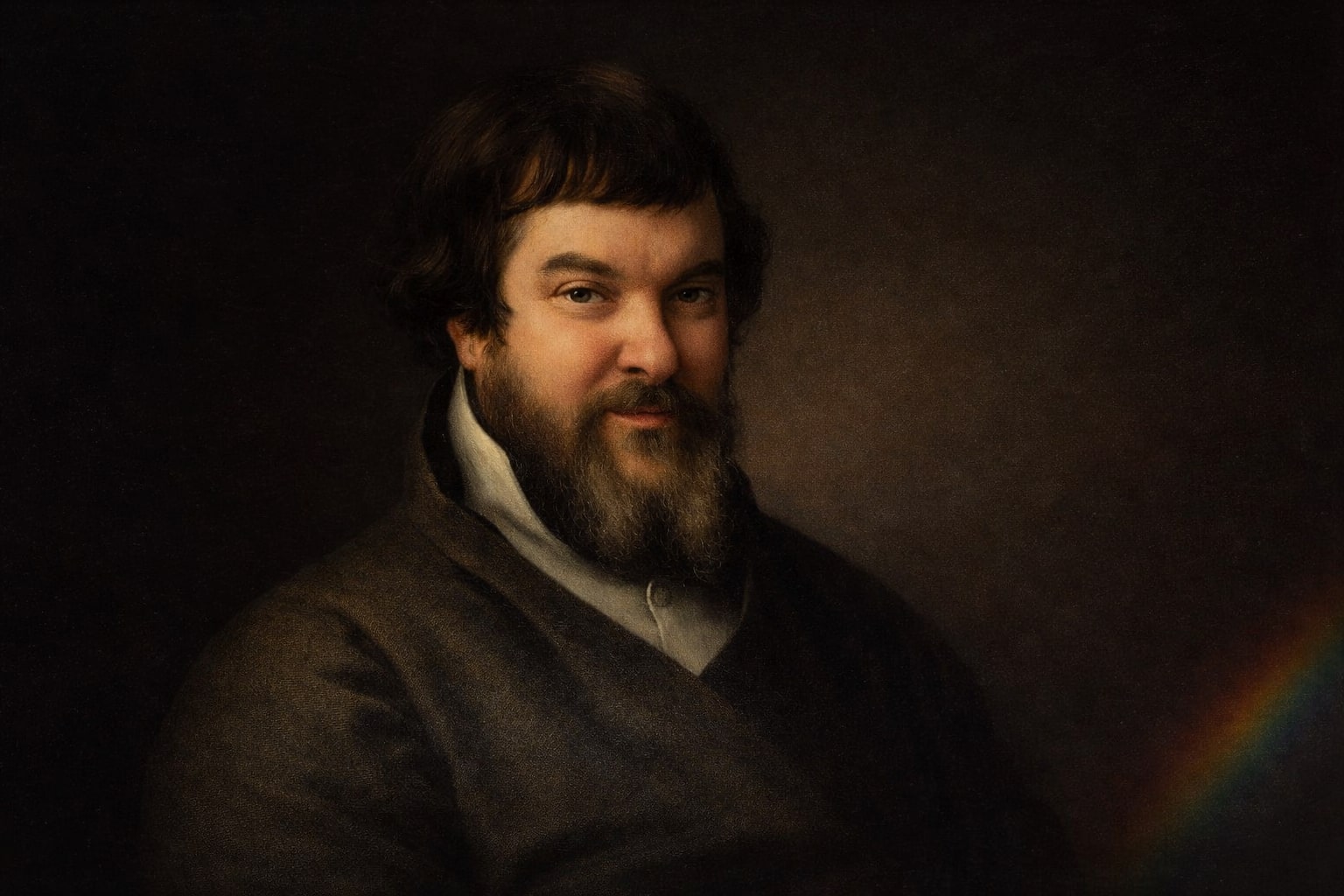
Information about intimate life in the Russian Empire — in letters and diaries — was most often left by nobles and other people from the upper strata. That is why the diary of a “middle” figure is especially valuable: the Moscow merchant Pyotr Vasilyevich Medvedev, who was bisexual.
From 1854 to 1863, Pyotr Medvedev kept a diary and described his experiences with striking frankness: religion, emotions, and his sexual experiences with men and women. He reflected on how intimate relationships affect the family, wrote about the body as a source of pleasure, discussed prostitution, infidelity, masturbation, as well as erotic desire and love in general.
But before moving on to those topics, it is important to understand who Medvedev himself was.
Pyotr Medvedev’s Character and Life Path
Pyotr Medvedev was born into a peasant family and did not receive a formal education. He himself wrote that he “learned literacy, to read-write, only as much as one could live for one’s daily bread” — meaning he mastered the bare minimum needed to manage everyday life and work.
In commerce he rose to the status of a third-guild merchant. In the Russian Empire, merchants were divided into guilds according to the size of their capital and the scale of their business; the third guild was, by modern standards, the level of a small entrepreneur.
Medvedev spent his free time walking around Moscow and reading. He was deeply religious, an impressionable person with a fragile psyche. A word or a situation could easily hurt him. At times he was irritable, but overall he was kind and responsive.
Politically, Medvedev was an Orthodox monarchist: he believed the Tsar’s authority was right and that Orthodoxy played an important role. He was a Slavophile — that is what people were called who believed Russia should develop by relying on its own traditions rather than blindly copying the West. He also called himself a patriot.
At the same time, his views were not completely “straight-line” or simplistic. He supported municipal reforms and the abolition of serfdom (when peasants stopped being the legal property of landowners). He criticized Peter the Great — the Tsar who radically rebuilt the country “in a European way.” Medvedev was outraged by police abuses, and he argued for expanding freedom of speech. Another conviction that mattered to him: you must not interfere in people’s private lives — especially the state, and even “public opinion.”
The Difficulties of Marriage and His Relationship with his Wife
Pyotr Medvedev married at the age of 30. His wife was the daughter of a wealthy Moscow merchant — P. I. Lanin. This marriage, like most marriages at the time — and especially among merchants — was a match “of calculation,” meaning a practical arrangement rather than a love match: Medvedev was counting on a large dowry (property and money the bride’s family provided upon marriage) and on strengthening his connections in Moscow.
But married life turned out to be difficult. Love and mutual understanding did not appear between them. The situation was made worse by the fact that his wife — Serafima — was infertile, while Pyotr desperately wanted children.
His disappointment is visible in how he wrote about his wife in the diary. He described her as a woman without education or taste, with a capricious character, prone to quarrels — both with his parents and with the household servants. He portrayed himself as a romantic dreamer, and her as a “down-to-earth” merchant’s wife for whom money mattered most. Sometimes conflicts escalated to physical violence.
“Sometimes, in hours of irritability, we even fought, as a kind of lesson; now the years have passed — I do not lay a finger on that blockhead in human form anymore.”
— the merchant Pyotr Medvedev, from his diary
After such “lessons,” he almost immediately felt guilty, and then could fall into a heavy state: for several days he would lie in bed doing nothing.
Against the background of constant conflict, Serafima began to cheat. At the same time, the diary suggests that they still had regular sex within the marriage — so this was not a complete break in intimate life, but a different problem: coldness, resentment, humiliation, and general hostility.
One affair caused a major scandal. During a quarrel between Serafima and Pyotr’s relatives, it came out that she had entered into a relationship with her husband’s nephew. Medvedev spoke with the nephew personally, and the nephew confessed:
“He sincerely, and with every detail, confessed the sin of repeated incest… And I took all of this to heart, but I did not allow myself punishments and other outrageous scenes, abuse, or reproaches…”
— the merchant Pyotr Medvedev, from his diary
In modern usage, incest means sexual relations between close blood relatives. In Medvedev’s situation, the nephew and the wife were not blood relatives. But in the religious logic of that time, such a relationship could be treated as “kinship” created through marriage — meaning it could be seen as spiritually and morally equivalent to incest. That is why Medvedev called it “incest” and a “sin.”
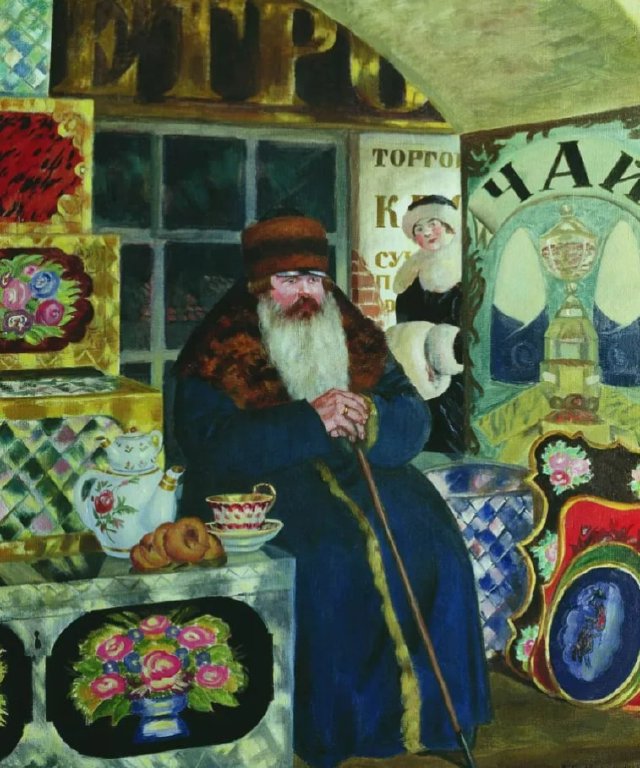
Two years after the scandal, Medvedev did punish the nephew: in front of workers, he beat him with a stick. He recalled not only the affair with his wife, but other misdeeds as well.
Pyotr did not dare to divorce. In those days, divorce in Russia was an extremely difficult procedure: it was hard to arrange legally and almost impossible without serious grounds and church rulings. In addition, his wife had high status and connections, while Medvedev — a very devout man — tended to see his fate as God’s permission, meaning a trial that must be endured (the idea that God allows hardship as a test, not that God “approves” of the harm).
At the same time, he did not see marriage as merely a system of the husband’s power over the wife. On the contrary, Medvedev had romantic ideals: an ideal union, in his view, should be held together by mutual love, and spouses should be close in age — more like partners than “a boss and a subordinate.”
Experiments and Sexual Preferences
Pyotr considered physical intimacy an important part of family life. He did not see extramarital affairs as an unambiguous evil: for him, they could be a way to gain experience that might later be useful in marriage. But his own marriage turned out to be nothing like what he had imagined. Because of constant emotional pain, he swung between the church and drinking establishments — looking for at least temporary relief.
After three years of painful married life, Pyotr, in despair, decided to “let his passions run free.” While drunk, in taverns, he indulged in “lust” with both men and women — and then recorded it in detail in his diary.
In the mid-19th century, if a man could not make his relationship with his wife work, turning to prostitutes was a common solution. In Russia, prostitution was legalized in 1843. Medvedev, however, rarely resorted to paid sex: he wrote that it was “not in his character and not his habit.”
He could have taken a mistress, but avoided it for religious reasons. In Orthodox moral teaching, a relationship with a mistress was considered the grave sin of adultery. Against that backdrop, other acts — for example, having sex with one’s wife during a fast, masturbation, sex with a prostitute, or homosexual relationships — felt to him like “lighter” sins. This does not mean he justified them; rather, within his own religious scale, he ranked the seriousness of violations in that way.
At first, his interest in men showed itself relatively mildly. In early entries he recalls the joy of bathing together with young, strong men and the pleasure of Easter kisses with handsome youths (in the Russian Orthodox tradition, on Easter it is customary to kiss three times and exchange a festive greeting). The full “unfolding” of his homosexual practices came later — when the marriage finally became, for him, a source of disappointment.
Homosexual Relationships
Episodes involving men appear especially often in the diary starting in 1861. Over five months — in summer and autumn — he described fifteen such encounters. In three cases, it was mutual masturbation with friends. In other cases, Pyotr and his companions used alcohol to lower inhibitions and make it easier to move toward intimacy — or to pressure a partner into it. For example, after a quarrel with his wife, on the Feast of the Ascension (forty days after Easter), he traveled with a friend to Ostankino — at that time a countryside area outside Moscow:
“…in me there formed a desire to drink and give myself over to debauchery; with strong passions there came to me an anxious desire to have a woman or a man for onanism, kulism [from Latin culus — “buttocks”], whatever you like… the habit of lust and shameful debauchery ruled in me.”
— the merchant Pyotr Medvedev, from his diary
Once, on the way home, Pyotr proposed intimacy to his companion. The man refused and suggested finding “camellias” — a slang term for prostitutes, associated with the popular European image of the “lady of the camellias,” i.e., a courtesan figure in 19th-century culture. But they did not find any “camellias,” and in the end the drunken companion agreed to “mutual onanism.”
Over time, Pyotr felt that this behavior influenced his circle: people who had not been involved before began proposing such things themselves. The religious Medvedev sometimes felt guilty about that:
“So I’m a fine goose. At my age, in my position, to do such filth — and to unwittingly draw others, by the force of lustful stories, into onanism.”
— the merchant Pyotr Medvedev, from his diary
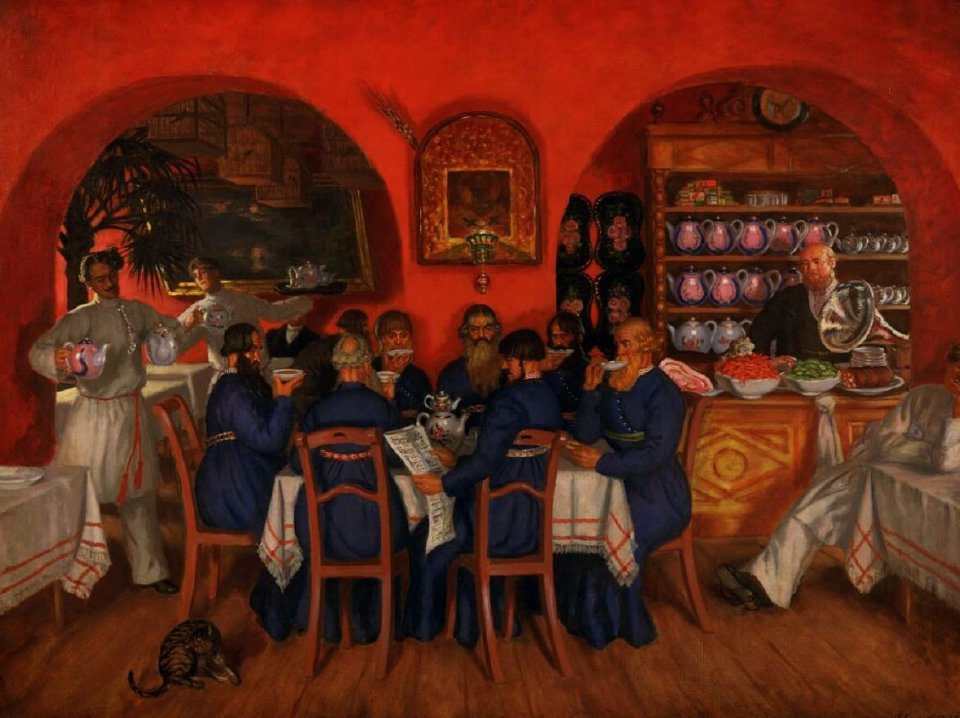
Another partner “not just for a one-off” was an 18-year-old youth — apparently a hired servant living in his household. Medvedev describes him as “developed,” meaning not a child but already a physically mature young man, but he still sees a moral problem in the situation:
“But why am I training a young boy (though, to be sure, developed)? … three more times, even in the previous apartment, I had with him a lustful relationship of mutual onanism; he is a little timid, but it seems he enjoys it too.”
— the merchant Pyotr Medvedev, from his diary
His other relationships with men were usually casual. Most often they were with young cab drivers — the city “taxi drivers” of that era, who carried passengers in horse-drawn vehicles. Some agreed to intimate encounters for 30-50 kopecks, and sometimes, he says, there were those who agreed “just because.”
He also found partners among bathhouse attendants — workers in public bathhouses who served visitors, managed the steam rooms, and kept order. In one episode, he went with a friend to a Moscow bathhouse where, as he put it, he engaged in “onanism and kulism.”
Repentance and Attempts to Fight Himself
At times Medvedev arrived at the thought that he ought to take a mistress “for health” — as if to find a “proper” outlet for himself. But his faith gave him no peace: he continued to consider homosexual practices a sin, and this led to a constant internal war.
“Of course, the sensation is pleasant, sweet, passionate — but it is all momentary. And what will it be like to pay afterward; for all this, in life — in deeds and in health, and after death — by hell and judgment… Sinful against God; shameful before people; painful to the conscience before oneself.”
— the merchant Pyotr Medvedev, from his diary
But fighting his own sexuality turned out to be very difficult. He repented, tried to “pull himself together,” but then returned to the same things again — and experienced it again as a cycle of sin and repentance.
The Diary as a Mirror of its Era
Medvedev’s diary contains not only his personal story, but also a portrait of a time when Russia was changing quickly. These were the years of Alexander II’s reforms: society debated personal freedom, the role of the family, the meaning of marriage, the boundaries of what was acceptable — even though many subjects still could not be discussed out loud in public.
Medvedev writes about himself, but at the same time he captures the era’s overall nervous mood. His attempts to reconcile strict religious rules with “earthly” desires show a larger 19th-century problem: the collision between a familiar, tightly regulated way of life and new attitudes, in which people wanted more personal freedom — at least in their thoughts and private lives.
Comparing his “sins” with the demands of faith, Medvedev keeps running into the same question: where does society’s and the state’s right to control a person end — and where does the territory of private life begin, where no one should interfere?
That is why Pyotr Medvedev’s diary matters not only as a document about one person’s sexuality. It is also evidence of how social views and legal norms were changing in the 19th century — and how those changes were reflected in the life of someone who did not belong to the elite.
References and Sources
- Из дневника купца П. В. Медведева (1854–1861 гг.): документы из ЦИА Москвы // Московский архив: Историко-документальный альманах. Кн. 2. М., 2000. [From the Diary of the Merchant P. V. Medvedev (1854–1861): Documents from the Central Historical Archive of Moscow]
🇷🇺 LGBT History of Russia
General history
- Homosexuality in Ancient and Medieval Russia
- The medieval Arabic source that called the women of the Rus the world's first lesbians
- The Homosexuality of Russian Tsars Vasily III and Ivan IV the Terrible”
- Peter the Great’s Sexuality: Wives, Mistresses, Men, and His Connection to Menshikov
- Homosexuality in the 18th-Century Russian Empire — Europe-Imported Homophobic Laws and How They Were Enforced
- Russian Empress Anna Leopoldovna and the Maid of Honour Juliana: Possibly the First Documented Lesbian Relationship in Russian History
Folklore
Biographies
- Grigory Teplov and the Sodomy Case in 18th-Century Russia
- Russian Poet Ivan Dmitriev, Boy Favourites, and Same-Sex Desire in the Fables 'The Two Doves' and 'The Two Friends'
- The Diary of the Moscow Bisexual Merchant Pyotr Medvedev in the 1860s
- Sergei Romanov: A Homosexual Member of the Imperial Family
- The Possible Homosexuality of Grand Duke Nikolai Mikhailovich of the Romanov Family
- Andrey Avinoff: A Russian Émigré Artist, Gay Man, and Scientist
 Subscribe to our Telegram channel (in Russian): Urania. With Telegram Premium, you can translate posts in-app. Without it, many posts link to our website, where you can switch languages — most new articles are published in multiple languages from the start.