Grigory Teplov and the Sodomy Case in 18th-Century Russia
Nine serfs accuse their master of rape.
Contents
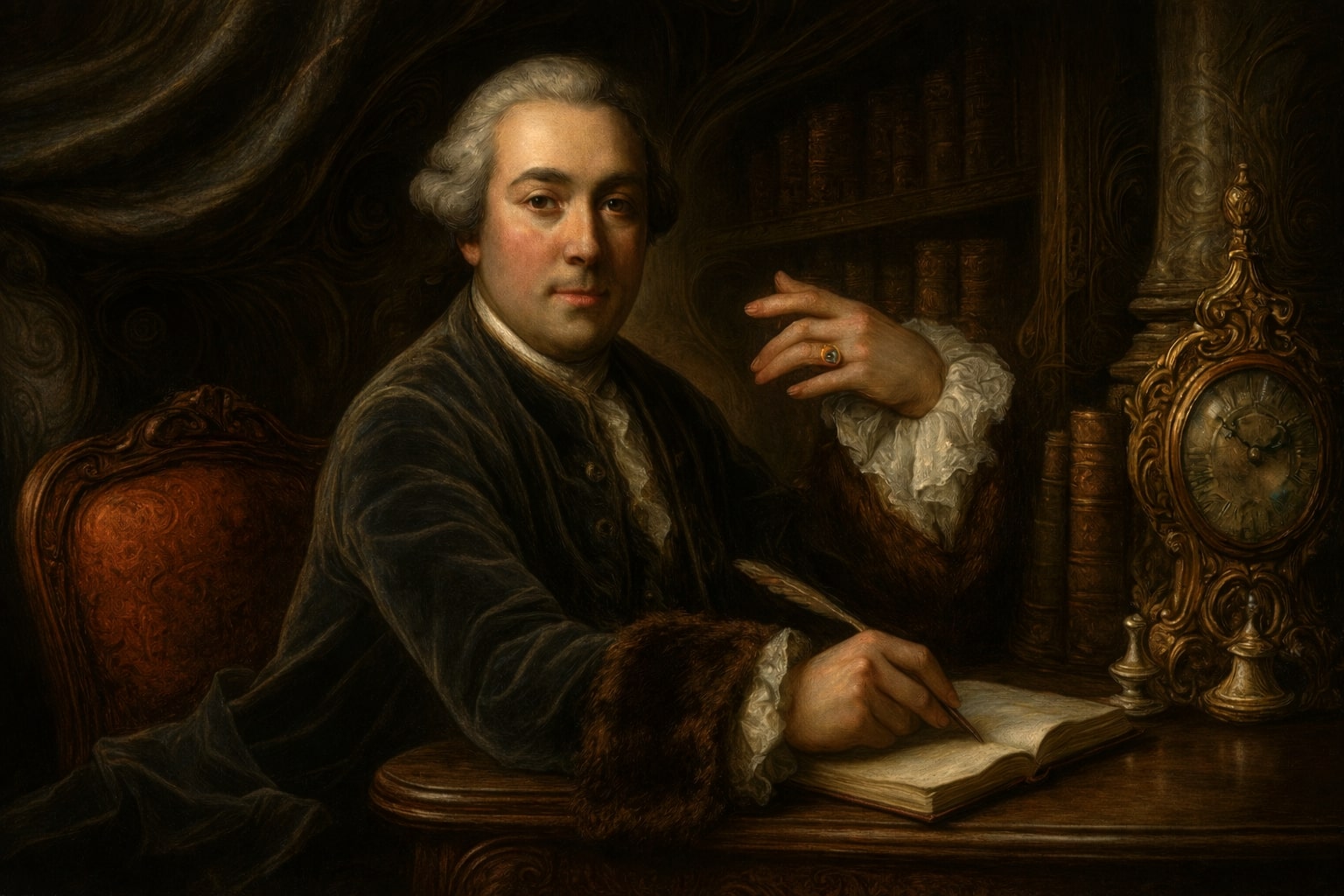
“Having summoned him to his bed, first caressing him and holding out promises of reward, and in the end also threatening him with a beating, he forced him to commit muzhelozhstvo (literally “lying with a man”) on him.” This is a line from the interrogation protocol of a serf peasant, who accused his master, the statesman Grigory Nikolayevich Teplov, of “muzhelozhstvo” (a historical legal and church term usually translated as “sodomy”) and of rape. The materials of this investigation lay in the archives of the Secret Expedition (Russian: Тайная экспедиция; Taynaya ekspeditsiya) for over two centuries, until the historian Mikhail Osokin discovered them and introduced them into academic circulation in 2013.
In the 18th century, Teplov made an unusual career: he rose from a poor background to become a notable figure at court. Before turning to the court case and its consequences, let us trace Teplov’s path to the heights of power.
“… his vice was that he loved boys, and his virtue — that he strangled Peter III.”
— Venetian adventurer and writer Giacomo Casanova, “History of My Life”
Childhood and Youth
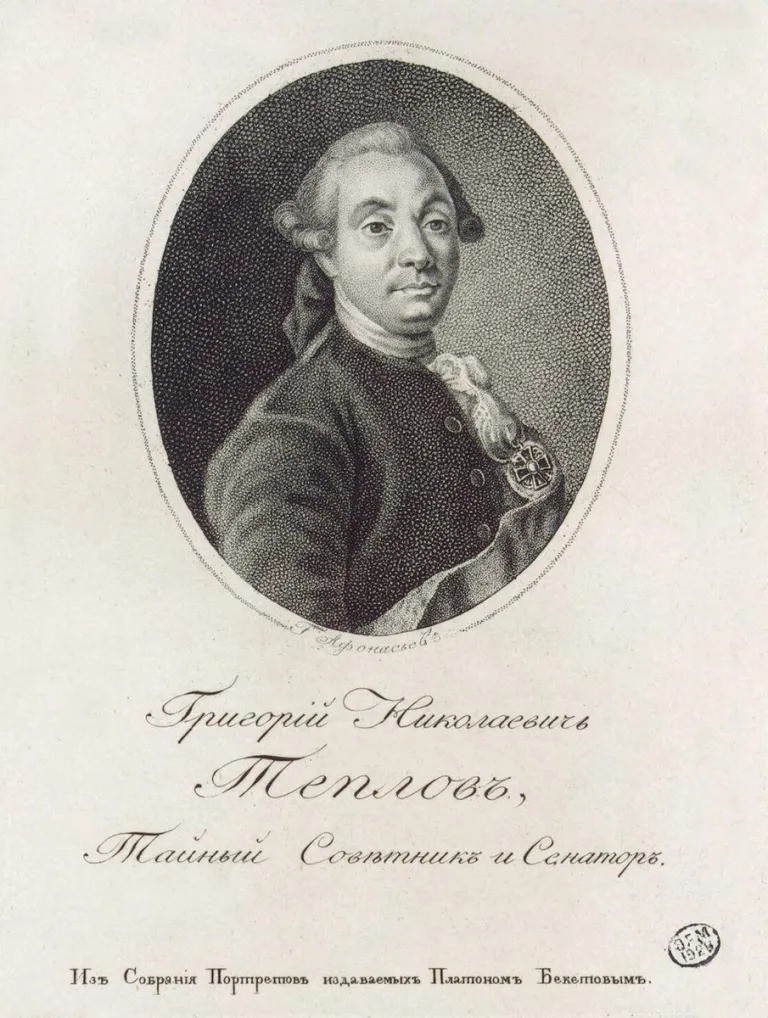
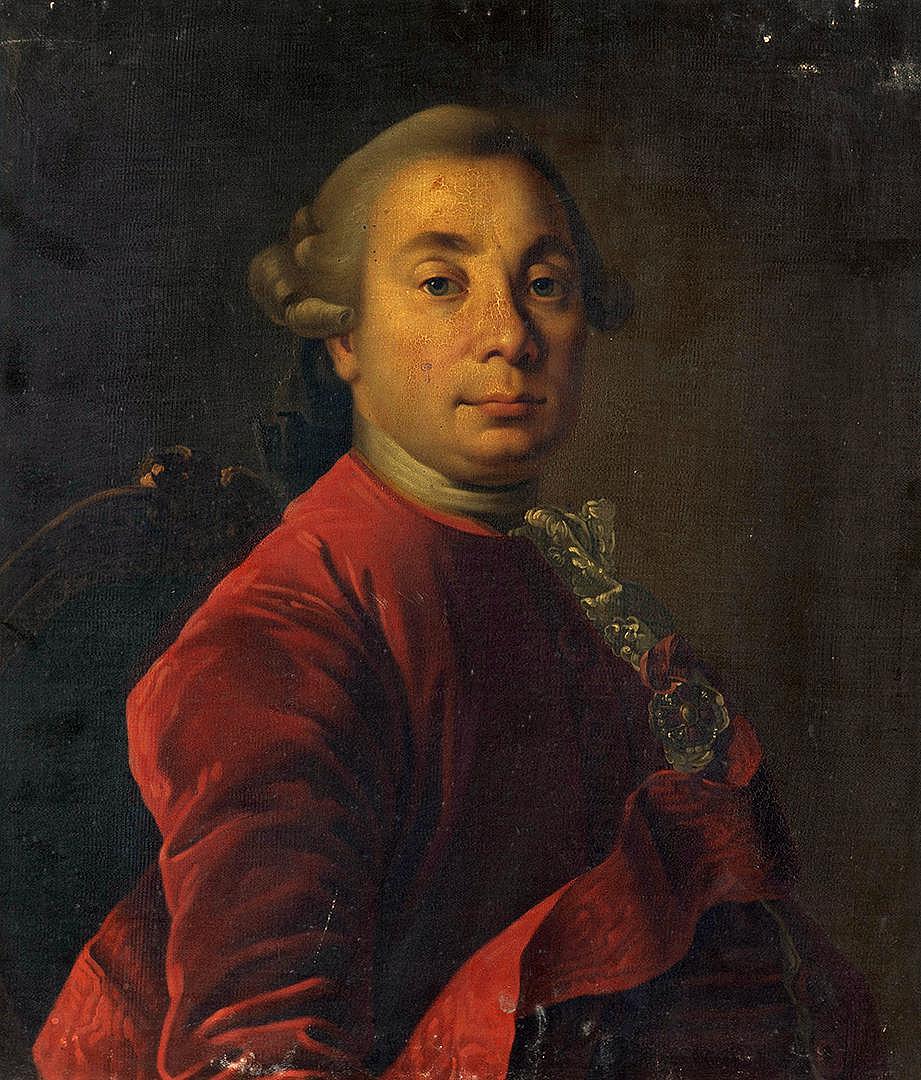
Grigory Nikolayevich Teplov was born in Pskov. The exact year of his birth is unknown: prone to mystification, Teplov indicated 1714 or 1716 in documents during his lifetime, but 1711 is carved on his tombstone in the Church of Lazarus of the Alexander Nevsky Lavra (Russian: Александро-Невская лавра; Aleksandro-Nevskaya lavra).
Teplov’s father served as a stoker (Russian: истопник; istopnik) — he heated and repaired stoves. It is believed that the surname derived from this trade. However, rumors circulated in society that Grigory’s real father was a Pskov hierarch, and later the highly influential Archbishop of Novgorod, Feofan Prokopovich (Russian: Феофан Прокопович) — an intellectual of the Petrine era and an organizer of education. According to this version, the church hierarch gave his illegitimate son to the stoker to be raised in order to hide his violation of the vow of celibacy.
These rumors are indirectly confirmed by the colossal attention and funds that Prokopovich invested in the boy. Teplov was raised in the elite bishop’s school at the Karpovka Metochion (Russian: Карповское подворье; Karpovskoye podvorye) in Saint Petersburg, and then went to Prussia at his patron’s personal expense to study botany and philosophy.
Upon his return, he entered the academic environment. In 1741 or 1742, Teplov entered the service of the Petersburg Academy of Sciences and received the position of adjunct (assistant professor). He studied botany and simultaneously gave lectures on Christian Wolff. This German thinker was extremely popular in Europe at the time: he was valued for his desire to build philosophy as a strict system with a consistent derivation of propositions. For many students and officials of the 18th century, Wolffianism served as a convenient introduction to science.
Parallel to his service, Teplov engaged in painting, which was considered an important part of education in Prokopovich’s school. Today, four of his works are known: one is kept in the Hermitage, and three more — in the Kuskovo Estate Museum in Moscow.
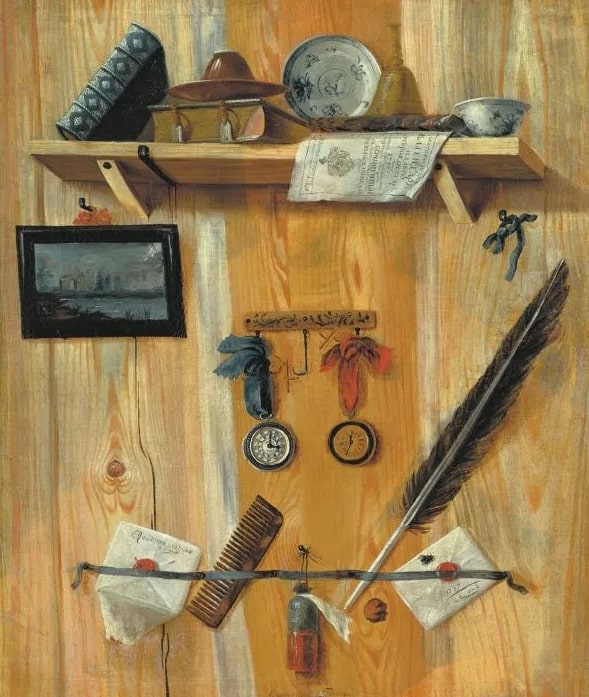
Teplov painted still lifes known as obmanki (from the French trompe-l’œil — “deceiving the eye”), which create the illusion that the depicted objects exist in real three-dimensional space. However, painting did not become his main occupation: Teplov’s further career turned out to be connected with dangerous political intrigues.
In 1740, he was implicated in the case of Cabinet Minister Artemy Petrovich Volynsky, who was accused of a state conspiracy. Among the evidence was a painting of Volynsky’s family tree. It was supposed to emphasize the family’s connection with the Rurik dynasty (Russian: Рюриковичи; Ryurikovichi) and thereby justify possible claims to the throne. Volynsky commissioned Teplov to paint this picture.
Teplov avoided punishment: the painting was destroyed in time, and he managed to prove that his involvement was purely technical. According to his words, he only sketched the tree in pencil under the guidance of another conspirator. Volynsky was executed, and Teplov was acquitted.
Leadership of the Academy of Sciences
Empress Elizabeth Petrovna’s favorite, Count Alexei Grigoryevich Razumovsky, appreciated Teplov’s education and entrusted him with the upbringing of his fifteen-year-old brother Kirill. Teplov became the young man’s mentor, and together they set off on an educational journey across Europe. Kirill studied in Königsberg, Berlin, and Göttingen, after which they visited France and Italy.
In the spring of 1745, the travelers returned to Saint Petersburg, and just a year later, eighteen-year-old Kirill was appointed President of the Academy of Sciences — the main scientific institution of the Russian Empire. Such an early appointment was explained not by the young man’s merits, but by the colossal influence of his older brother at court.
Formally, the Academy was headed by Kirill Razumovsky, but the real management was concentrated in Teplov’s hands. Having taken several key positions, he monopolized all the main decisions, while Razumovsky only signed the papers prepared by him. Teplov behaved as if the Academy were his personal appanage principality.
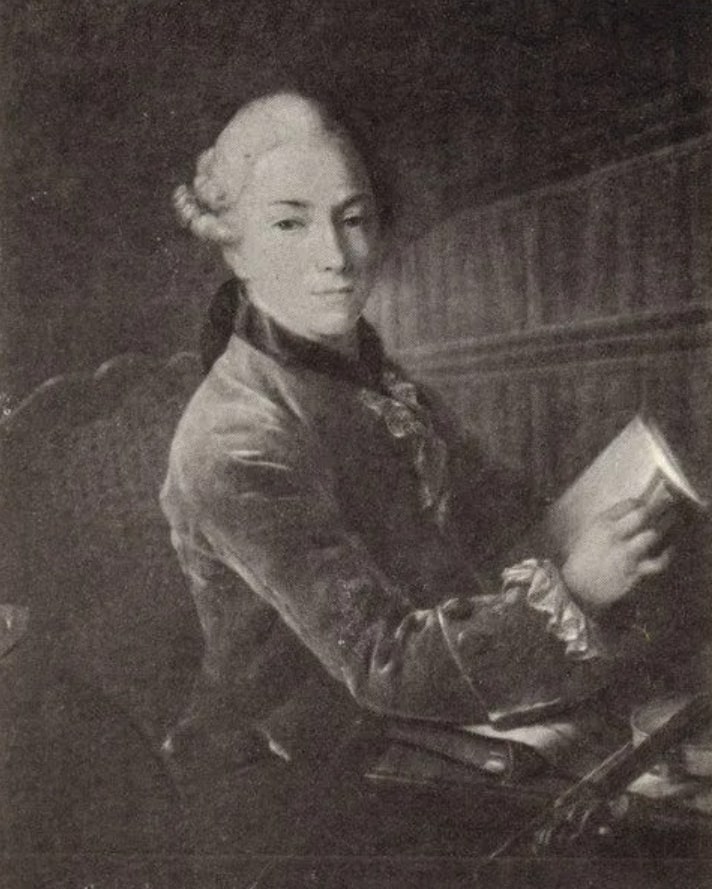
According to the testimonies of academicians, Teplov turned out to be a worthless leader. An administrator was expected to extinguish conflicts in the scientific community, but Teplov, on the contrary, incited enmity and constantly quarreled with professors himself.
Once, an anonymous pamphlet appeared at the Academy, mocking the scientists and caustically criticizing Teplov himself. Suspecting the poet Vasily Kirillovich Trediakovsky of authorship (allegedly recognizing his writing style), Teplov did not limit himself to an official complaint about “improper behavior”: he summoned the poet to his office and “threatened to stab him with a sword.”
The administrator’s sharpest and longest conflict flared up with Mikhail Vasilyevich Lomonosov. The scientist was so tired of the constant clashes that he asked the empress to rid the Academy of “Teplov’s yoke.” However, the court connections of the favorite proved stronger: Lomonosov’s complaints remained without consequences, and his colleagues had to put up with it. Over time, the open confrontations subsided, but the muffled dissatisfaction with Teplov did not disappear anywhere.
Teplov’s Service in Little Russia
The Razumovsky brothers came from a Cossack background. In 1750, Elizabeth Petrovna appointed Kirill Razumovsky as hetman — the head of the Cossack administration and army of Little Russia (Russian: Малороссия; Malorossiya, as the lands of modern Left-Bank Ukraine with the environs of Kyiv and Chernihiv were called in the empire).
Along with the hetman, Grigory Teplov also went to Little Russia. Having taken a key position in the chancellery, he concentrated the entire document flow in his hands. Control over decrees made Teplov effectively the second person in the region after Razumovsky.
Teplov’s administrative legacy in Little Russia proved to be dual. On the one hand, bribery flourished under him, and it was he who prepared the ground for the enserfment of the local peasants. Teplov compiled the famous “Note on Disorders in Little Russia,” which served as the main ideological justification for the liquidation of the hetmanate by Catherine II in 1764. In this document, he criticized the abuses of the Cossack elders and insisted on imperial unification. According to the traditional version of the historian Sergey Mikhaylovich Solovyov, the note was commissioned by Catherine herself, but modern researchers (in particular, Tatyana Anatolyevna Kruglova) believe that Teplov began working on it back during the reign of Elizabeth Petrovna.
On the other hand, Teplov planned to open the first Little Russian university in Baturyn and scrupulously collected materials on local history. Later, this information formed the basis of one of the first historical works about the region, thanks to which Teplov is considered one of the founders of Ukrainian historiography.
Marriages and Relations With Peter III
Grigory Teplov was married twice. His first wife, a Swedish woman who bore him two children, died in 1752 for an unknown reason.
Two years later, Teplov married for the second time — to Kirill Razumovsky’s niece Matryona Gerasimovna Demeshko-Streshentsova. Although the marriage was official, the spouses’ relationship remained open. In 1756–57, Grand Duke Peter Fyodorovich (the future Emperor Peter III) became passionately infatuated with Matryona. The affair ended anecdotally: the beloved sent the Grand Duke a four-page letter, demanding a written reply. Peter, who harbored an organic disgust for reading and writing, flew into a rage, and the romance instantly ceased.
The Teplovs’ family life did not work out either: in 1776, Matryona left her husband and lived, in his words, “on someone else’s upkeep.”
Teplov’s Role in Catherine II’s Rise to Power
Having ascended the throne at the end of 1761, Peter III did not forget old grievances. On March 2 (13), 1762, Teplov was arrested and thrown into the Peter and Paul Fortress (Russian: Петропавловская крепость; Petropavlovskaya krepost) for “disrespectful words about the emperor.” Razumovsky’s intercession saved the prisoner from torture: soon Teplov was released, granted the rank of Active State Councilor, but immediately sent into retirement with a mocking order to accompany the emperor on the violin.
This humiliation pushed Teplov into the ranks of the conspirators preparing the overthrow of the emperor. The coup was successful: Peter III was removed from power, soon “suddenly” died, and Catherine II ascended the throne.
As one of the most educated participants in the conspiracy, Teplov received a crucial task — to draft the manifesto on Catherine’s accession to the throne. Historical tradition also attributes to him the authorship of the humiliating text of Peter III’s abdication, written in the first person.
In European memoirs (in particular, those of Giacomo Casanova and the diplomat Georg von Helbig), a myth took root that Teplov personally participated in the strangulation of the overthrown monarch in Ropsha. Modern science denies his direct participation in the murder, placing the blame on Alexei Grigoryevich Orlov and Fyodor Sergeyevich Bariatinsky, but rumors of Teplov as the main ideologist of the reprisal became firmly established.
“Recognized by all as the most deceitful fraudster of an entire state; yet very clever, ingratiating, greedy, flexible — ready to be used for any business for money.”
— Austrian ambassador Count Florimond Claude de Mercy-Argenteau, from a diplomatic dispatch
Participation in the coup elevated Teplov to the peak of his career. He received twenty thousand rubles and several high government posts, regularly dined with Catherine the Great, and developed state reforms for her.
However, already in 1763 his position was shaken: an unprecedented sodomy case was initiated against the favorite.
The Sodomy Case Involving Serfs
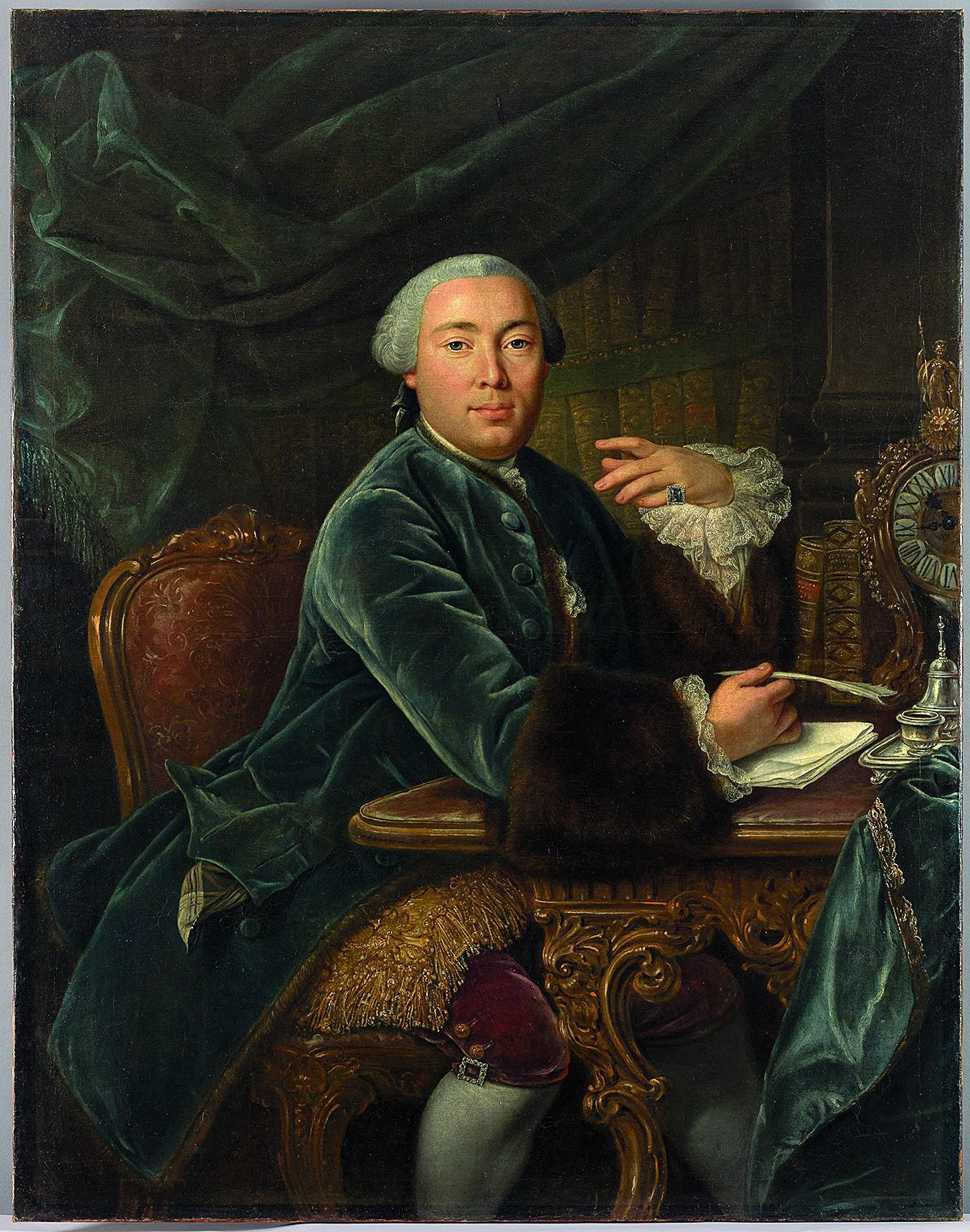
Nine serfs accused their master Grigory Teplov of long-term sexual violence. According to their words, for six years he forced the servants into acts that were referred to in the documents of the time as “muzhelozhstvo.” For a long time the peasants remained silent, but then they united and filed a collective complaint.
The petition (Russian: челобитная; chelobitnaya) was sent to the empress’s “complaints cabinet” headed by Ivan Perfilyevich Yelagin. Yelagin promised to bring the matter to Catherine II, but preferred to sweep the paper under the rug — probably to avoid a scandal around an influential dignitary. For some time it seemed that the story would not come out, but soon Teplov’s wife found out about it.
Matryona Teplova received a copy of the petition from a relative of one of the victims. She was shocked, “was in considerable grief and cried,” and then summoned the serf to personally verify the truthfulness of the accusations. Soon Kirill Razumovsky also learned about the scandal (however, it is possible that he had guessed what was happening even earlier).
Having learned about the complaint, Teplov decided to speak with each of the rebels in private. He summoned them one by one to his bedroom and tried to dissuade them from further actions. According to the peasants, the master explained that as an influential official and a person close to the empress, he would avoid punishment in any case.
He also reminded them that the complainants themselves would inevitably face repressions: serfs have almost no rights, and the investigation and the court will always believe the “master” more willingly than the “servant.” Judging by these stories, Teplov did not so much threaten as cynically state the facts, trying to stop the course of the case.
“…how did you dare to submit a petition about me to Yelagin, you know that THE EMPRESS favors me, and I am a useful man, and THE EMPRESS will not want to lose me from among her people, and I can always be believed more than servants. […] and as soon as they take you in for questioning, they will start torturing you, and as for me, even if they ask, I will only say that you accused me for nothing, and so they will torture you to death.”
— Grigory Nikolayevich Teplov, according to the peasants from the investigation materials of the Secret Expedition
When it became clear that an official trial could not be avoided, Teplov tried to persuade the serfs to give false testimony. He suggested they voice another version: as if they had seen the master with some “wench” and mistakenly accused him of something that had not happened. This would allow the serious accusation of violence to be reclassified as a less dangerous false denunciation. Teplov assured them that the punishment for such slander would be relatively mild — for example, a regular flogging. In return, he promised to grant freedom to anyone who wanted it.
For the sake of appearances, the peasants agreed and promised to confirm the invented version. However, they did not abandon their intentions: they secretly filed a new petition directly to Catherine II.
The empress handed the case over to the Secret Expedition under the Senate — the highest organ of political police under the leadership of Stepan Ivanovich Sheshkovsky. This department was engaged in the investigation of particularly important cases, primarily state crimes.
The Investigation and the Testimonies of the Serfs
In the investigation materials, the words skvernodeystviye (“obscene act”) and the expression “to do filth into the cheek” figured — the official bureaucratic terminology of the Secret Expedition to denote oral sex.
The first to testify was Vlas Kocheyev. He had previously belonged to Kirill Razumovsky, and after coming of age he was transferred to Teplov as a kamerdiner (from the German Kammerdiener — “room servant”). His duties included the everyday service of the master: he was responsible for the wardrobe, helped with shaving and bathing, and accompanied him on trips. Kocheyev was married, but marriage did not protect him from the master’s harassment. During the interrogation, he described what happened as follows:
“Teplov kept him decently, and in that year, when he was already 20 years old, in the summertime, […] he slept with him, Teplov, in the bedroom. Having summoned him to his bed, first caressing him and promising a reward, and in the end also threatening him with beatings, he forced him to commit muzhelozhstvo on him. […] And on top of that, Teplov forced him to do such filth into his cheek, which he was compelled to do, also fearing beatings, and for that Teplov rewarded him, Kocheyev, with money and clothes.”
— from the investigation materials of the Secret Expedition
According to the peasants, Teplov strictly forbade telling anyone about what was happening, especially priests. Kocheyev was a religious man and feared sin most of all. Once in Little Russia, he nevertheless decided to confess. Having listened to him, the priest imposed an epitimia (church penance) on the young man — he forbade him to attend church for three hundred days.
Apparently, this seemed insufficient to Kocheyev, and later he tried to find spiritual purification from a Moscow priest. The latter reacted to the confession surprisingly indifferently. Teplov himself, having learned about the servant’s torments, declared:
“[…] there is no sin in that, and it’s the fool-priests who invented it for their own profit, and if you say anything, they won’t believe you, and I will say that you’ve gone rabid or lost your mind.”
— Grigory Nikolayevich Teplov, according to the peasants from the investigation materials of the Secret Expedition
The testimonies of the other victims are largely of the same type. The investigators of the Secret Expedition recorded them in standard bureaucratic language and did not go into physiological details, focusing on circumstances formally significant for the investigation: whether the sin was committed on fasting days and who among outsiders knew about what had happened.
According to the serfs, the master acted according to a well-established scheme: first he found fault with their work, then moved on to threats of beatings and achieved obedience, and afterward sometimes gifted the victim with money or clothes.
Before submitting the petition, the peasants (all of whom were literate) exchanged notes so that their testimonies would match and look consistent.
Nevertheless, differences in individual episodes show that the methods of pressure changed depending on the character of the victim. Thus, Teplov left the seventeen-year-old footman Alexei Semyonov alone after the young man reported a confession in a Moscow church. It hardly follows from this that the dignitary feared priests as bearers of authority, but the very publicity at the confession clearly forced him to retreat.
The next to be interrogated was twenty-two-year-old Alexei Yanov, who served as a butler for Count Razumovsky. After the violence, Teplov warned him: if the servant goes to confession, it is Yanov who will be sent to a monastery for repentance, while Teplov himself “will have no shame.” Despite the threat, Yanov still turned to a Moscow priest, but “that priest told him to stay away from it as much as possible.”
The fourth testimony was given by twenty-four-year-old Ivan Tikhanovich, a native of Little Russia. According to him, Teplov raped him in the bedroom of Razumovsky’s Petersburg house. Seeking obedience, the master assured the young man that such a thing was a common occurrence in the count’s house.
“And you, a young man, can bring repentance to the Lord God in your mind, and this is the same as debauching a wench, only between men, and in the house of Count Kirill Grigoryevich there are many singers and musicians, and where are they all to find wenches for themselves, I think that they also debauch each other, and I am not the only one who does this, others do it too, only you keep quiet about it.”
— Grigory Nikolayevich Teplov, according to the peasants from the investigation materials of the Secret Expedition
The story of the fifth victim, nineteen-year-old Vasily Lobanov, stands out for its demonstrativeness: according to his words, the coercion occurred right at the table when he was serving tea to the master.
“…being […] in the house of that Teplov, he served him tea. Then in private he, Teplov, having taken out his secret member, committed malakia [masturbation], […] and then Teplov forced him to do such filth into his cheek, which, also fearing beatings, he did, and for that he rewarded him, Lobanov, with money and clothes…”.
— from the investigation materials of the Secret Expedition
The remaining four serfs could not be interrogated, although the complaint was filed on their behalf as well.
“I myself know better than the priests what is a sin and what is not.”
— Grigory Nikolayevich Teplov, according to the peasants from the investigation materials of the Secret Expedition
The outcome of the case turned out to be tragic for the complainants themselves — exactly what Teplov had predicted for them from the very beginning. The final decision was made personally by Catherine II. Guided by political pragmatism, the empress classified the materials and issued a decree forbidding the victims, under pain of death, to talk about what had happened. After that, all the rebels were exiled to Siberia, forcibly enrolled in the Tobolsk Garrison Regiment.
Back in 1715, Peter I issued the “Military Articles” (Russian: Воинский артикул; Voinsky artikul), which punished muzhelozhstvo, but de jure this code applied only to military personnel. For the civilian population of the Russian Empire, there was no special secular law: same-sex relations were considered a crime against morality subject to church penance. The secular police intervened only in cases of gross violence or in the presence of a political subtext. Theoretically, Teplov could have been prosecuted for violence against unfree people, but the decrees of the 1760s consistently deprived peasants of any legal subjectivity.
As a result, Teplov suffered no punishment. Moreover, a few years later he rose to the rank of Privy Councilor and received new orders. Over time, the dignitary restored relations with his wife, and later their daughters Maria and Natalia were born.
This case clearly demonstrates the lack of rights of serfs in the Russian Empire. Even in the era of “enlightened absolutism,” state protection mechanisms worked exclusively in the interests of the nobility. Serfs were viewed as a labor force and living property, entirely dependent on the whim of the owner.
Teplov’s Life After the Investigation
After the scandal with the serfs, Teplov changed his habits and in subsequent years formed his inner circle no longer from serfs, but from young noble secretaries, among whom homosexuals were found.
In his memoirs, Giacomo Casanova mentions one of Teplov’s lovers — Lieutenant Lunin the younger. The Venetian does not give his full name, but researchers believe that he is referring to Pyotr Mikhaylovich Lunin (the brother of General Alexander Mikhaylovich Lunin and the uncle of the future Decembrist Mikhail Sergeyevich Lunin), who was about seventeen years old at the time. Casanova describes the young man as so beautiful that he himself almost “gave in to temptation.”
“…I found the traveling couple there, as well as two of the Lunin brothers. […] The younger was a pretty blond with an entirely girlish appearance. He was among the lovers of the cabinet secretary Teplov, and being a resolute fellow, he not only placed himself above all prejudices but did not hesitate to take pride in the fact that with his caresses he could enthrall every man he kept company with. […] Not suspecting such tastes in me, he decided to embarrass me. With that in mind, he sat down beside me at the table and pestered me so persistently throughout dinner that I honestly took him for a girl in disguise. After dinner, sitting by the fire beside him and a daring Frenchwoman, I told him of my suspicions. Lunin, who prized his belonging to the stronger sex, immediately displayed convincing proof of my mistake. Wanting to see whether I could remain indifferent at the sight of such perfection, he moved closer and, once he was sure he had delighted me, took up the position necessary, as he said, for our mutual bliss. I confess, to my shame, that sin would have happened if not for [the Frenchwoman].”
— Giacomo Casanova, “History of My Life”
When the rumors around the Secret Expedition finally died down, Teplov quietly continued his career in the highest state posts. He prepared a multitude of reports for Catherine II on reforming the system of administration and the economy.
In 1765, the dignitary became one of the founders of the Imperial Free Economic Society. In parallel, he was engaged in the creation of gymnasiums, financed orphanages, and was one of the first to begin introducing tobacco brought from America into Russian agriculture, teaching peasants how to grow it.
“Teplov — immoral, bold, intelligent, deft, able to speak and write well.”
— historian Sergey Mikhaylovich Solovyov, “History of Russia from the Earliest Times”
Grigory Nikolayevich Teplov died of a fever in 1779, in his sixty-eighth year of life. He was buried in the Alexander Nevsky Lavra in Saint Petersburg.
Teplov’s Legacy
Like many intellectuals of the 18th century, Teplov was an encyclopedist — a person of the broadest interests, working simultaneously in several fields of knowledge and creativity.
In addition to painting, he proved himself as a talented musician and compiler of the first printed collection of Russian romances, “Idleness Between Tasks, or a Collection of Various Songs” (1759). The lyrics of these songs are built on motifs of unrequited love, betrayals, and suffering — plots that met the demands of the gaining strength “sensitive” culture. Teplov’s romances are still performed today.
▶️ Grigory Teplov – “V otradu grusti” (“A Comfort in Sorrow”), romance (YouTube)
“Not only did he sing himself in a fine Italian manner, but he also played the violin very well.”
— academician Jakob Stählin, “Music and Ballet in Russia of the 18th Century”
Furthermore, Teplov acted as a philosopher and translator. He translated the works of Christian Wolff into Russian and wrote his own philosophical compositions. The most famous of them is “Instruction to a Son” (1768), where the author expounds at length on morality, kindness, and generosity. In this treatise, Teplov publicly declared Christian ideals and criticized Voltairianism, which, as he complained in conversations with the writer Denis Ivanovich Fonvizin, “corrupted the youth.” However, the intellectual elite perfectly felt the falsity of this moralizing: the poet Alexander Petrovich Sumarokov wrote a caustic parody with the same title, where a dying father instructs his son exclusively in vices.
“Love, or amorous passion, is the most pleasant and the most mad of passions. […] Though love is blind, it always dwells in the eyes, and even the proudest hearts submit to it. Everything that lives with a soul owes its very existence to it. It has no regard for sex, nor for age.”
— Grigory Nikolayevich Teplov, “Instruction to a Son”
References and Sources
- РГАДА. Ф. 7, оп. 2, ед. хр. 2126. [RGADA – Russian State Archive of Ancient Documents, Fond 7, Inventory 2, File 2126]
- Кочеткова Н. Д. Теплов Григорий Николаевич // Словарь русских писателей 18 века, вып. 3. [Kochetkova N. D. – Teplov Grigory Nikolaevich]
- Теплов Г. Н. Наставление сыну. 1768. [Teplov G. N. – Instruction to a Son]
- Гусев Д. В. «Обманка» Г. Н. Теплова и неизвестные факты его биографии. [Gusev D. V. – “Decoy” by G. N. Teplov and Unknown Facts of His Biography]
- Лаврентьев А. В. К биографии «живописца» Г. Н. Теплова. [Lavrentiev A. V. – On the Biography of the “Painter” G. N. Teplov]
- Смирнов А. В. Григорий Николаевич Теплов – живописец и музыкант. [Smirnov A. V. – Grigory Nikolaevich Teplov as Painter and Musician]
- Теплов Г. Н. // Русский биографический словарь, в 25 т. [Teplov G. N. – Russian Biographical Dictionary]
- Осокин М. «Между делом сквернодействия» Григория Теплова. [Osokin M. – “Between Deeds of Debauchery” of Grigory Teplov]
- Alexander J. T. Review of Catherine the Great: Art, Sex, Politics by Herbert T.
🇷🇺 LGBT History of Russia
General history
- The Story of a Medieval Arabic Source in Which the Women of the 'Rus' Were Called the World's First Lesbians
- Homosexuality in Ancient and Medieval Russia
- The Homosexuality of Russian Tsars Vasily III and Ivan IV the Terrible
- Homosexuality in the 18th-Century Russian Empire – Homophobic Laws Borrowed From Europe and How They Were Enforced
- Ruler Anna Leopoldovna and the Maid of Honour Juliana: Possibly the First Documented Lesbian Relationship in Russian History
- Peter the Great’s Sexuality: Wives, Mistresses, Men, and His Relationship with Menshikov
- A History of Kissing Between Men in Russia
- Polmuzhichye and Razmuzhichye in the Russian North: A History of Female Masculinity
- The 1916 Corruption Case of a Secret Society of Gay Officials Who Wore a Golden Winged Penis Badge
Folklore
Biographies
- Grigory Teplov and the Sodomy Case in 18th-Century Russia
- Alexander Golitsyn: A Homosexual Man at the Head of Church and Education in the Russian Empire
- The Diary of Pyotr Medvedev, a Bisexual Moscow Merchant, 1854–1863
- Sergei Alexandrovich Romanov: A Homosexual Member of the Imperial Family
- Ivan Dmitriev, Young Favourites, and Same-Sex Desire in the Fables 'The Two Doves' and 'The Two Friends'
- Andrey Avinoff: A Russian Émigré Artist, Gay Man, and Scientist
- The Possible Homosexuality of Grand Duke Nikolai Mikhailovich of the Romanov Family
- Saint Moses the Hungarian – One of the First Queer Figures in Russian History?
- Aleksey Apukhtin: Homosexual, Poet, and Friend of Tchaikovsky
 Subscribe to our Telegram channel (in Russian): Urania. With Telegram Premium, you can translate posts in-app. Without it, many posts link to our website, where you can switch languages — most new articles are published in multiple languages from the start.