Ruler Anna Leopoldovna and the Maid of Honour Juliana: Possibly the First Documented Lesbian Relationship in Russian History
\"... she spends most of her time in the apartments of her favourite, Mengden.\"
Contents
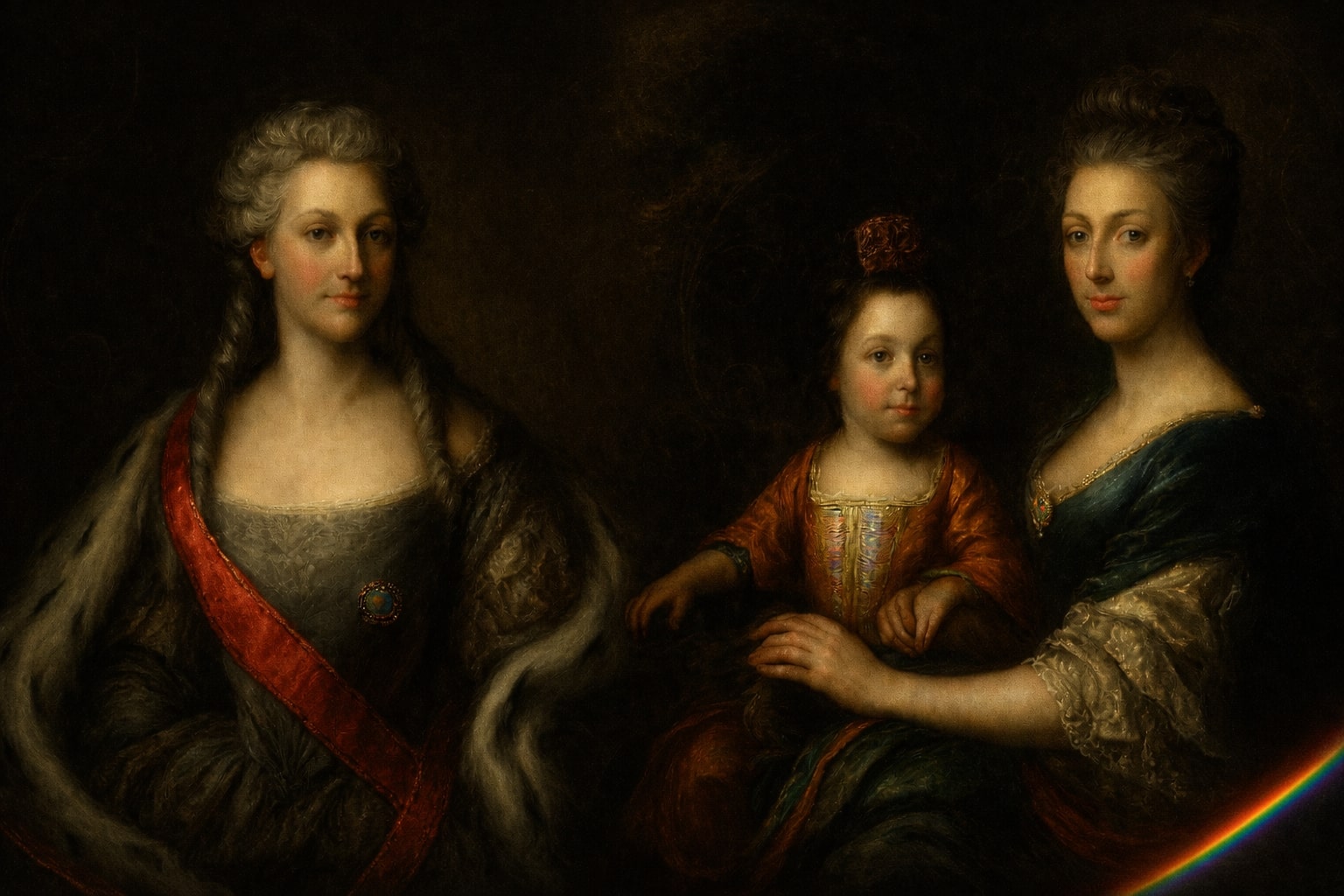
Ruler Anna Leopoldovna stood at the head of Russia for only a year and remains a relatively little-known figure. She is rarely discussed in school textbooks. Yet her relationship with her maid of honour, Augusta Juliane von Mengden, deserves attention: it may represent one of the earliest documented indications of lesbian love in Russian history.
Anna Leopoldovna and Juliana were clearly bound by a very close attachment. Historians have long debated whether this relationship was a romantic connection or an intense friendship. The facts and sources, including diplomatic dispatches and personal correspondence, allow us to reconstruct a complex picture of the intimate life of the Russian court in the 18th century.
Early Years
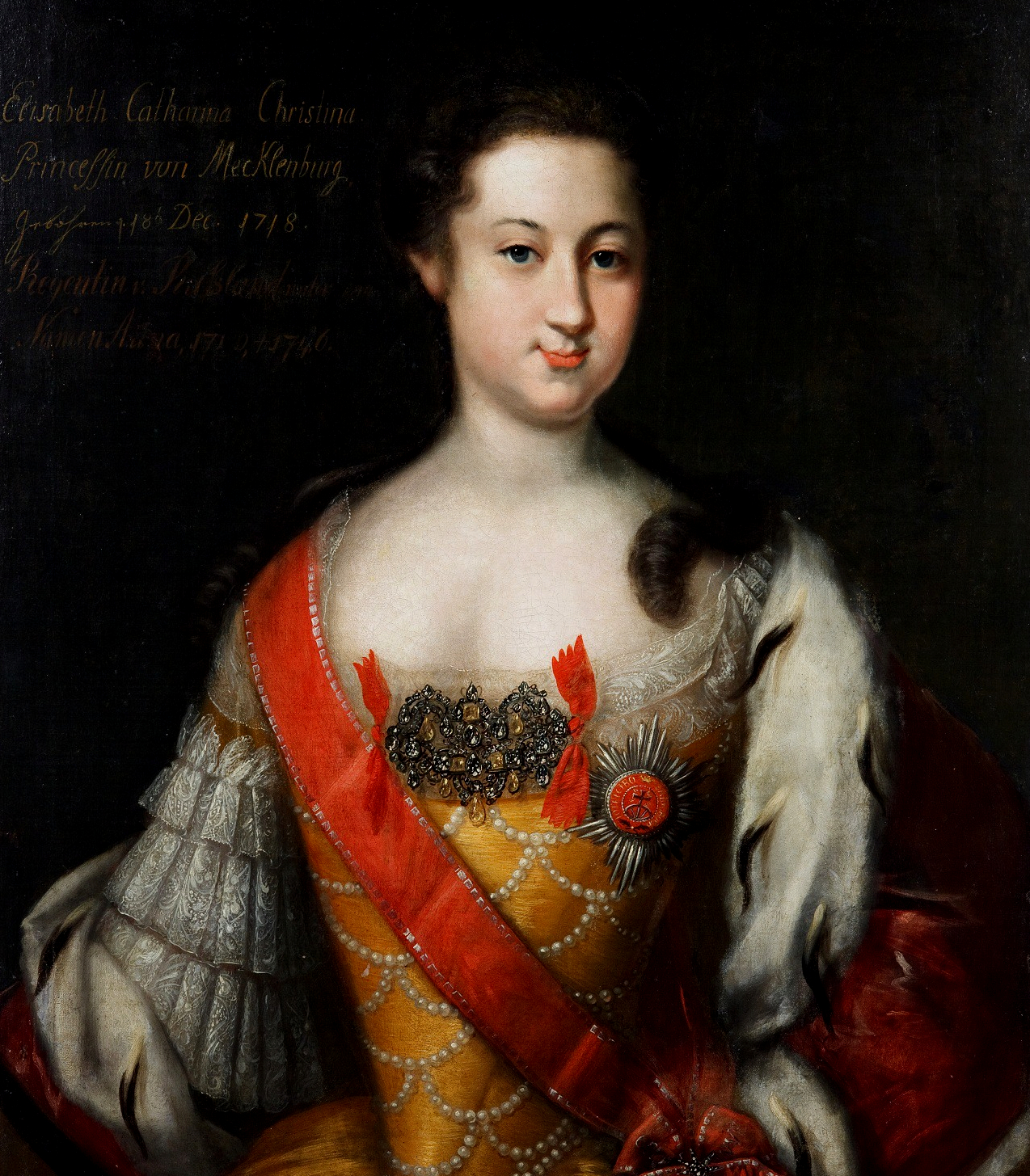
Elisabeth Katharina Christine, the future ruler Anna Leopoldovna, was born on December 18, 1718, in the German duchy of Mecklenburg-Schwerin in northern Germany. She was the daughter of Duke Karl Leopold of Mecklenburg and Catherine Ivanovna, a niece of Peter the Great. This union was the result of marriage diplomacy.
The princess spent her childhood in an atmosphere of severe family conflict: the duke had a despotic character and openly preferred other women to his wife, including his own niece. In Germany, Catherine Ivanovna was dubbed the “wild Muscovite duchess” and was met with hostility.
Unable to tolerate her husband’s harsh treatment, Catherine Ivanovna fled to Russia with her daughter in 1722. The marriage was not formally dissolved, but she never returned to her husband.
On May 23, 1733, Elisabeth Katharina Christine converted to Orthodoxy and received the name Anna Leopoldovna. This step opened her path to the succession. The baptismal rite was performed by the most prominent ideologist of Peter the Great’s reforms, Archbishop Theophan Prokopovich of Novgorod (Russian: Feofan Prokopovich; Феофан Прокопович).
Although the princess changed her name only eleven years after her arrival in Russia, she is referred to as Anna in the rest of this text.
Youth in Russia
According to the memoirs of the Holstein nobleman Friedrich Wilhelm von Bergholz, Anna, “a very cheerful little child of about four,” grew up and studied in the Izmailovo Palace in Moscow. Far from court intrigues, she lived a comparatively simple life, believing she had no claim to the Russian throne. She was raised in a relaxed atmosphere, without unnecessary formalities. She attended balls that sometimes lasted for ten hours.
The situation changed in 1730, when the princess’s aunt, Anna Ioannovna, took the throne. The childless empress immediately singled out her niece and placed her under special protection. Anna received a house on the Neva, an order of chivalry, and a substantial allowance. Tutors in German, French, and Russian were hired for her.
Meanwhile, according to contemporaries, Anna’s mother “gave herself over heavily to strong drink” and grew distant from her daughter. In June 1733, she died “of an illness.” Anna was left with almost no close relatives or loyal friends, aside from her aunt the empress. From then on, the young woman became increasingly drawn into the court environment, where nobles fought for influence and saw her as a political resource.
“The Tsarina loves her as if she were her own daughter, and no one doubts that she is destined to inherit the throne.”
— Jacobo Francisco Fitz-James Stuart y Burgh, Duke of Liria and Jérica, Spanish envoy at the Russian court (from dispatches)
The Search for a Husband and First Infatuations
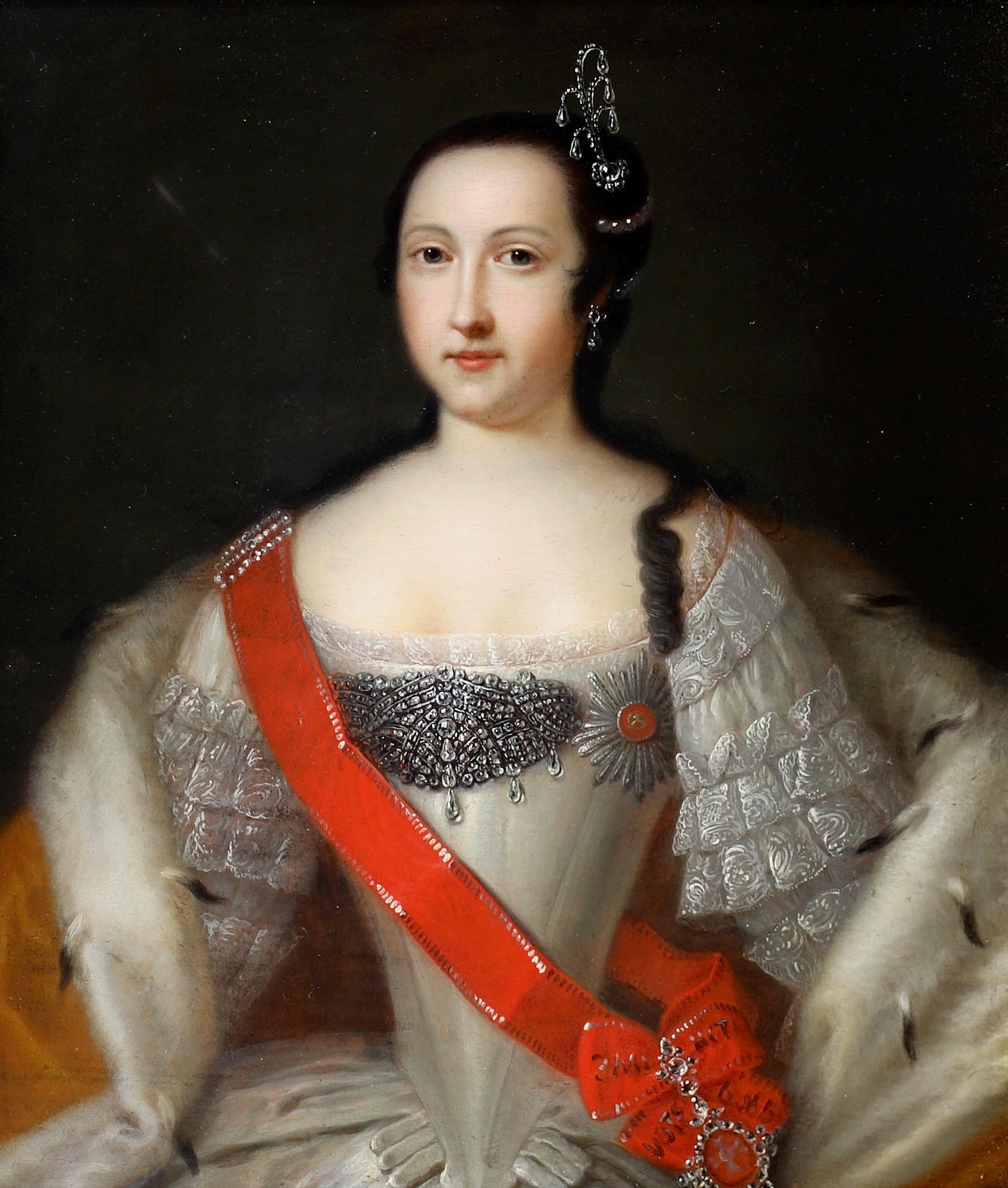
When Anna turned fourteen, plans began for a dynastic marriage. The choice fell on the eighteen-year-old Prince Anton Ulrich of Brunswick (Anton Ulrich von Braunschweig-Wolfenbüttel), the son of a German duke. This thin and short young man arrived in St. Petersburg to court her, but it quickly became clear that he was far more interested in military affairs than in Anna herself.
Anna found an escape in reading. She was especially drawn to French novels: they allowed her to detach herself for a time from the cloying routines of court life and her fiancé’s indifference.
Another of her infatuations was the Saxon envoy Count Moritz Karl von Lynar — a forty-year-old and, according to contemporaries, very attractive man. In 1735, Empress Anna Ioannovna, having learned of their secret correspondence, flew into a rage. She immediately dismissed the princess’s governess, Madame Aderkas, accusing her of indulging this connection, and exiled her abroad, while demanding that Lynar be recalled from St. Petersburg.
“Princess Anna, who is regarded as the presumed heiress, is now at an age when expectations may be formed, especially given the excellent education she has received. But she has neither beauty nor grace, and her mind has not yet shown any brilliant qualities. She is very serious, speaks little, and never laughs; this seems to me quite unnatural in so young a girl, and I think that behind her seriousness there is more stupidity than good sense.”
— Jane Vigor, British memoirist and wife of the English resident Claudius Rondeau, “Letters from a Lady, who resided some years in Russia”
The Beginning of Friendship With Juliana von Mengden
After her separation from Lynar, finding herself under the strict control of her aunt the empress, the young Anna began to grow close to her maid of honour, Juliana Mengden.
Augusta Juliane von Mengden was born on May 22, 1719, into the family of a Swedish-Livonian baron. The family belonged to the ancient and influential Baltic nobility. Juliana’s appearance at court was no accident: after the end of the Great Northern War, the integration of Baltic elites into the imperial administrative structure became a crucial element of state policy. The appointment of the young baroness as maid of honour to the potential heir to the throne was part of a system of distributing court positions among the loyal nobility.
Juliana quickly became Anna’s close friend and confidante. According to contemporary accounts, their relationship went beyond the bounds of ordinary friendship. They spent long hours alone together — in casual domestic attire, carelessly dressed, with their hair down. This gave rise to court rumours about their “non-traditional” intimacy.
“The princess did not possess dazzling beauty, but she was a pretty blonde, good-natured and gentle, yet at the same time drowsy and lazy; she disliked any kind of work and idled away the hours with her favourite maid of honour, Juliana von Mengden, for whom she felt a rare kind of friendship.”
— Nikolai Ivanovich Kostomarov, Russian historian, “Russian History in the Biographies of its Chief Figures”
The Prussian envoy Axel von Mardefeld reported to King Frederick II:
“No one can understand the source of the Grand Duchess’s supernatural attraction to Juliette [Juliana]; therefore I am not surprised that the public accuses this girl of following the tastes of the famous Sappho…”
— Axel von Mardefeld, Prussian envoy (from a dispatch to King Frederick II)
The rumours of a non-traditional connection reached such proportions that Empress Anna Ioannovna made an unprecedented decision: she ordered the young Juliana to undergo a strict gynaecological and anatomical examination. A special commission was to determine whether the maid of honour was a hermaphrodite.
The report was favourable for Juliana: it was established that she was “a girl in all parts, without any signs of the male sex.” This medical examination demonstrates that female homosexuality in 18th-century Russia was not inconceivable, although early modern medicine linked it exclusively to physiological deviations. The confirmation of anatomical “normality” formally removed the legal threat, though the whispering at court did not subside.
An Unloved Marriage and the Birth of an Heir
Over time, Anton Ulrich gained military experience and gradually won the favour of Empress Anna Ioannovna. For Anna Leopoldovna, his successes remained a matter of indifference. “I don’t like the prince. They’re keeping me only for childbirth,” she said.
Despite this, the wedding was staged on a grand scale: a ceremonial procession, ornate carriages, three fountains of wine, artillery salutes from the Peter and Paul Fortress, a grand ball, and fireworks. The main task of this union was the birth of an heir to the throne.
“All these receptions were arranged in order to unite two people who, it seems to me, hate one another with all their hearts.”
— Jane Vigor, “Letters from a Lady, who resided some years in Russia”
On August 23, 1740, Anna gave birth to a son, who was named Ivan (Russian: Ioann; Иоанн) — in honour of his great-grandfather, the brother of Peter I. Russia had an heir.
The Rise to Power
Soon Empress Anna Ioannovna fell ill and, sensing the approach of death, issued a manifesto declaring the infant Ivan the heir to the Russian throne. The regent for him, however, was not the child’s mother, but the empress’s favourite, the German Ernst Johann von Biron.
Biron held onto power for only a month. On the night of November 20, 1740, a palace coup took place. Its true architect and physical executor was Field Marshal Burkhard Christoph von Münnich.
That night he arrived at the Winter Palace; his adjutants entered through the wardrobe and woke Juliana Mengden. After speaking with Münnich, Juliana went to wake Anna. The ruler came out to the guard officers and authorized Biron’s arrest, complaining of his oppressions. The organization and physical execution of the coup remained Münnich’s military operation, while Anna acted as a figurehead. Biron was arrested and exiled.
Ivan’s father, Anton Ulrich, showed almost no interest in state affairs. Therefore, Anna Leopoldovna, who was then only 22 years old, assumed the duties of regent and became the de facto ruler of Russia.
Deconstructing the Myth of the “Lazy Ruler”
In gratitude for her support, Anna Leopoldovna generously rewarded Juliana Mengden. She received the finest dresses, an estate in Livonia, and large cash loans.
“These young women [maids of honour], having seen little of people, lacked the mind necessary for conducting palace intrigues, and so they did not involve themselves in them. But Juliana, the ruler’s favourite, wanted to take part in affairs, or, better to say, being lazy by nature, she managed to pass this vice on to her sovereign.”
— Christoph Hermann von Manstein, memoirist and participant in Biron’s arrest, “Memoirs of Russia”
By the beginning of Anna Leopoldovna’s rule, the population of St. Petersburg had reached 70,000. Vegetable gardens still remained in front of the Admiralty, Nevsky Prospect was not fully built up, and townspeople could freely bathe naked in the Fontanka River.
“There was no creature less capable of being at the head of state administration than the good Anna Leopoldovna… Without dressing, without doing her hair, with a headscarf tied around her head, she would only sit in the inner rooms with her inseparable favourite, the maid of honour Mengden.”
— Sergei Mikhailovich Solovyov, Russian historian, “History of Russia from the Earliest Times”
The image of a lazy and politically inert regent became firmly entrenched in classical historiography; however, it was purposefully constructed by Elizabeth Petrovna’s propaganda to legitimize her own coup in 1741. It was vital for Elizabeth to present her predecessor’s reign as a period of chaos.
Modern historians refute this myth. During the short year of her regency, the Complete Collection of Laws of the Russian Empire recorded 185 legislative acts passed with Anna Leopoldovna’s personal participation. According to the testimony of Chief Steward Ernst von Münnich (the son of the field marshal), the ruler “was never bored with listening to and deciding affairs… at any time.”
Anna Leopoldovna took a number of important institutional steps. On November 23, 1740, she established the post of reketmeister (an official receiving petitions) to receive and examine petitions in order to combat bureaucratic red tape and corruption in the Senate and the Synod. She energetically set about preparing reports on the treasury’s income and debts. In foreign policy, her government confirmed the articles of the 1739 Treaty of Belgrade, securing recognition from the Ottoman Empire for Russian sovereigns as emperors.
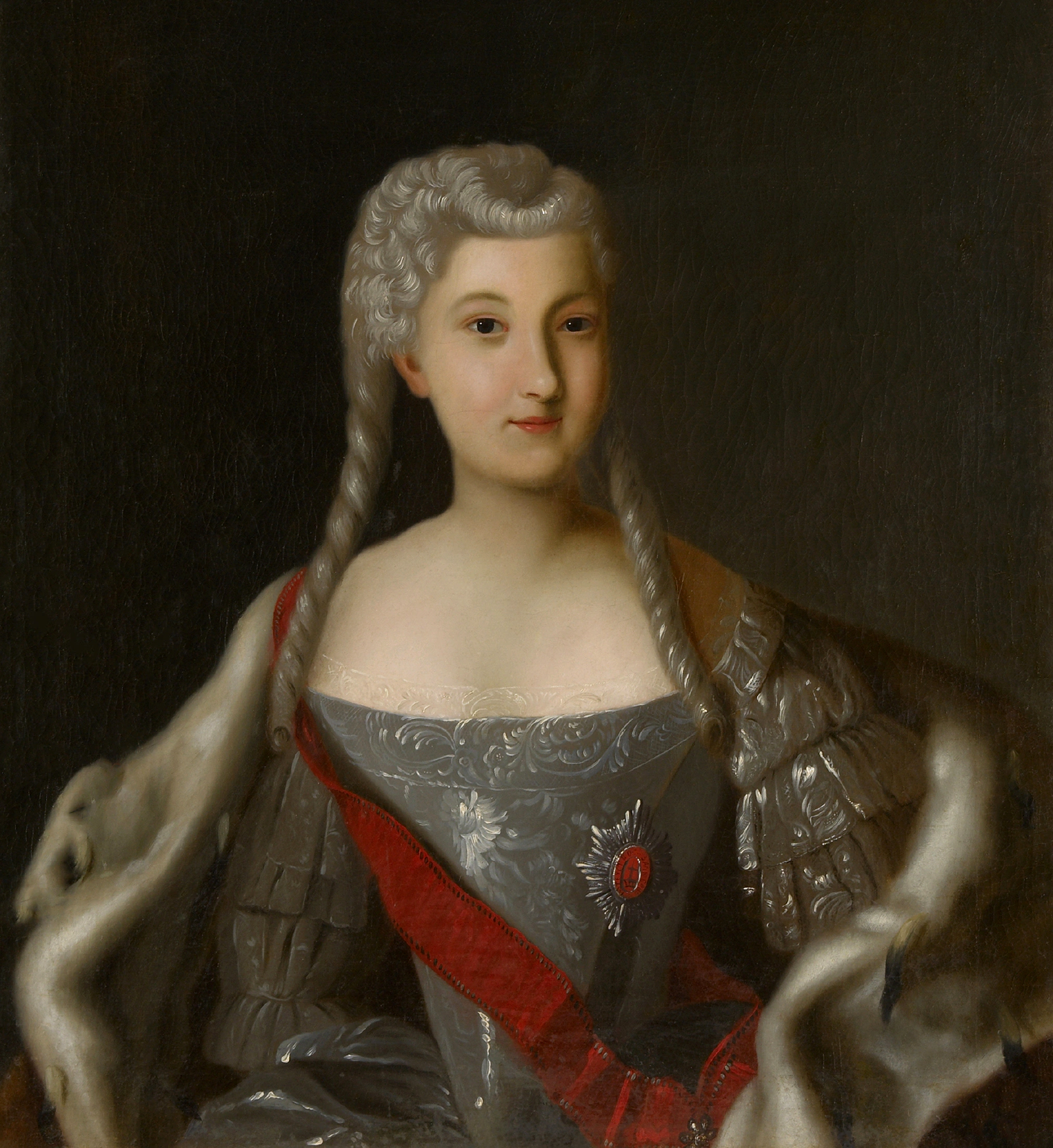
Anna’s weakness lay not in laziness, but in political inexperience, excessive gullibility, and an inability to balance between warring factions.
Private Life and a Polyamorous Union
Anna Leopoldovna was distinguished by a mercy rare for her time. She recalled many disgraced nobles from exile, including Vice-Chancellor Alexey Petrovich Bestuzhev-Ryumin and the relatives of His Serene Highness Prince Alexander Danilovich Menshikov. She also abolished the ban introduced by Peter I on constructing stone buildings outside St. Petersburg and eased restrictions for those wishing to take monastic vows.
“Her actions were open and sincere, and nothing was more unbearable to her than the pretense and constraint so necessary at court, which is why it happened that people, accustomed in the previous reign to the grossest flattery, unjustly considered her arrogant and supposedly contemptuous of everyone. Under the guise of outward coldness she was inwardly lenient and sincere… […] she always dressed with displeasure when, during her regency, she had to receive and appear in public…”
— Ernst von Münnich, chief steward and memoirist, “Memoirs”
She was increasingly drawn to seclusion and socializing with a narrow circle of intimates. The British envoy Edward Finch, who regularly played cards with the regent, left frank testimonies about the nature of her intimate life.
In dispatches to London, he reported that the ruler loved Julia “as passionately as only a man loves a woman.” To heighten the effect, the envoy added: “A lover’s passion for a new favourite is a mere joke compared to this.” Finch noted the highest degree of domestic intimacy between the women: they not only slept in the same bed, but were in it “without any other clothing except a petticoat.”
“I cannot but acknowledge in her considerable natural abilities, a certain perceptiveness, extraordinary good nature and humanity, but she is undoubtedly too restrained in temperament: large gatherings weary her, she spends most of her time in the apartments of her favourite Mengden, surrounded by the relatives of this maid of honour.”
— Edward Finch, British envoy (from a dispatch)
Count Moritz Lynar, whom she had recalled from Saxony, again drew close to Anna. Popular historiography traditionally calls Lynar Anna’s only lover, relegating Juliana to the role of a convenient smokescreen. However, researchers note that Anna was passionately in love with Lynar, but Juliana also had feelings for him. Lynar was Anna’s lover, Juliana was Anna’s beloved, and both women were devoted to Lynar.
“The ruler still harbours disgust for her husband; it often happens that Julia Mengden refuses him entry into this princess’s room; sometimes he is even forced to leave the bed.”
— Jacques-Joachim Trotti, Marquis de La Chétardie, French diplomat (from a dispatch)
In this context, Lynar’s plan to marry Juliana Mengden makes sense. The betrothal, which took place in July 1741 with Anna’s blessing, was not merely a political calculation. This decision made it possible to legitimize Lynar’s presence in the inner chambers of the palace and removed formal accusations of sin from the ruler.
“She often had meetings in the third palace garden with her favourite Count Lynar, where she always went accompanied by the maid of honour Julia… and when the Prince of Brunswick wished to enter this same garden, he found the gates locked, and the sentries had orders to let no one in… Since Lynar lived near the garden gates in Rumyantsev’s house, the princess ordered a dacha to be built nearby, which is now the Summer Palace. In summer she ordered her bed to be placed on the balcony of the Winter Palace; and although screens were set up to hide the bed, from the second floor of the houses neighbouring the palace one could see everything.”
— Burkhard Christoph von Münnich, field marshal, “An Essay Giving an Idea of the Form of Government of the Russian Empire”
Chamberlain Fyodor Andreyevich Apraksin once reproached Anna Leopoldovna that she “eats alone with the maid of honour von Mengden, and it would be more proper with her husband, and that maid of honour is in great favour with Her Imperial Highness.” In response, Anna scolded him, calling him a “Russian scoundrel.”
Unlike Anna Ioannovna, who preferred lavish entertainments, Anna Leopoldovna did not like hunting or horseback riding. Quieter pursuits were closer to her; in particular, she enthusiastically bred birds. A parrot, an Egyptian dove, a trained starling, and two nightingales lived in her chambers.
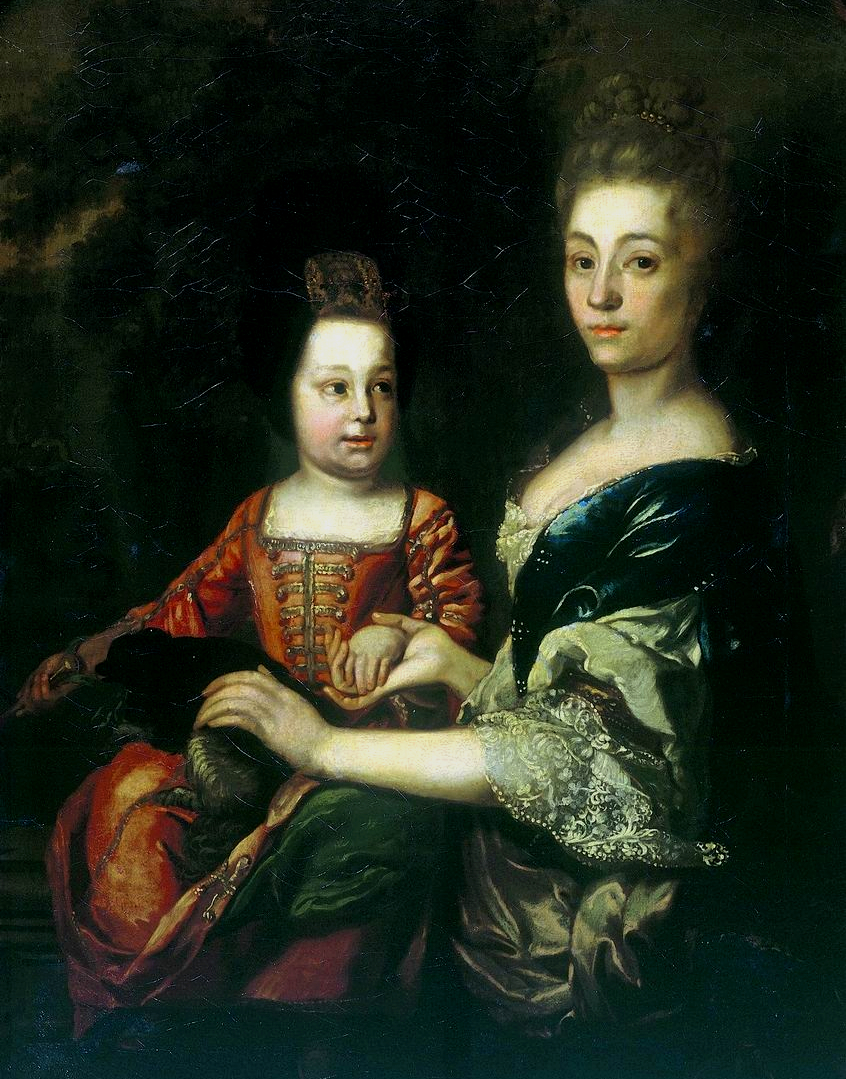
In July 1741, Anna gave birth to a daughter, Catherine. A nanny, a wet nurse, and her favourite maid of honour Juliana Mengden were constantly present in the nursery.
Coup and Downfall
The period of relative calm was interrupted on August 8, 1741, when Sweden declared war on Russia, hoping to regain territories lost under Peter I. Hostilities began in Finland. Against this background, St. Petersburg was temporarily left almost without troops capable of protecting Anna.
Anna Leopoldovna’s fall was accelerated by the geopolitical alignment of forces in Europe. Russia’s foreign policy course, directed by Vice-Chancellor Heinrich Johann Friedrich Ostermann, relied on a firm alliance with Austria against Prussia. This categorically did not suit France. The French envoy Marquis de La Chétardie received a direct assignment to overthrow Anna Leopoldovna’s regime and became the main financial sponsor of the conspiracy of Peter I’s daughter, Tsarevna Elizabeth Petrovna.
Anna’s tragedy was compounded by her political blindness. She received repeated warnings about the impending coup from Ostermann and Vice-Chancellor Mikhail Gavrilovich Golovkin. On the eve of the coup, Chief Marshal Reinhold Gustav von Löwenwolde handed the ruler a note urging her to arrest Elizabeth, to which Anna replied: “Ask Count Löwenwolde if he has gone mad? This is all empty gossip, I myself know better than anyone that we have nothing to fear from the tsarevna.”
On the night of December 6, 1741, a palace coup took place. Elizabeth Petrovna, with the help of grenadiers of the Preobrazhensky Regiment, overthrew the regent without resistance. While Anna’s courtiers were having fun at a ball, the conspirators burst into the chambers and arrested everyone, including the underage Emperor Ivan.
“Having finished in the guardhouse, Elizabeth went to the palace, where she met no resistance from the sentries, except for one non-commissioned officer, whom she immediately arrested. Entering the ruler’s room, who was sleeping together with the maid of honour Mengden, Elizabeth said to her: ‘Sister, it is time to get up!’ The ruler, waking up, said to her: ‘How, is it you, madam!’ Seeing grenadiers behind Elizabeth, Anna Leopoldovna guessed what was the matter, and began to beg the tsarevna not to do evil either to her children or to the maiden Mengden, from whom she would not like to be separated.”
— Sergei Mikhailovich Solovyov, “History of Russia from the Earliest Times”
Exile and Interrogations
After the arrest, legal proceedings began. Field Marshal Münnich was sentenced to quartering, and Juliana Mengden to death. At the last moment, Elizabeth replaced both sentences with exile. The court found Anna Leopoldovna and her husband guilty of usurping power.
Before departing, Anna Leopoldovna was allowed to address the new empress with a final petition. She asked for only one thing: to be allowed to remain near Juliana Mengden. Elizabeth granted this request. Juliana voluntarily followed her friend into exile.
Initially, Elizabeth announced the expulsion of the Brunswick family to Europe. The family was delivered to the Dünamünde fortress (now Daugavgrīva within the limits of Riga), where they were detained for almost a year. Here in 1743, Anna gave birth to a daughter, Elizabeth.
Correspondence ensued between Riga and St. Petersburg. Elizabeth Petrovna launched an investigation into the disappearance of royal jewels. The Secret Chancellery was looking for a pretext for the criminal prosecution of the overthrown family, and the accusation of stealing diamonds became a convenient instrument of discredit. Juliana explained in detail to whom the jewels had been given.
During one of the interrogations, she claimed that Anna Leopoldovna herself broke some jewels. Empress Elizabeth ordered the guards to question Anna about the fate of the diamonds, adding a personal postscript: “And if she begins to deny that she gave any diamonds to anyone, tell her that I will be forced to interrogate Julia; so if she feels sorry for her, she should not let her be subjected to such torment.”
The new authorities perfectly understood the overthrown regent’s vulnerable spot. Anna, apparently, rejected the accusations, as no further persecution followed and Juliana was left alone.
The Final Years
Later, Elizabeth ordered the family to be moved deeper into the country — to the Ranenburg fortress (modern Chaplygin in the Lipetsk region). Then in 1744, the empress ordered Anna Leopoldovna’s family to be sent north, to Kholmogory in the Arkhangelsk Governorate.
It was in Ranenburg that the final separation of Anna and Juliana took place. By Elizabeth’s order, the maid of honour was told to remain in the fortress. Anna’s servants understood that the separation would be a heavy blow for her, and sent a request to the capital to allow Juliana to travel with them, but received no answer. Anna never saw her faithful friend again.
Having reached Kholmogory, the prisoners could not continue their journey to the Solovetsky Monastery (Russian: Solovetsky monastyr; Соловецкий монастырь) due to ice on the Northern Dvina. As a result, they were left there, in conditions of strict secrecy on the territory of the Assumption Bishop’s House. The conditions of detention were harsh.
Anna’s Death and Juliana’s Fate
The posthumous fate of the members of the disgraced family was determined in advance. Elizabeth issued a decree according to which, in the event of the death of anyone from the family, the body was to be immediately delivered to the capital.
In the Kholmogory exile, Anna Leopoldovna gave birth to two more children: Peter (in March 1745) and Alexei (in February 1746).
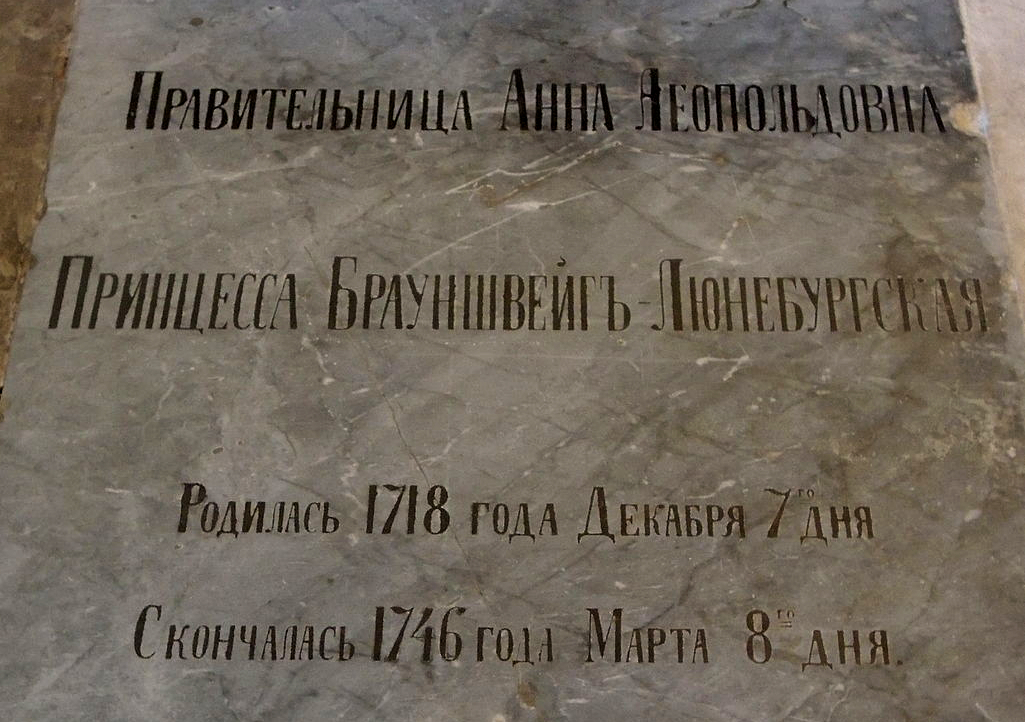
Torn away from Juliana and exhausted by childbirths in the conditions of a northern winter without proper medical care, on March 20, 1746, Anna died of puerperal fever. She was 27 years old. The official notification dryly called her the “Orthodox Princess.” Her body in a sealed coffin was delivered to St. Petersburg for burial in the Annunciation Church of the Alexander Nevsky Lavra.
The fate of Anna’s firstborn, the overthrown Emperor Ivan Antonovich, turned out to be the most terrible page in the history of the Romanov dynasty. The boy was torn away from his parents and kept in complete isolation. His name was changed to “Grigory,” and in 1756 he was secretly transported to the Shlisselburg Fortress under the name of the “nameless prisoner.” On July 27, 1764, during a coup attempt, the 23-year-old prisoner was stabbed to death by his guards. Prince Anton Ulrich spent the rest of his life in Kholmogory, went blind, and died in 1774.
Juliana Mengden remained in exile in Ranenburg for a long 18 years. Only after Catherine II’s accession to the throne in 1762 did she receive her release and permission to return to her native Livonia. Juliana settled on her mother’s estate of Jērkule near Krimulda, rarely left it, and engaged in household management.
Until the end of her days, she reluctantly recalled the court years, taking to her grave the secret of one of the possible earliest LGBT unions of the 18th century. Juliana Mengden died on October 21, 1787, having outlived Anna by 41 years, and was buried in the cemetery in Carnikava.
Literature and Sources
- Anisimov, Evgeny. Ivan VI Antonovich [Ivan VI Antonovich]. Moscow: Molodaya gvardiya, 2008.
- Korf, Modest. Braunshtveigskoe semeystvo [The Brunswick Family]. Moscow: Prometey, 1993.
- Kostomarov, Nikolai. Russkaya istoriya v zhizneopisaniyakh eyo glavneyshikh deyateley [Russian History in the Biographies of its Chief Figures]. St. Petersburg: Tipografiya M. M. Stasyulevicha, 1873–88.
- Kurukin, Igor. Anna Leopoldovna [Anna Leopoldovna]. Moscow: Molodaya gvardiya, 2012.
- Manstein, Christoph Hermann von, Burkhard Christoph von Münnich, and Ernst von Münnich. Perevoroty i voyny [Coups and Wars]. Moscow: Fond Sergeya Dubova, 1997.
- Solovyov, Sergei. Istoriya Rossii s drevneyshikh vremyon [History of Russia from the Earliest Times]. Moscow: Universitetskaya tipografiya, 1851–79.
- Vigor, Jane. Pisma ledi Rondo [Letters from a Lady, who resided some years in Russia]. St. Petersburg: Izdanie A. S. Suvorina, 1874.