The Future President’s Secret Operation: How Franklin Roosevelt Spent a Million Dollars on a Hunt for Gay Men in the Navy
…to rid the U.S. Navy in Newport, Rhode Island, of ‘cocksuckers and rectum receivers.’
Contents
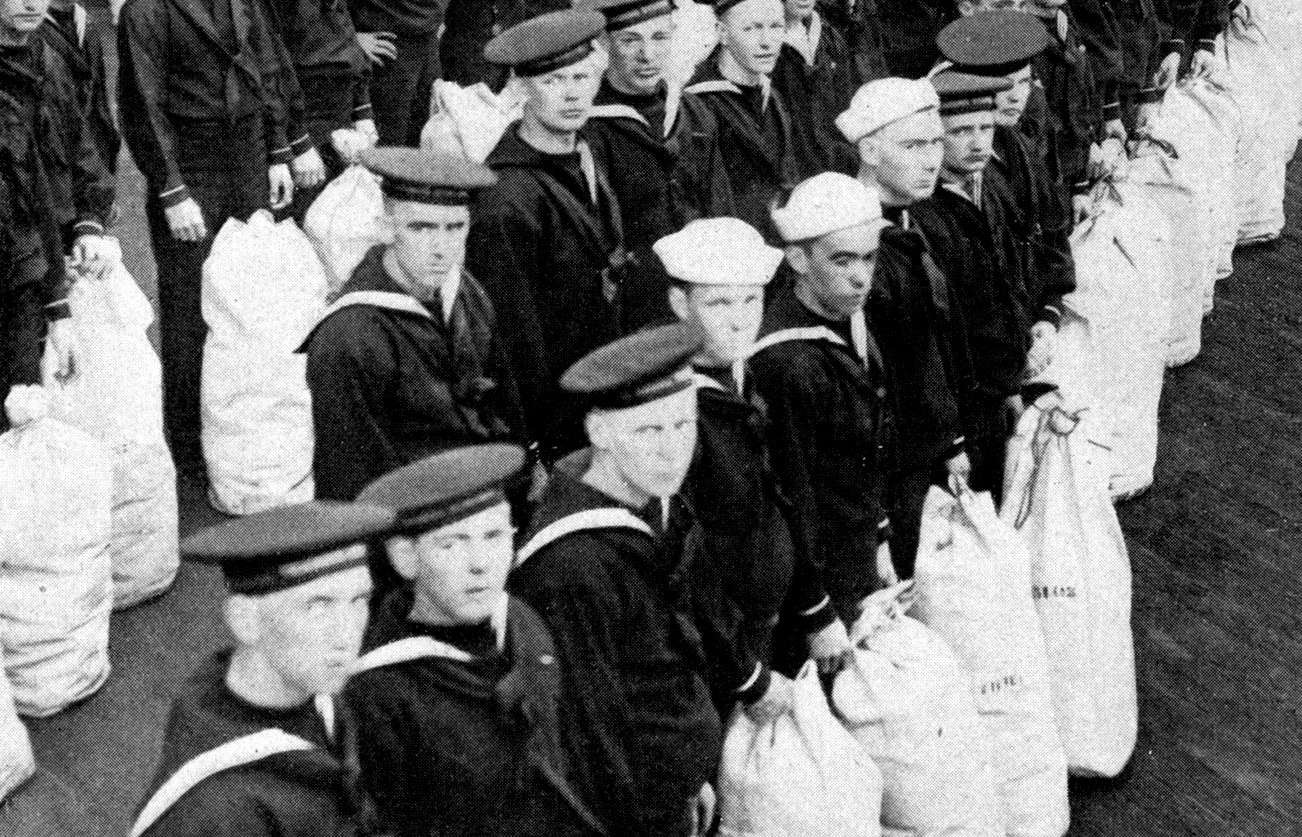
In 1919 the United States Navy launched a covert operation at its base in Newport, Rhode Island, aimed at sailors suspected of same-sex relations.
The command hired undercover volunteers who had sex with suspects and then testified against them before courts-martial.
The operation, known as “Section A,” was approved by Assistant Secretary of the Navy Franklin Delano Roosevelt – who would later become the 32nd president of the United States and lead the country through the Great Depression and the Second World War.
Drawing on the U.S. outlet The 19th and historians’ work, the episode shows how the service used sexual entrapment and military justice to remove people without recourse to civilian courts.
The 19th reports the operation’s stated aim in the blunt language of the time:
“…to rid the U.S. Navy in Newport, Rhode Island, of ‘cocksuckers and rectum receivers.’”
— The 19th
Ports, Mothers’ Fears, and “Cleaning Up” the Base
As the First World War drew to a close, many senior officers grew vocal about the “morality” of port cities, and puritanical tones in public debate about morals became more common.
Historian Sherry Zane, who has written on Operation Section A, links the Navy’s initiative to widespread fear among American mothers of sending sons to serve where cities were associated with vice and debauchery. The command wanted to reassure the public and present the Newport base as under control and “cleaned up.”
“There was this fear by American mothers about sending their sons … into port cities where they associated cities with vice, so the Navy wanted to clean up those areas to make mothers feel safer,” said Zane. “If you think about it, it’s about the military having this power to get rid of so-called perverts and degenerates without needing legal authority.”
— Sherry Zane
Roosevelt was then assistant secretary of the Navy; as Sherry Zane writes, he consulted lawyers before the program began so the procedure would look lawful.
The Section A Method
The method was simple: undercover agents initiated same-sex contact with suspected sailors, then reported them to superiors.
“It wouldn’t just take one time, like the covert op would have sex with someone, like three or four times before they would get the person,” Zane said.
— Sherry Zane
Asked why so many encounters were needed to gather evidence, she says in the same interview:
“Well, that’s questionable,” Zane said. “On the one hand, one of their arguments might have been that, you know, well, they wanted to make sure, right? Like they wanted to have enough evidence. And then there’s a lot of questions, well, they just enjoyed having sex with these men.”
— Sherry Zane
It remains important to separate the established fact of repeated contacts from interpretations of the agents’ motives.
The Budget and Congress
Rhea Debussy, a lecturer at Ohio State University and author of The Lavender Bans on the persecution of LGBT people in the U.S. military and Navy, cites the sum the Navy allocated to the operation: $50,000 in 1919 dollars – slightly more than a million in today’s money after inflation. When details of spending and methods reached Congress, lawmakers reacted sharply.
“On the policy end of things, we end up in front of a congressional committee, and the congressional committee is, like, you did what?” Debussy said.
— Rhea Debussy
The Court-Martial Log
A surviving handwritten log of the court-martial at the Newport Naval Training Station, with entries from around August 1919, illustrates the routine of the trials. Charges include wording such as “sodomy” and “scandalous conduct.”
One line names Harold J. Trubshaw: the log records him guilty of scandalous conduct and sodomy and sentences him to ten years’ imprisonment with a dishonorable discharge. Nils C. M. Johnson, in the same record, was acquitted on a sodomy charge. Harrison A. Rideout’s name is struck through with a long line and a note that his case was transferred to a special Newport court in December 1919. Other entries show both acquittals and prison terms of about two, five, or seven years – a picture of selective application of the rules.
As Sherry Zane writes, Section A’s work landed 22 sailors before tribunals on charges of “deviance,” and another sixteen civilians were caught in the same net.
Justice followed the stereotypes of the day: men seen in the so-called “active” role were often treated as less culpable or not counted as “homosexual” in the period sense and punished more lightly. Those assigned a “passive” role or judged “too effeminate” faced harsher penalties.
After the Verdicts
Court-martial outcomes were devastating for the convicted. In some cases sentences ran up to twenty years. Even without long prison terms, a dishonorable discharge meant a lasting stigma: loss of veterans’ benefits, loss of standing, and serious difficulty finding work. In this setup the military had a tool to remove unwanted people outside civilian jurisdiction beyond the tribunal itself.
“There are so many ways in which like this criminalization of queer identity, particularly in the context of the military, has a ripple effect throughout these men’s lives, not even just talking about a prison sentence, but talking about the stigma that comes with a dishonorable discharge, the lack of benefits, the lack of respect, all of these things that follow you,” she said.
— Rhea Debussy
Roosevelt and the Memory of the Scandal
When Section A’s methods and costs came to light, Zane, citing scholarly literature, characterizes part of the Senate reaction as follows:
…senators were “utterly shocked” and “strongly advised that Roosevelt never again be allowed to hold public office.”
— Sherry Zane
In the end the scandal did not end his career, and over time it faded from national memory against the backdrop of his later presidency.
References
- Debussy R. The Lavender Bans. 2026.
- The 19th. The wild saga of FDR’s $1 million gay military sex sting. 2026. https://19thnews.org/2026/04/fdr-navy-military-gay-sex-sting-history/
🇺🇸 LGBT History of the USA
- Homoeroticism of the Victorian Era: Male Intimacy in Photographs from the 1850s–1890s from the Herbert Mitchell Collection
- The Future President’s Secret Operation: How Franklin Roosevelt Spent a Million Dollars on a Hunt for Gay Men in the Navy
- Two Republican Politicians from Georgia and Their Old Photographs in Women’s Clothing
- The Story of the 2016 “Twinks for Trump” Photo Shoot
- Support for LGBT Rights in the US: PRRI's 2025 50-State Survey
 Subscribe to our Telegram channel (in Russian): Urania. With Telegram Premium, you can translate posts in-app. Without it, many posts link to our website, where you can switch languages — most new articles are published in multiple languages from the start.