
The Homosexuality of Sultan Mehmed II
Sources on the possible same-sex relationships of the Ottoman sultan who conquered Constantinople.
Contents
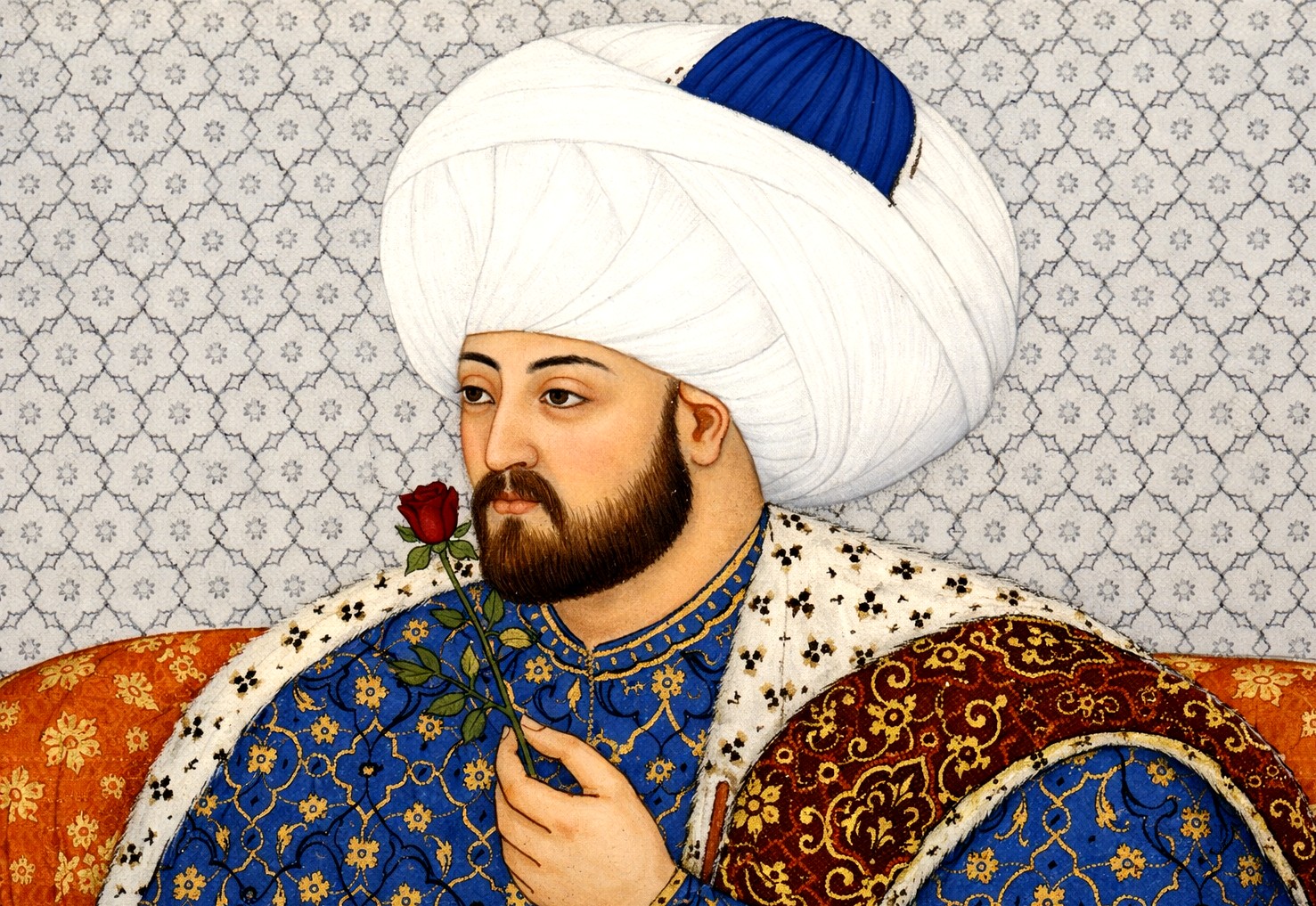
Byzantine authors of the 15th century remembered Mehmed II not only as the conqueror of Constantinople. Their texts also contain stories about his attraction to young men and about a possible intimacy with Radu the Handsome, the brother of Vlad Dracula.
In this article, we examine what exactly the sources claim and how the accounts of different authors diverge.
A Brief Biography of Sultan Mehmed II
Mehmed II, better known as Mehmed the Conqueror, occupied the Ottoman throne twice: from 1444 to 1446, and then from 1451 until his death in 1481.
He was born on March 30, 1432. His father was Sultan Murad II, and his mother was a woman of enslaved status; her origin remains unclear.
Mehmed’s first reign coincided with a period of sharp confrontation with the Christian powers of Europe. In the 15th century, a “crusade” usually referred to a large military alliance formed for war against the Ottoman Empire. It was during this period that the Ottomans managed to halt such a campaign.
After returning to the throne in 1451, Mehmed began preparing a strike against Constantinople – the capital of the Byzantine Empire.
In 1453, at the age of twenty-one, he captured the city, and after the victory adopted the title “Caesar of Rome.” This title was meant to show that control over the former Roman capital made him the heir of the Roman emperors. The Patriarchate of Constantinople recognized this status within the new political reality, but most European monarchs did not accept it.
After the fall of Constantinople, the conquests continued. Mehmed again brought Anatolia under his control – most of the territory of modern Turkey in Asia Minor, where separate domains and competing centers of power had previously remained. In the west, his campaigns reached Bosnia; Serbia was also conquered.
Mehmed was not only a military commander. He carried out a series of political and social reforms, strengthening central authority and bringing order to the administration of a vast state.
In 1481, the sultan set out on a new campaign with his army, but fell ill on the road and died.
In modern Turkey, Mehmed II is perceived above all as the ruler who took Constantinople and made it the Ottoman capital. The Istanbul district of Fatih is named after him; the word “fatih” in Turkish and Arabic means “conqueror.” Many other places across the country also bear his name.
The Sultan’s Reputation and Cultural Interests
The image of Mehmed II in the sources depends heavily on the author’s position. In some texts he appears as a cruel and depraved tyrant; in others, as an intelligent, cool-headed, and enlightened ruler who valued art, science, and education.
From a young age, he was interested in the culture and history of Ancient Greece and Byzantium. He was inspired by heroes of classical legend, including Achilles, and by great commanders such as Alexander the Great. This interest in antiquity went together with broad learning: Mehmed studied languages, philosophy, and history, followed the intellectual currents of his time, and was open to Renaissance ideas.
He patronized the arts and sciences. Artists, scholars, and architects were invited to his court from the Islamic world and from Europe, including Italian masters of the Renaissance. Mehmed collected Western art, books, and Christian relics. The Greek historian Michael Kritoboulos, who served at his court, called the sultan a philhellene – a “friend of the Greeks,” that is, someone sympathetic to Greek culture.
Such attention to Christian culture provoked mixed reactions. In the West, some contemporaries even entertained the idea that the sultan might convert to Christianity, taking his interest as a sign of spiritual closeness. His son and successor, Bayezid II, on the contrary, reproached his father for excessive tolerance and accused him of “not believing in the Prophet Muhammad.”
Mehmed wrote poetry under the pen name Avni; this word means “helper” or “benefactor.” According to researchers, more than eighty poems belong to him under this name.
By the end of his reign, Constantinople, which had become the Ottoman capital after the conquest, had turned into a lively and wealthy center of a vast empire.
Wives, Concubines, and Harem
Mehmed had at least eight women whom sources describe as his wives or concubines; at least one held the status of a lawful wife in the usual sense. Like other Ottoman rulers, he had a harem.
In the Ottoman Empire, the harem was a secluded palace household with strict guards, a hierarchy, and its own rules. It ensured dynastic continuity, was where the ruler’s children were raised, and also served as a space of upbringing and education for women and children.
Mehmed had at least four sons and four daughters.
The Homosexual Poetry of Mehmed II and the Debate Over Its Interpretation
In one of the poems by Mehmed II (Avni), the author describes the beauty of a Christian youth from the Christian part of the city (Galata):
1. I saw an angel with a sun-like face, who is the moon for the world,
His black hyacinths (locks) are the sighs of his lovers.
2. Dressed in black, like a shining moon, this slender cypress,
Must be the padishah of the Frankish kingdom in his beauty.
3. He who has not tied his heart to the knot of his zunnar (monk's belt),
Cannot be a man of faith, he is lost among lovers.
4. Those whom his sly glance kills are resurrected by his lips,
If this soul-giver has a religion, it is the way of Jesus.
5. O Avni, do not hope that this idol will submit to you:
You are the shah of Istanbul, and he is the shah of Galata!
Original (modern Turkish transliteration):
1. Bir güneş yüzlü melek gördüm ki âlem mâhıdur,
Ol kara sünbülleri âşıklarınun âhıdur.
2. Karalar geymiş meh-i tâbân gibi ol serv-i nâz,
Mülk-i Efrenc'ün meğer kim hüsn içinde şâhıdur.
3. Ukde-i zünnârına her kimse kim dil bağlamaz,
Ehl-i îmân olmaz ol âşıklarun güm-râhıdur.
4. Gamzesi öldürdügine lebleri cânlar virür,
Vâr ise ol rûh-bahşun dîni Îsâ râhıdur.
5. Avniyâ kılma gümân kim sana râm ola nigâr,
Sen Sitanbul şâhısun ol da Kalata şâhıdur.
In the Islamic tradition, the miracle of resurrecting the dead is associated with the prophet Isa (Jesus). Therefore, in the poem, “the way of Jesus” is connected to the poetic motif of death and resurrection: the beloved’s sly glance wounds and “kills,” and his lips grant new life.
The French historian André Clot read this text literally. In his book on Mehmed II, he writes: “The first poem is dedicated to a young Christian priest from Istanbul,” that is, it is a love poem.
The literary scholar Yusuf Babür notes that characters of a different faith were common poetic clichés (mazmun). Almost every poet from the early period to the Tanzimat used these images. The belt (zunnar) conveyed figurative meanings of loyalty, service, delusion, and amorous submission. The beloved was often called an infidel (kafir), and the heart was likened to a church, as it houses the idol-beloved.
Clot’s literal reading is criticized by the researcher Türkan Alvant. She writes that the French historian approaches the text “without considering the connection between the literal and the figurative.”
The literary scholar Muhammet Nur Doğan reminds us of the conventionality of names and figures in classical poetry and emphasizes that they “are merely some of the symbolic names.” The language of such poetry itself is built on stable clichés, multilayered metaphors, and grammatical ambiguity of the addressee.
What Sources Say About Mehmed II’s Possible Homosexuality
The discussion of Mehmed II’s possible same-sex inclinations rests mainly on Byzantine Greek texts.
Some testimonies concern the first days after the fall of Constantinople, when looting and the mass enslavement of inhabitants began after the assault. Both young men and young women were taken captive; some ended up in harems.
The Ottoman official and historian Tursun Beg, a contemporary of these events, wrote that after the final defeat, soldiers turned to plundering and enslaving boys and girls. In his words, every tent held many handsome youths and young women, and captured slaves were displayed naked in the city’s slave market.
Another group of testimonies concerns Mehmed II’s relationship with the Wallachian prince Radu the Handsome.
Doukas: The Story of Loukas Notaras’s Son
The most famous episode appears in the work of the Byzantine historian Doukas. He lived in the 15th century and in his Byzantine History described in detail the last years of the empire and its fall under Ottoman blows. Doukas was not an eyewitness to the siege of 1453, but he apparently relied on the accounts of witnesses, documents, and his own observations, comparing various reports.
According to his account, five days after the capture of Constantinople, Sultan Mehmed II held a banquet to celebrate the victory. When the sultan was already drunk, he was told that the captured Byzantine commander Loukas Notaras had a fourteen-year-old son of extraordinary beauty named Iakovos.
Loukas Notaras held the office of megas doux in Byzantium – that is, commander-in-chief of the fleet – and was one of the most influential men of the empire. After the fall of the city, he, his family, and his servants fell into Ottoman hands. The sultan initially spared Notaras and appointed him governor, hoping to restore order, but then the situation changed.
In Doukas’s version, Mehmed sent a eunuch – a court official responsible for the harem – with a demand to deliver the boy to the palace. Notaras refused, considering the demand humiliating. After that, Doukas continues, Notaras, his son, and his son-in-law were arrested and then executed on the sultan’s order. The historian emphasizes the demonstrative cruelty of the punishment: the heads of the executed were brought to the banquet.
The execution of Loukas Notaras is confirmed by other sources as well, but its causes remain unclear. Some chroniclers link the punishment not to Mehmed’s personal motives but to a refusal to hand over treasures.
There is also another version of the Notaras family’s fate. According to it, Notaras’s son Iakovos did not die but remained at the sultan’s court, lived there until 1460, then fled to Italy, settled with his sisters, married, and, it is claimed, was unhappy in marriage. If so, a different son of Notaras may have been executed.
Modern researchers treat Doukas’s story with skepticism. In particular, the American professor Walter G. Andrews points out that the plot suspiciously resembles earlier Christian legends, for example the story of Saint Pelagius, which contains the same motif of coercive seduction. In Andrews’s view, such stories may have been created to portray Muslims as morally depraved conquerors in contrast to virtuous Christians.
An additional reason for caution is Doukas’s own personal position. He was an opponent of Loukas Notaras: Doukas supported church union with the Catholics, while Notaras remained a supporter of Orthodoxy and became famous for the phrase: “Better to see the Turkish turban in Constantinople than the pope’s tiara.” In this context, Doukas’s account may be not so much a neutral testimony as an attempt to discredit both the sultan and his own political adversary.
Other Byzantine historians do not tell a similar story. For example, George Sphrantzes in his Chronicle reports a different episode: after the fall of the city, Notaras comes to the sultan with gifts, and Mehmed asks why he did not help the emperor remove the palace treasures. Here the conflict is explained by money and power, not by the sultan’s personal desires.
Kritoboulos: The Version About Sphrantzes’s Son
The French historian René Guerdan retells another episode, drawing on the Byzantine author Michael Kritoboulos.
Kritoboulos, a Greek historian of the 15th century, wrote about the time of Constantinople’s fall. According to him, immediately after the assault, killings, looting, and the mass enslavement of inhabitants began. Captives were taken without distinction: men and women, children, people of different ages and social ranks.
Against this backdrop, Kritoboulos presents a story that partly echoes the account of the Notaras family. According to him, after the capture of the city, the wife and children of another Byzantine historian, Sphrantzes, were taken captive. Learning of Sphrantzes’s children, Sultan Mehmed II purchased them for the palace. The historian’s three daughters were sent to the sultan’s harem.
Sphrantzes’s son, fifteen-year-old John, was, according to Kritoboulos, killed by the sultan after refusing to submit to his advances.
Sphrantzes himself confirms only one thing: he learned of his son’s death in December 1453. He does not name the cause.
Laonikos Chalkokondyles: Mehmed II and the Sultan’s “Favorite,” Radu the Handsome
Another episode connected with Mehmed II’s personal life comes from the Byzantine historian and chronicler Laonikos Chalkokondyles. It concerns the Wallachian prince Radu, the younger brother of Vlad, who entered legend as Dracula. In history, Radu is known by the nickname “the Handsome.”
In the 15th century, Wallachia was a small principality north of the Danube, roughly on the territory of present-day Romania. Its rulers maneuvered between more powerful neighbors and often fell into dependence, including on the Ottoman Empire.
In 1443, Radu and Vlad were sent to the Ottoman Empire as hostages to Sultan Murad, Mehmed’s father. Radu converted to Islam, was admitted to court, and entered the circle of the sultan and the court elite.
When Mehmed II took the throne, Radu, according to the sources, remained at his side and took part in his campaigns, including the siege of Constantinople.
Around 1451–1452, Laonikos Chalkokondyles recorded that Mehmed “loved Radu very much.” According to him, the sultan, “burning with lust,” repeatedly invited the young man to banquets and then tried to draw him into the bedroom. Radu, however, rejected these advances.
The emperor [that is, the sultan] kept by his side Vlad’s brother, the son of Dracul, and he was his favorite and lived close to him. And it happened that, when he began to rule, the emperor wanted to have relations with this youth – and nearly died because of it. Since the youth pleased him, the emperor invited him to feasts and, burning with lust, raised his cup, calling him into the bedroom. But the youth was stunned to see the emperor rush at him with such intent; he resisted and did not yield to the imperial passion. Yet the emperor kissed him against his will, and then the youth drew a dagger, cut the emperor’s thigh, and fled. The doctors healed the emperor’s wound. And the youth climbed the nearest tree and stayed there, hiding. Only after the emperor had gone did the youth climb down, leave, and then return to court and again become the emperor’s favorite.
– Laonikos Chalkokondyles
Other sources do not establish whether Radu was Mehmed’s lover. The only firmly established fact is that Radu later married Maria Despina.
Conclusion
The stories about Mehmed II’s possible same-sex desires have reached us primarily through the Byzantine historiographic tradition, which was writing about an enemy. Such testimonies must therefore be read with an awareness of genre, polemics, and the personal positions of the authors.
At the same time, they cannot be entirely dismissed: they are important both as possible reports of events and as material for understanding mid-15th-century ideas about male beauty, courtly intimacy, and sexual violence.
The historical conclusion here inevitably remains cautious. Such episodes can be neither accepted unconditionally nor dismissed automatically.
References and Sources
- Runciman S. The Fall of Constantinople 1453. 1969.
- Chalkokondyles L. The Histories.
- Beg T. The History of Mehmed the Conqueror.
- Doukas. Decline and Fall of Byzantium to the Ottoman Turks (ed. Magoulias H.). 1975.
- Guerdan R. Byzantium: Its Triumphs and Tragedy. Allen & Unwin. 1956.
- Andrews W. G., Kalpaklı M. The Age of Beloveds: Love and the Beloved in Early-Modern Ottoman and European Culture and Society. Duke University Press. 2005.
- Arvas A. From the Pervert Back to the Beloved: Homosexuality and Ottoman Literary History, 1453–1923. (Philological Encounters). 2016.
- El-Rouayheb Kh. Before Homosexuality in the Arab-Islamic World, 1500–1800. University of Chicago Press. 2005.
- Öztoprak N. Şâir Avnî (Fâtih)’nin Şiirlerine Genel Bir Bakış. 2024.
- Sabuncuoğlu Şerefeddin. Cerrâhiyyetü’l-Hâniyye. 1465.
- Pius II (Aeneas Silvius Piccolomini). Epistola ad Mahomatem II. 1461.


