A History of Kissing Between Men in Russia
From Nicholas II’s Easter kisses with soldiers to Brezhnev’s fraternal kiss.
Contents
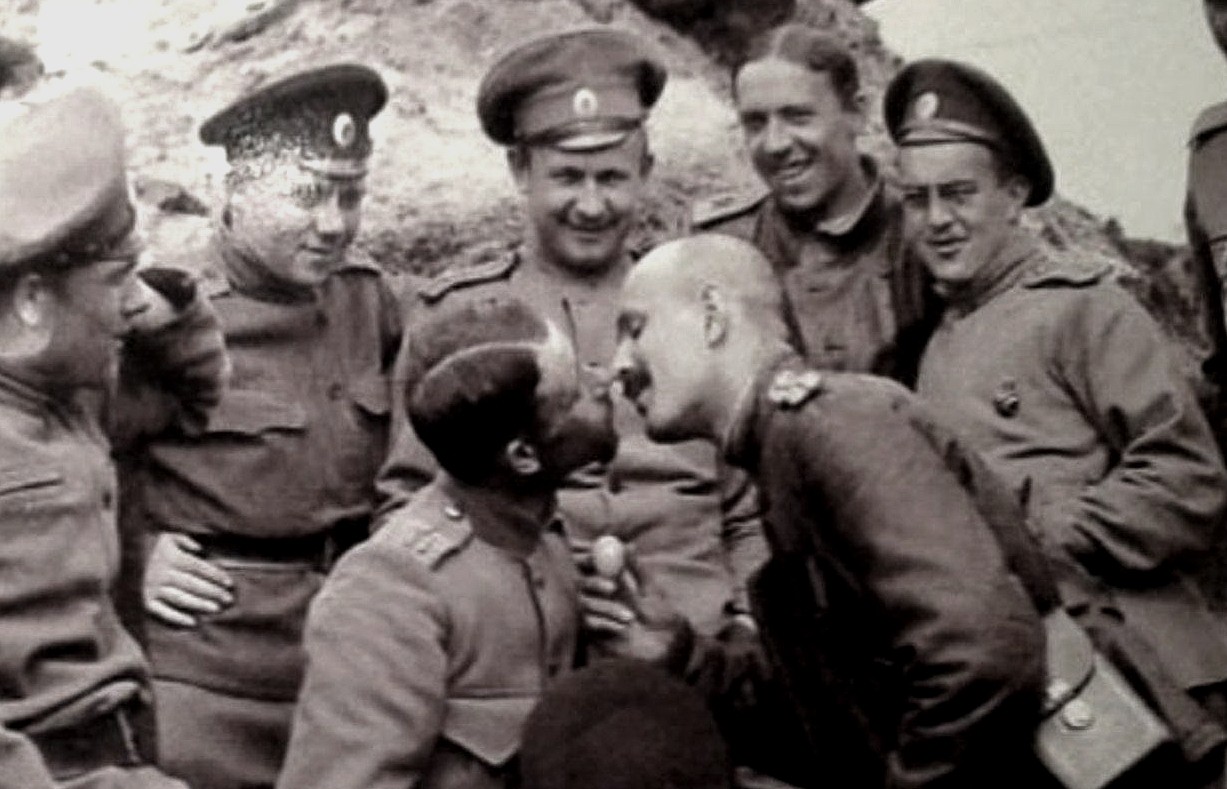
For a long time, the history of non-heteronormative sexuality and male embodiment in Russia intertwined Orthodox rites, army life, and urban subcultures. Among pre-revolutionary practices, Easter khristosovanie stands out: a triple kiss between men on Bright Sunday, sanctioned by the Church and performed in public.
For one day it replaced the usual estate- and rank-based distance with another logic: “Christ is risen!” and three kisses among the Orthodox. For people in the 19th and early 20th centuries, a kiss “by custom” was not necessarily read through the lens of “homosexual identity”: the line between “permissible” tactility and condemned muzhelozhstvo (male same-sex acts in the legal and moral language of the time) worked differently than it does today.
Below is the full story of how the rite took shape, how it intersected with army culture, what remains in photographs and newsreel from 1916, and what happened to it after the revolution of 1917.
Brief Glossary
Khristosovanie – the Easter custom of greeting one another on Bright Sunday: the words “Khristos voskrese!” (“Christ is risen!”) and the reply “Voistinu voskrese!” (“Truly He is risen!”), followed by a triple kiss.
Lobzanie – an archaic Russian word for kissing.
The “Holy Kiss”: Biblical Roots and the Early Church
In Orthodox Russia, the tradition of men kissing drew on the early Christian practice of the “holy kiss” (Greek philema hagion, Latin osculum sanctum) – the “kiss of peace,” rooted in customs of the Eastern Mediterranean and Judaea, where the kiss served above all as a greeting between men.
Later, in Christian communities, the exchange of “peace” and a kiss became a gesture of the faithful’s unity; the New Testament mentions the rite at least five times. Romans 16:16 is well known:
“Greet one another with a holy kiss.”
According to early writers such as Tertullian, Justin Martyr, and Origen, the kiss was originally “mouth to mouth,” not on the cheek: tradition held that Christ and the disciples had greeted each other that way. For early Christians, refusing the kiss meant participation in the Eucharist was a “sham”: without a bodily sign of reconciliation, spiritual unity seemed incomplete.
Even then the physicality of the rite raised concern. To reduce the risk of abuse, at the liturgy men and women sat separately, and the “holy kiss” was allowed only within one sex; catechumens preparing for baptism were not admitted to it – their kiss was “not yet holy.”
Kisses at Easter in the Russian Empire
In the Russian Empire, the early Christian custom became mass Easter khristosovanie. On the feast, any Orthodox person could and was expected to approach any other with “Christ is risen!” and exchange a triple kiss, regardless of estate, wealth, or rank. In theological interpretation this meant universal forgiveness and spiritual brotherhood before God.
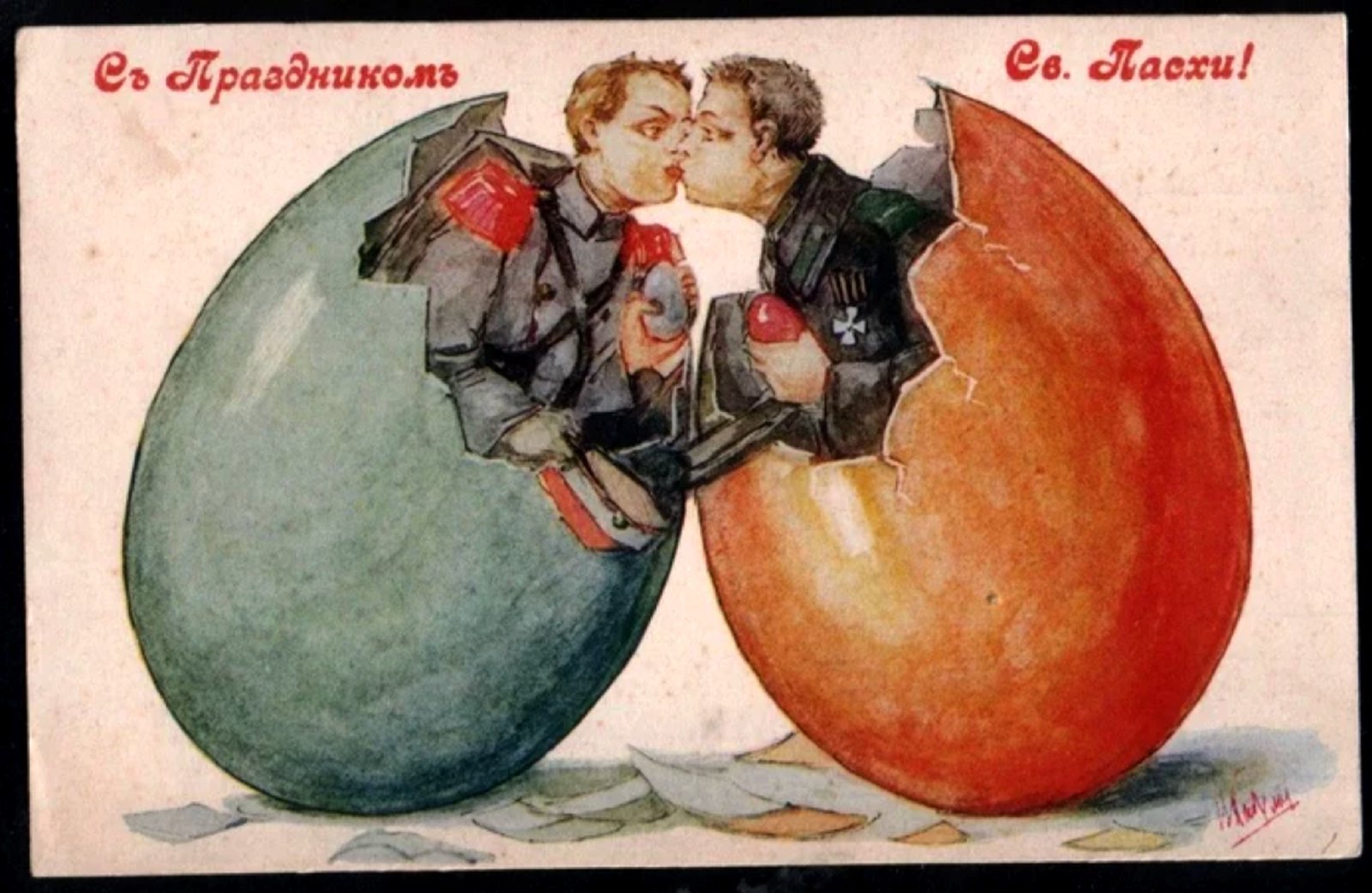
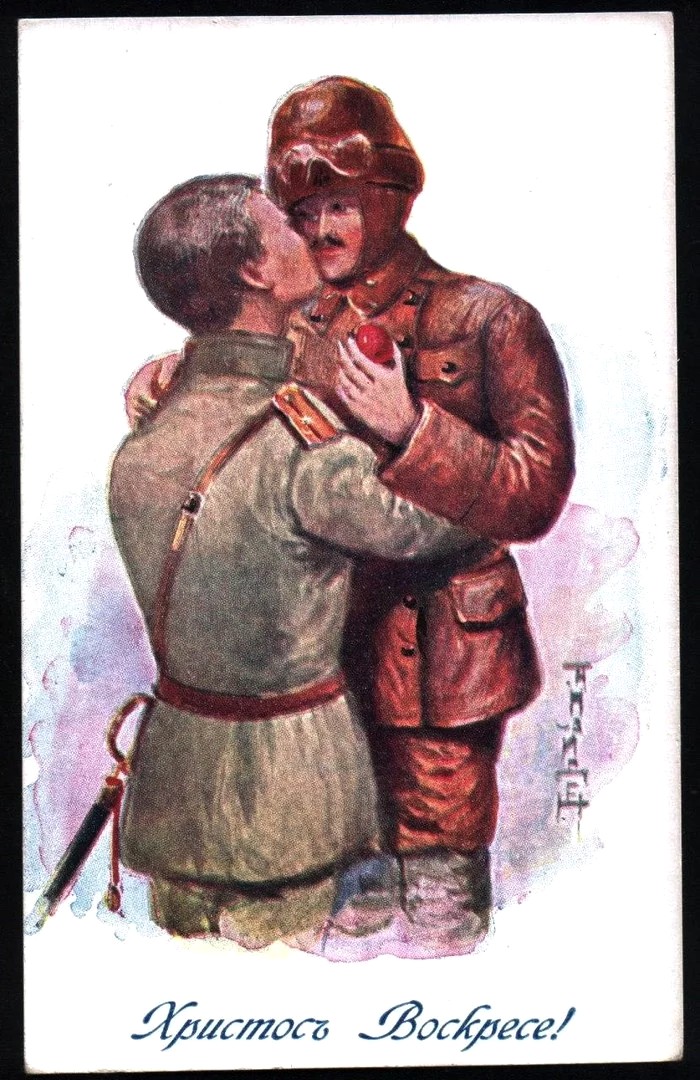
From the perspective of the history of the body and gender norms, such a rite offered a rare opportunity for legitimate male tactility in a patriarchal society, even though the established Church generally condemned same-sex sexual acts.
In mystical strands of Christianity, another rhetoric of male closeness sometimes appears. For example, in the parables of the 11th-century Greek monk Symeon the New Theologian, the king (an allegory of Christ) meets the penitent: he throws his arms around his neck, kisses him, seats him on the couch. For a medieval reader this did not automatically mean “heresy” in the modern sense: spiritual passion and love between men, or between man and God, framed in Platonic terms, could be described as the highest virtue.
For imperial everyday life, the army milieu mattered no less. Historian John Bushnell, in Peasants in Uniform: The Tsarist Army as a Peasant Society, described the imperial Russian army as an extension of the peasant commune: long service, isolation from women’s society, and harsh living conditions increased bodily and emotional closeness among soldiers.
In pre-Petrine Rus there were no secular statutes punishing same-sex relations. Institutional homophobia was “imported” into Russia from Western Europe together with the Western-style army under Peter I, who modernized the country. His Military Statute of 1716 was the first to criminalize homosexual activity in Russia – but only for servicemembers.
Compared with the British or German armies in the second half of the 19th century, where male tactility was increasingly regulated amid a “panic” around homosexuality, in Russia archaic peasant forms of “brotherly love” lasted longer: sleeping pressed together, often under one greatcoat, kisses at meetings and partings, shared baths. That does not “prove” mass homosexuality in the modern sense, but it shows a different norm of bodily closeness between men in Russia.
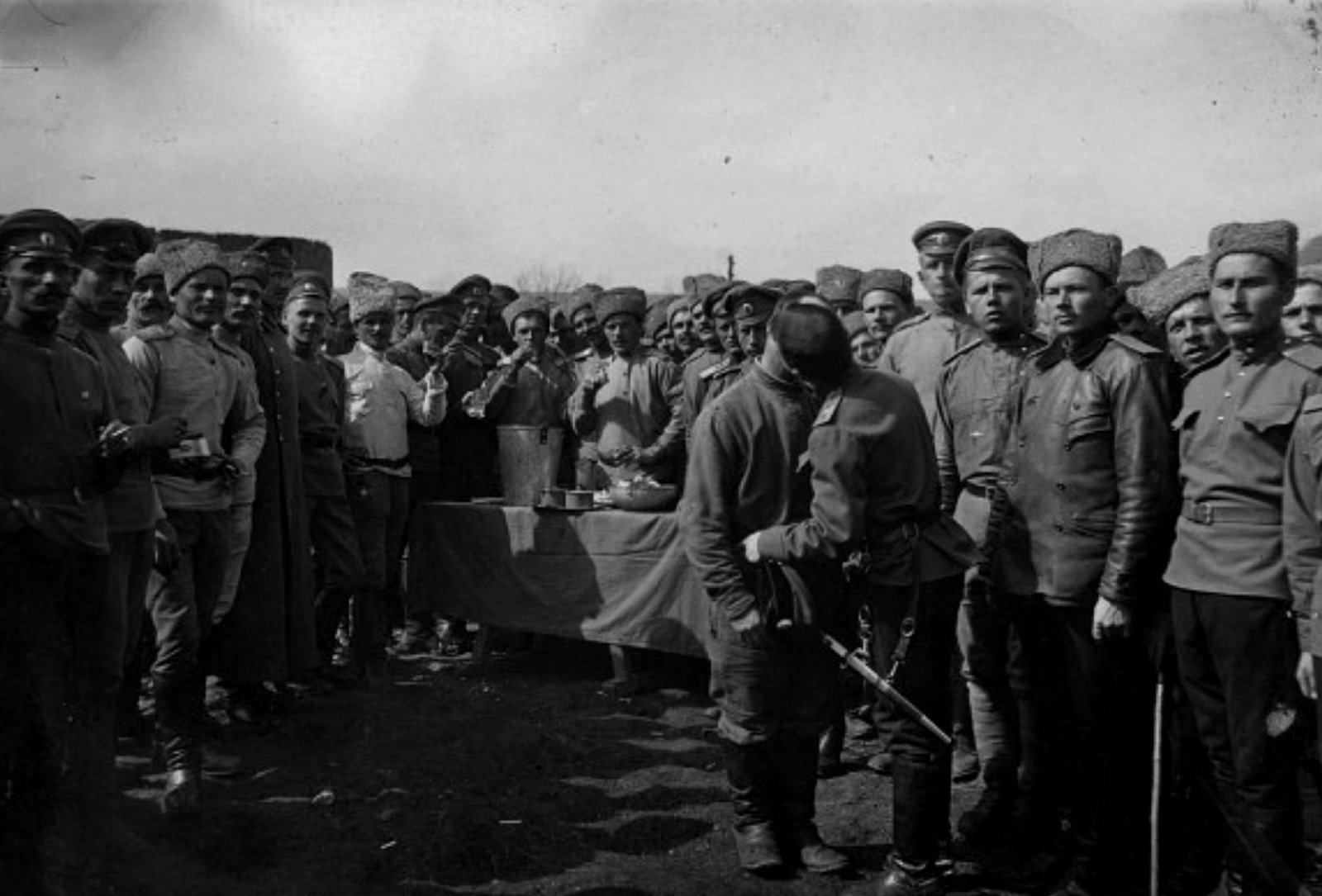
On the front in the First World War, Easter khristosovanie between soldiers and officers was captured in many photographs and the illustrated press.
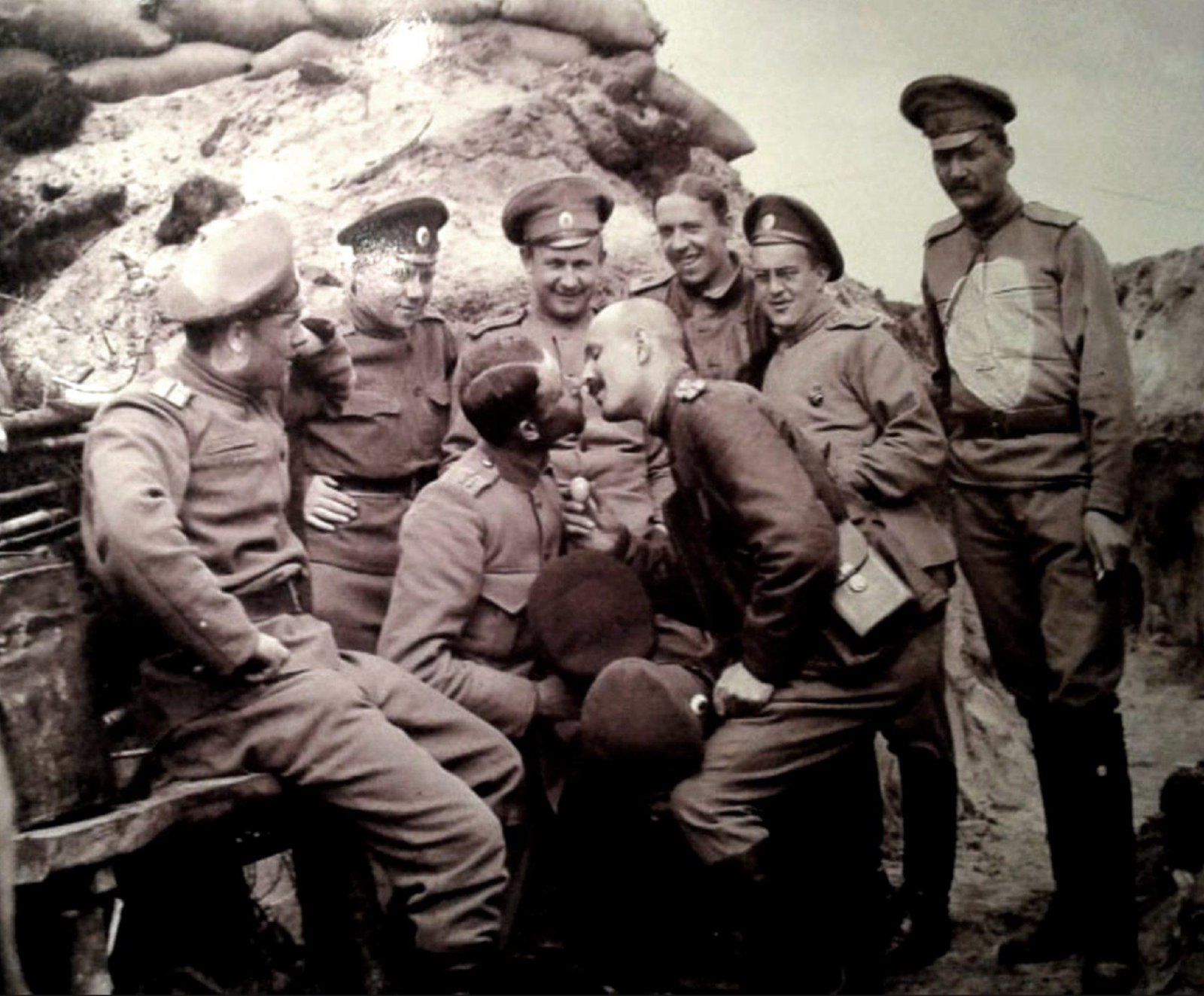
In her study Homosexuality in the Late Imperial Russian Navy: A Microhistory, Irina Roldugina shows, using the Baltic Fleet and especially the School for Mechanics and Stokers, how court files recorded same-sex contacts, yet only isolated cases reached a tribunal. For the late empire she stresses a “moderate and secular” quality in attitudes to homosexuality against the gradual influence of a humanist medical discourse.
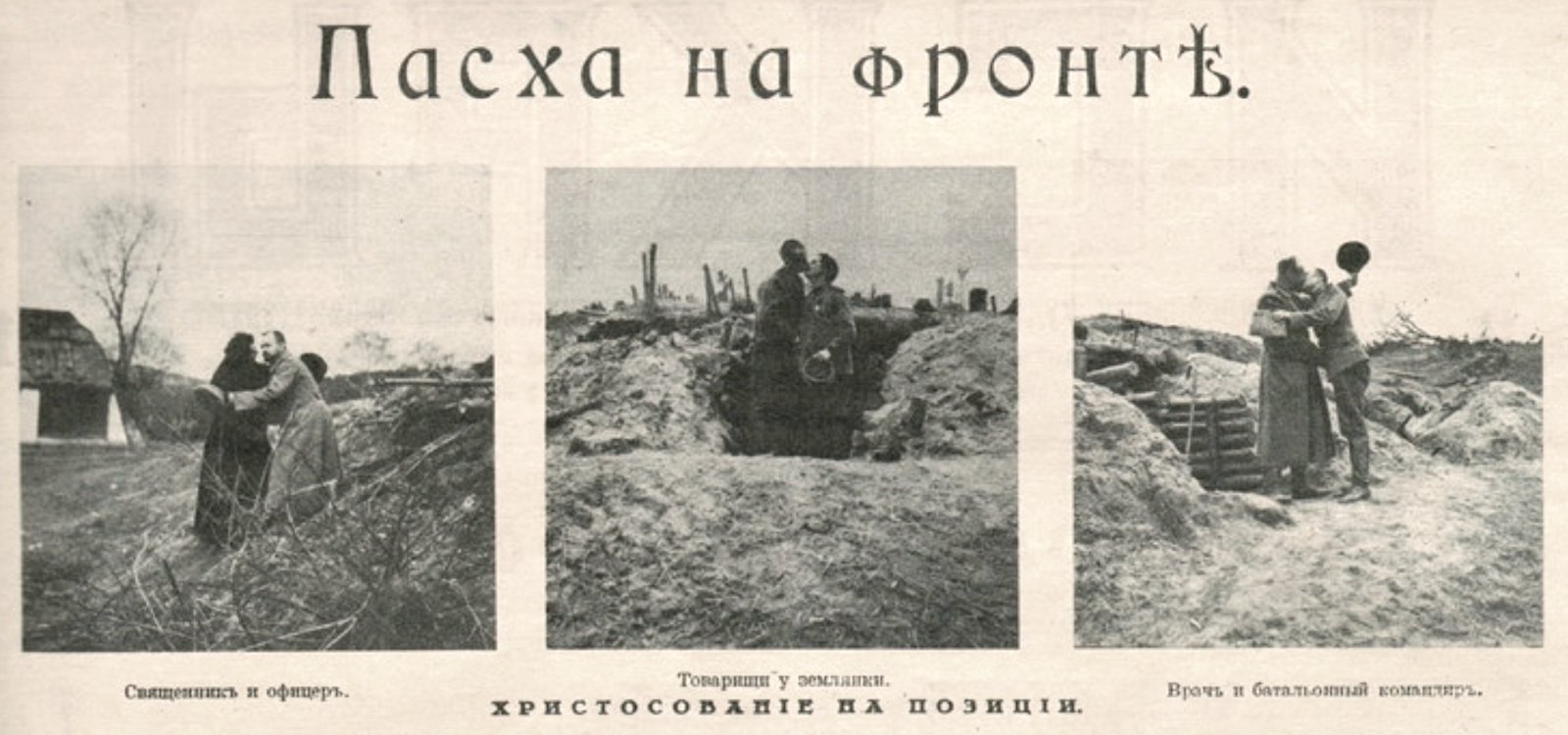
In 1916, amid heavy losses in the First World War and Nicholas II’s personal command, Easter khristosovanie became both a religious act and a military-political gesture. The emperor visited Stavka (the imperial high command headquarters) in Mogilev and forward units; court photographers and cameramen recorded greetings to soldiers and junior officers with triple kisses on lips and cheeks.
The best-known photograph comes from the personal album of Grand Duchess Anastasia Nikolaevna: Nicholas II kisses a soldier.
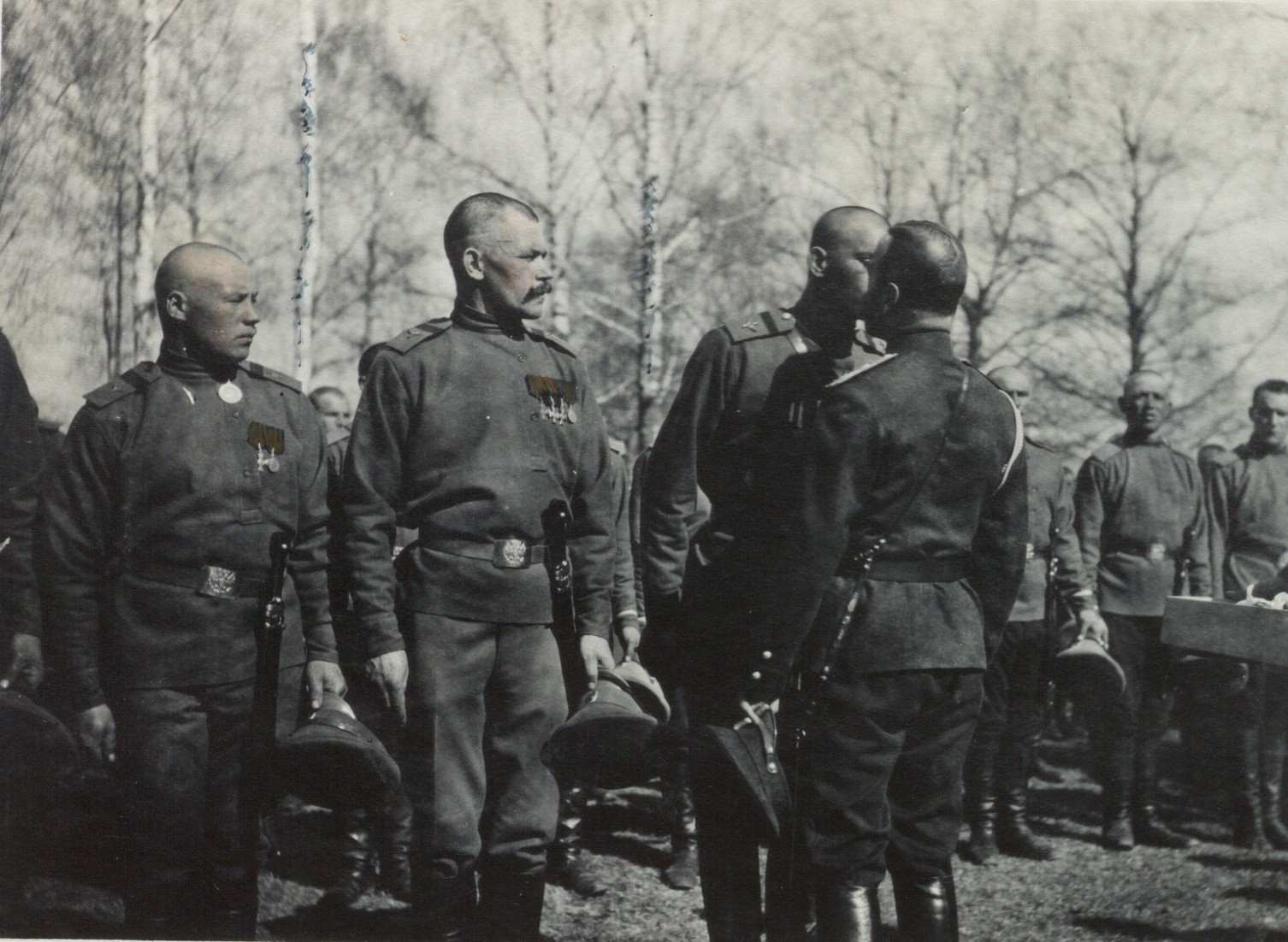
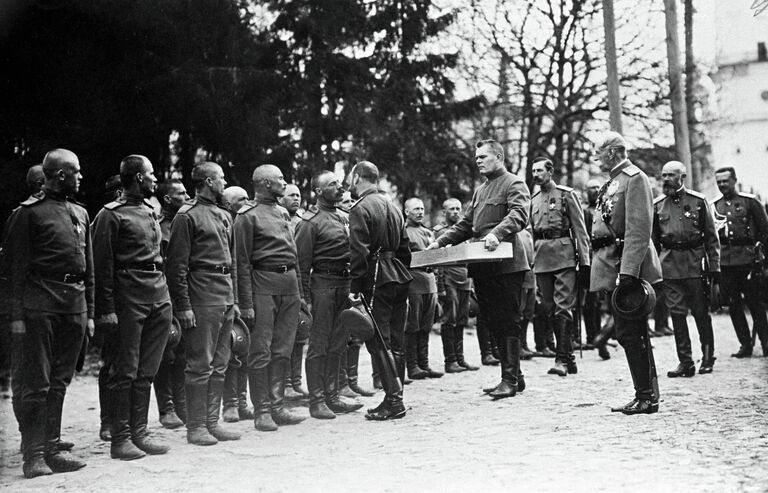
Black-and-white newsreel from 1916 survives: the tsar in field uniform, a line of soldiers and lower-ranking officers, embraces, kisses on cheeks and lips, then a group shot.
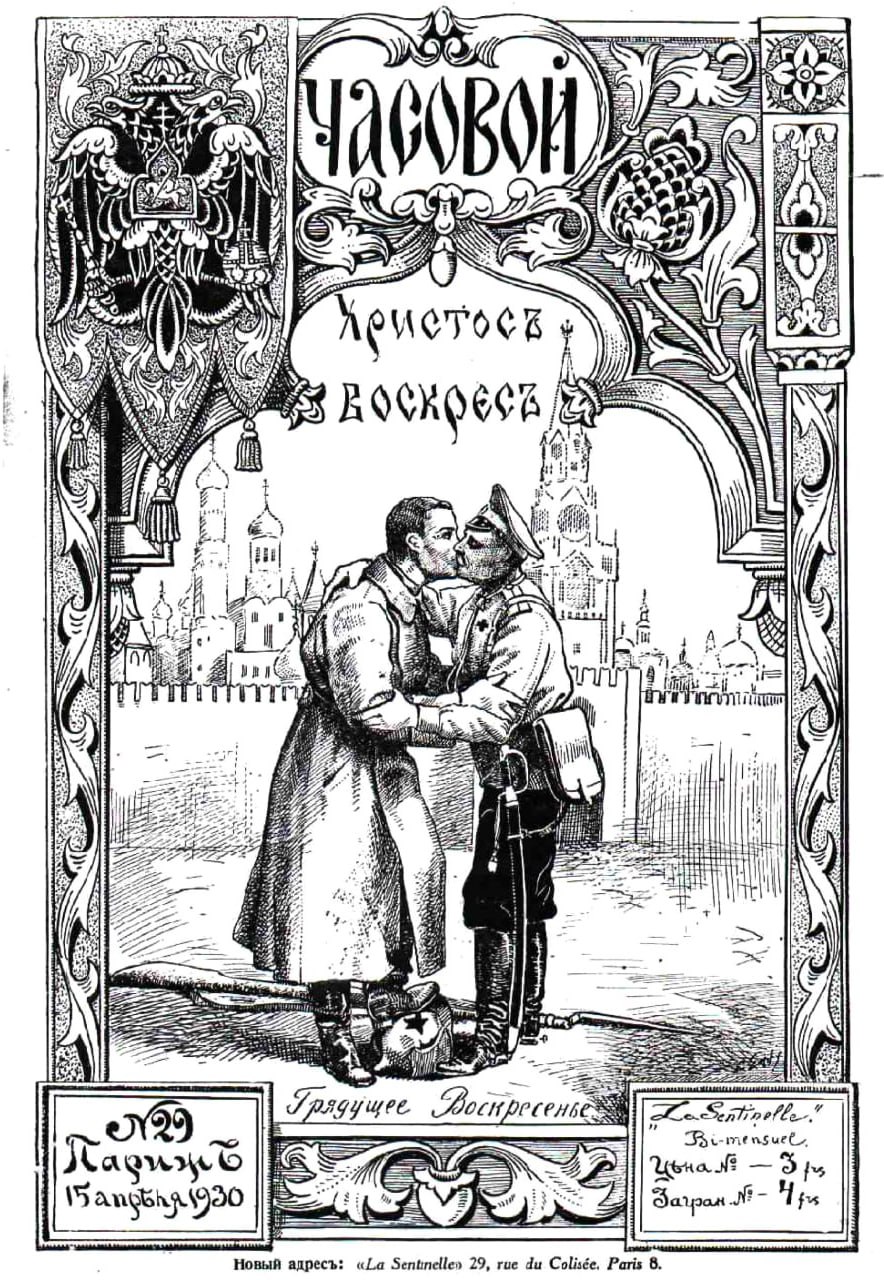
Among Russians who emigrated after the Bolshevik victory, the motif of Easter lobzanie in uniform could turn into political allegory. The cover of the Paris journal Chasovoy (no. 29, 15 April 1930) juxtaposes “Khristos voskres” and the line “The Coming Resurrection” with figures in military dress against the Kremlin; at their feet lie a red-star helmet and a rifle – a dream of a future liberation of Russia from communism.
The “Socialist Fraternal Kiss”
After the revolution, the USSR produced a situation that now looks paradoxical. Under Stalin the USSR introduced an article punishing muzhelozhstvo (and in some union republics such articles had existed from the founding of the USSR, for example in the Georgian SSR), while Soviet leaders publicly used a triple kiss akin to the Paschal one. It was called the “socialist fraternal kiss” and became a symbol of the “Eastern bloc”: three kisses on alternating cheeks on the Orthodox model, and in special cases on the lips. Scholars explain the gesture as a counter to “bourgeois” hierarchy (kissing a monarch’s hand) and as a display of equality.
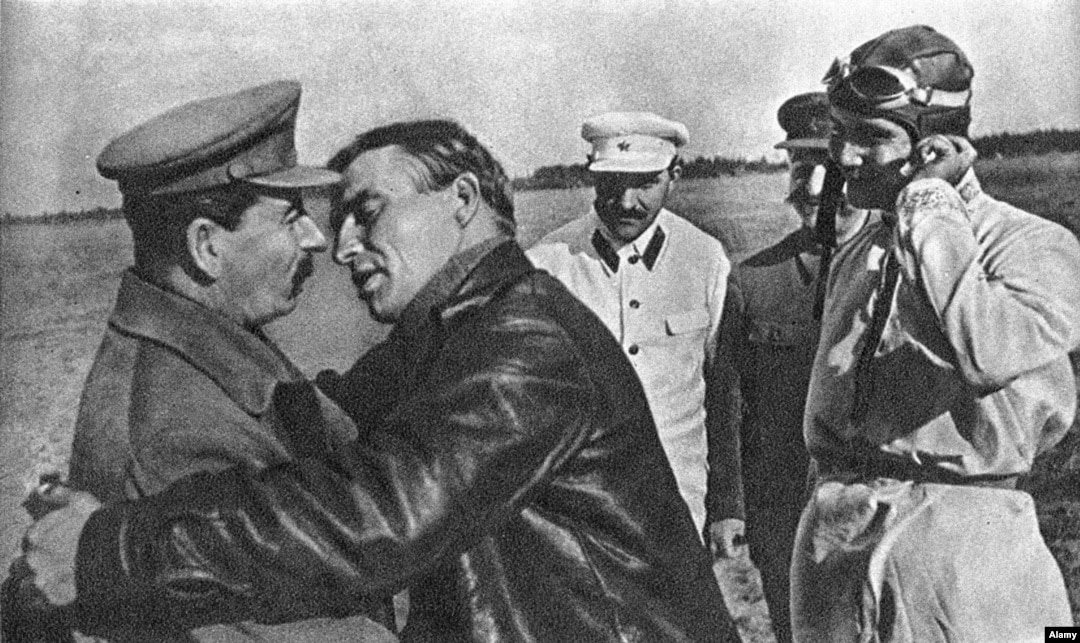
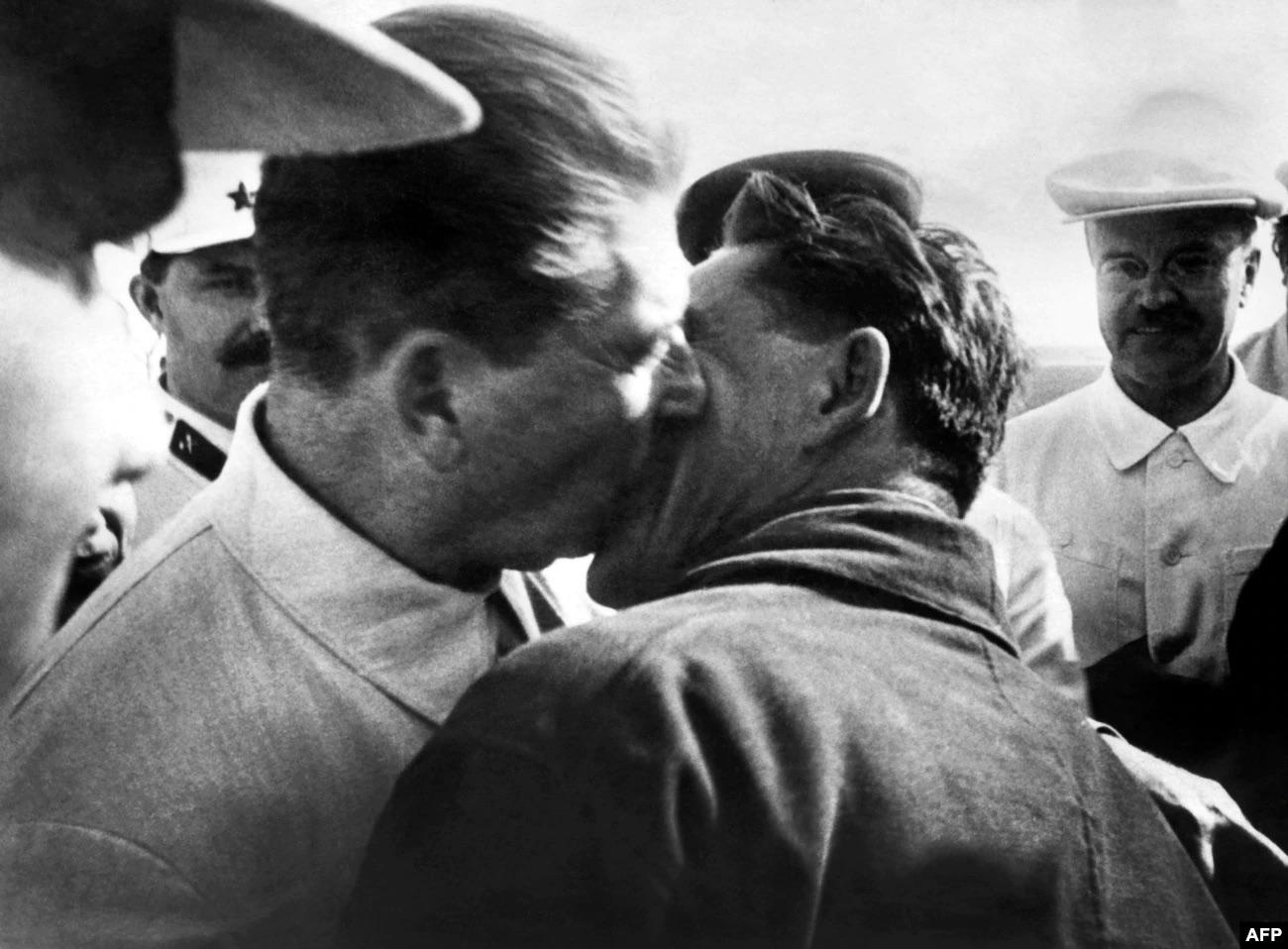
In the chronology of images one can trace growing ease with the rite. In 1936, in footage with pilot Valery Chkalov, Stalin still pulls back when Chkalov reaches for a kiss, though they eventually kiss; by 1937, in shots with Vasily Molokov, Stalin himself leans into the kiss.
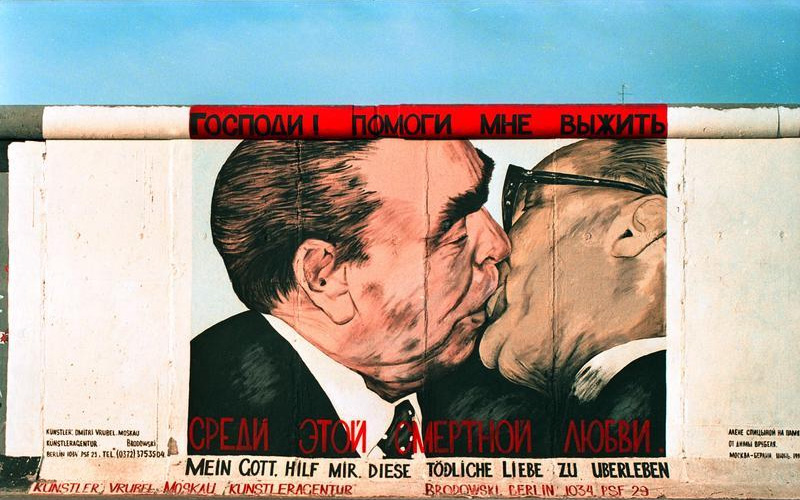
Leonid Brezhnev became the genre’s trademark: his kisses in 1975 with Nikolai Podgorny, in 1980 with Konstantin Chernenko, and the famous kiss with Erich Honecker in 1979 later inspired Dmitri Vrubel’s graffiti on the Berlin Wall with the German line “Mein Gott, hilf mir, diese tödliche Liebe zu überleben” (“My God, help me survive this deadly love”).
Diplomatic details were also read through the body. After the Sino-Soviet split, for instance, the Chinese side refused “fraternal” kisses; in 1959 in Beijing Mao Zedong stepped back and did not let Khrushchev kiss him, offering a handshake instead.
Homohysteria
Today’s viewer may read pre-revolutionary and Soviet images of kisses as “homosexual” in the contemporary sense. Sociologist Eric Anderson coined the term homohysteria for this: a cultural regime in which heterosexual men fear being taken for gay because of tactility or “soft” behavior. Homohysteria requires three conditions: broad recognition of homosexuality as a distinct orientation and identity; cultural homophobia; and the collapse in the public imagination of any male tenderness or tactility into homosexuality.
In imperial Russia in the early 20th century, and even in the late USSR, these conditions only partly overlapped: yes, muzhelozhstvo was prosecuted, but a kiss at khristosovanie or a “fraternal” kiss at the podium did not necessarily mark sexual identity. Interviews with older generations in European and Russian research suggest that people who grew up in the 1920s–1950s often see today’s restrictions on male tactility as something new.
References
- Anderson E. Homohysteria and the Inclusive Masculinity Theory. Journal of Men’s Studies. 2011.
- Bushnell J. Peasants in Uniform: The Tsarist Army as a Peasant Society. Journal of Social History. 1980.
- Roldugina I. Homosexuality in the Late Imperial Russian Navy: A Microhistory. 2021.
🇷🇺 LGBT History of Russia
General history
- Homosexuality in Ancient and Medieval Russia
- The Story of a Medieval Arabic Source in Which the Women of the 'Rus' Were Called the World's First Lesbians
- The Homosexuality of Russian Tsars Vasily III and Ivan IV the Terrible
- Peter the Great’s Sexuality: Wives, Mistresses, Men, and His Relationship with Menshikov
- Homosexuality in the 18th-Century Russian Empire — Homophobic Laws Borrowed From Europe and How They Were Enforced
- A History of Kissing Between Men in Russia
- Russian Empress Anna Leopoldovna and the Maid of Honour Juliana: Possibly the First Documented Lesbian Relationship in Russian History
Folklore
Biographies
- Saint Moses the Hungarian – One of the First Queer Figures in Russian History?
- Grigory Teplov and the Sodomy Case in 18th-Century Russia
- Russian Poet Ivan Dmitriev, Young Favourites, and Same-Sex Desire in the Fables 'The Two Doves' and 'The Two Friends'
- The Diary of Pyotr Medvedev, a Bisexual Moscow Merchant, 1854–1863
- Sergei Romanov: A Homosexual Member of the Imperial Family
- The Possible Homosexuality of Grand Duke Nikolai Mikhailovich of the Romanov Family
- Andrey Avinoff: A Russian Émigré Artist, Gay Man, and Scientist
 Subscribe to our Telegram channel (in Russian): Urania. With Telegram Premium, you can translate posts in-app. Without it, many posts link to our website, where you can switch languages — most new articles are published in multiple languages from the start.