The Earliest Laws in History Against Same-Sex Relations — Assyria in the Twelfth Century BCE
The Middle Assyrian Laws are the earliest known text to prescribe punishments for same-sex practices. Even so, the passage may have been concerned chiefly with sexual violence and the protection of male status, rather than with every form of same-sex act.
- Editorial team
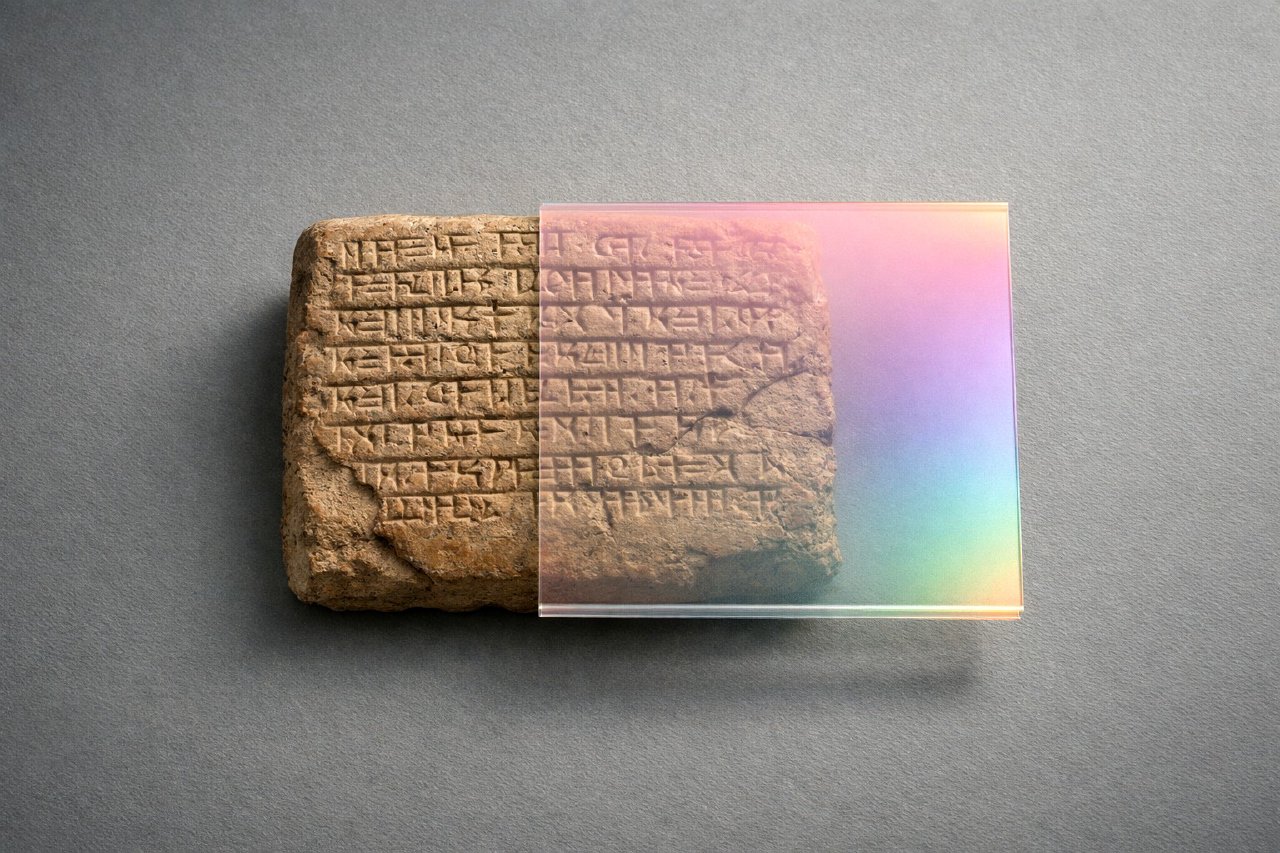
The legal history of sexual life in ancient Mesopotamia is full of uncertainties. The sources are fragmentary, and their interpretation depends to a great extent on the scholar’s point of view. Even so, most historians agree on one point: the people of ancient Mesopotamia seem to have lived under fewer sexual prohibitions than many later societies.
Same-sex practices in Mesopotamia certainly existed earlier as well. Yet it is the Middle Assyrian Laws that offer the first known legal formulation directed against a sexual act between men.
Where and when Assyria existed
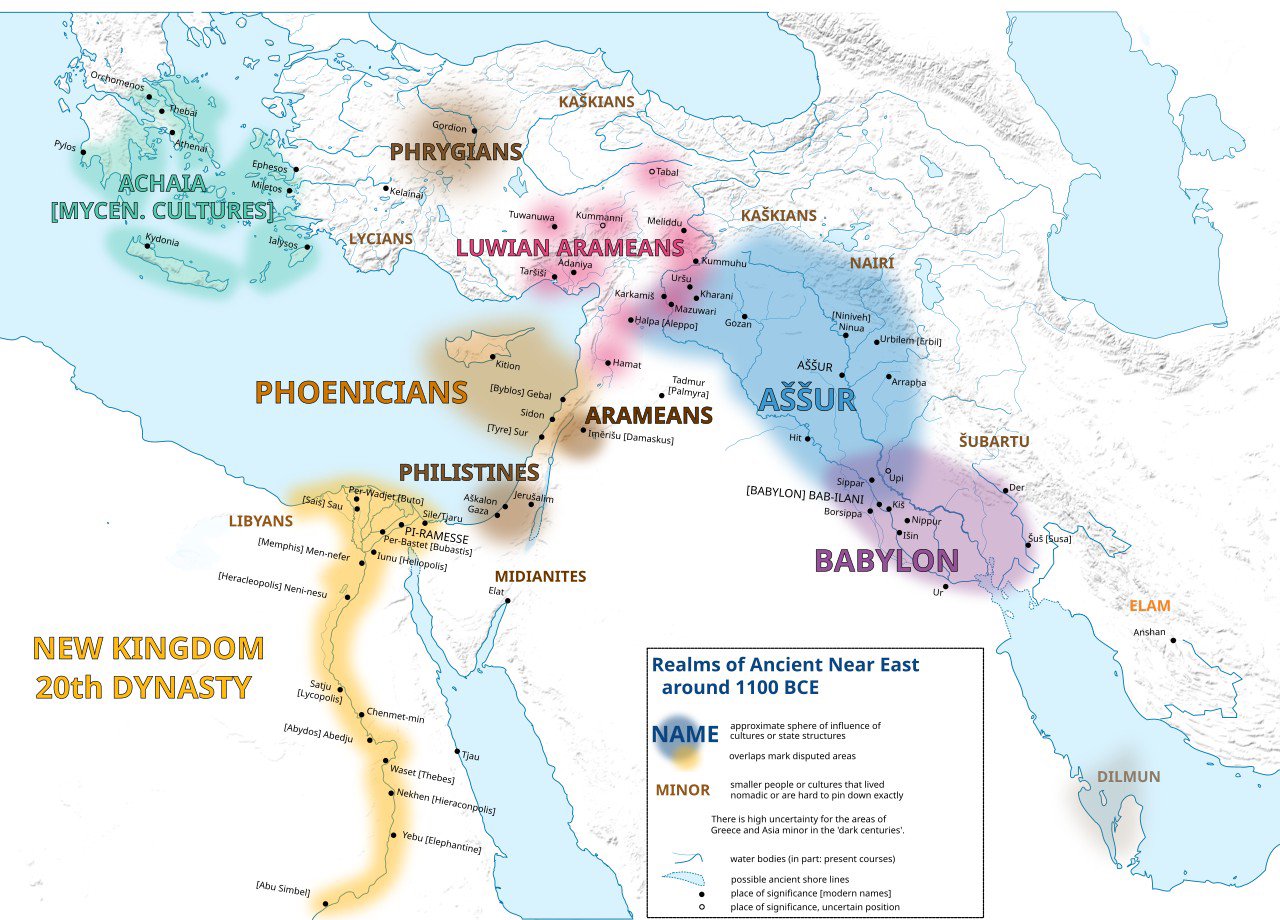
Assyria was an ancient state in the Near East. It arose in northern Mesopotamia, between the Tigris and the Euphrates. Today this territory lies chiefly in northern Iraq, with adjoining areas in Syria and Turkey.
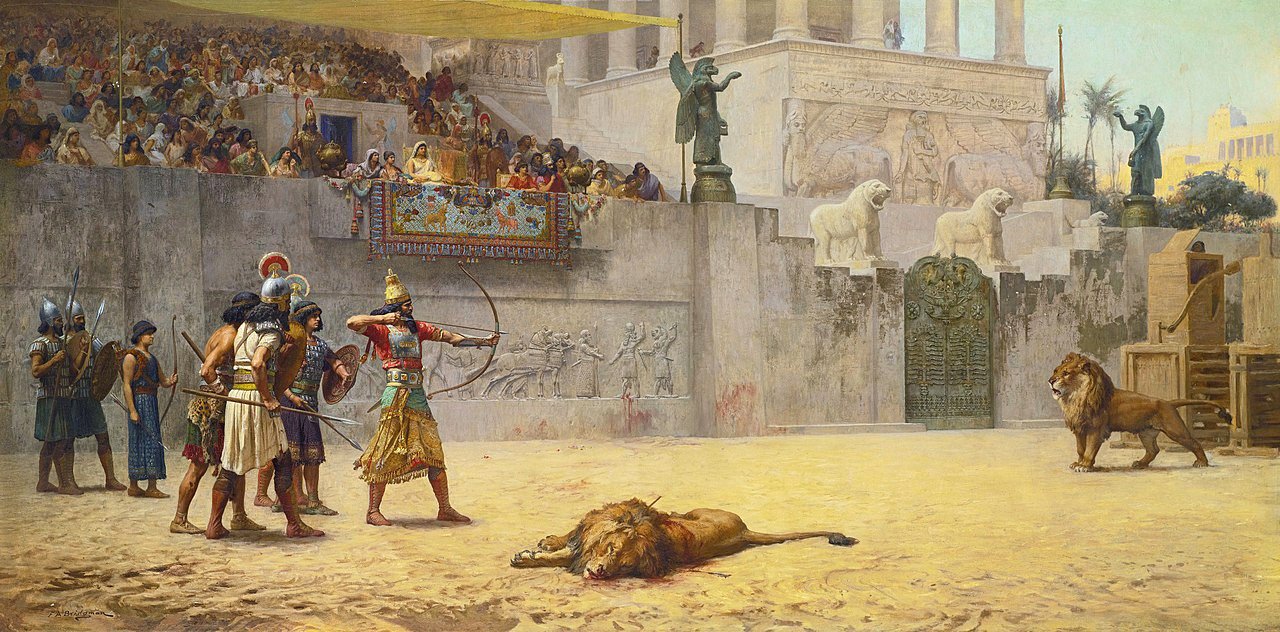
Assyria existed during the second and first millennia BCE. It reached particular power during the Neo-Assyrian Empire, roughly in the ninth to seventh centuries BCE, when it became a vast empire.
Assyria behaved like a schoolyard bully — it constantly pressed its neighbours, compelled them to submit, pay tribute, and acknowledge its authority. It became famous for military strength, harsh rule, and the ability to keep enormous territories in fear. At the same time, the Assyrians possessed developed cities, palaces, a bureaucratic apparatus, roads, an effective system of government, and great libraries.
The Assyrian state vanished at the end of the seventh century BCE, when its capital was destroyed by the Medes and the Babylonians.
When the Middle Assyrian Laws appeared and what makes them distinctive
None of the earlier Mesopotamian law codes — those of Ur-Nammu, Hammurabi, or Eshnunna — mentions male homosexuality.
The earliest known legal rule touching on sex between men is found in the Middle Assyrian Laws, in the so-called “Tablet A.” They are usually dated to the reign of King Tiglath-Pileser I, that is, to the twelfth century BCE, within the Middle Assyrian period.
The Middle Assyrian period, approximately 1450–1050 BCE, was the time when Assyria grew from a small city-state into one of the major powers of Mesopotamia. By the reign of Tiglath-Pileser I, it had already become a strong regional state, though it had not yet reached the scale of the later empire. The surviving texts, or later copies of them, are usually assigned to this stage.
At the same time, the laws themselves were probably not created from nothing. They are generally regarded as copies or reworkings of earlier Assyrian legal norms that may have existed as early as the fifteenth century BCE. Yet whether these laws go back to the age of Tiglath-Pileser I or to an even earlier period, they belong to the era of the Middle Assyrian state at the height of its strength. They have no parallels in other Mesopotamian legal texts: these norms arise within a narrow historical and cultural setting and then disappear.
What the laws said about false accusations of sex between men
“Tablet A” contains provisions on insults and sexual offences. A substantial part of these norms concerns false accusations rather than the sexual acts themselves. The logic of the law is clear: if one man publicly accuses another of shameful sexual conduct and cannot prove it in court, the punishment falls on the slanderer, not on the accused.
Section 18 describes a case in which a man accuses his neighbour’s wife of promiscuity:
§ 18. If a man says to his equal, whether in private or publicly during a quarrel, “Everyone has intercourse with your wife,” and further, “I will myself bring a sworn charge against her,” yet does not bring the charge and does not prove it, that man shall receive 40 strokes with the rod; he shall perform the king’s service for one month; he shall be branded; and he shall pay one talent of tin.
Section 19 follows the same pattern, though here the accusation concerns a man. The point at issue is a false charge that a man regularly takes the passive sexual role in relations with other men. It seems that in Assyrian society a consistently passive role of this kind was understood as a loss of normative male status and as a disgraceful form of subordination.
If a man of standing secretly spread such a rumour about his neighbour and could not prove it, the punishment was even harsher:
§ 19. If a man spreads rumours in secret about his companion, saying, “Everyone commits sodomy with him,” or during a public quarrel says to him, “Everyone commits sodomy with you,” and further, “I can prove the charges against you,” yet he is unable to prove the charges and does not prove them, that man shall be struck with rods 50 times; he shall render royal service for one full month; his hair shall be cut off; and in addition he shall pay [that is, one talent of tin].
This is the earliest known state legal provision in which a punishment connected with homosexual conduct is mentioned.
The difference between Sections 18 and 19 is revealing. In Section 18, the accusation of a wife’s promiscuity may be either private or public. In Section 19, where the charge concerns a man, the word “secretly” appears. This creates the impression that both the slanderer and the man he describes belong to the same sphere of concealed shame.
What Section 20 says about a sexual act between men
The following section no longer concerns slander, but the same-sex act itself. If a man of standing “lay” with his neighbour and this was proven in court, the punishment was strikingly severe. The law proceeds from the assumption that penetration of another free man alters that man’s sexual and social status:
§ 20. If a man commits sodomy with his companion, and the charges against him are proved, and he is found guilty, they shall commit sodomy upon him and turn him into a eunuch.
The severity of the punishment reflects the injury that, in the law’s view, had been done to the victim’s status. The active partner is subjected to retaliatory penetration and then “turned into a eunuch,” that is, his own sexual status is irreversibly altered and he is pushed to the margins of society. At the same time, the law says nothing about many other forms of homosexual behaviour. Historians generally believe that this silence can hardly be accidental.
In a note to her translation of the laws, the American scholar Martha T. Roth points out that in Sections 19 and 20 the implied meaning of “sodomy” is derived from the context rather than from the verb nâku, which means illicit sexual intercourse. In other words, the term in Roth’s translation does not itself refer back to the biblical story of Sodom.
Against this background, Section 20 appears especially enigmatic when set beside biblical parallels. The German biblical scholar and Old Testament specialist Erhard S. Gerstenberger cites it in his commentary on Leviticus, though he admits: “It is unclear why only one man is condemned. In any case, the public character of the judicial proceedings is evident.”
👉 A Queer Theological Reading of Leviticus 18:22: “Do Not Lie With A Man As With A Woman”
What exactly the laws prohibited: all same-sex acts or only violence
Historians of the first half of the twentieth century usually interpreted these norms broadly. In 1930, the Danish Assyriologist Thorkild Jacobsen read them as a prohibition of all “pederasty.” The British Assyriologist W. G. Lambert held that Section 20 was not a law against rape, but a general ban on homosexuality, whether consensual or forced. In his view, had rape been at issue, the law would have mentioned the use of force. Yet neither of these interpretations explains why the punishment falls upon only one of the participants.
Modern scholars read these sections differently. The debate turns chiefly on whether the Middle Assyrian Laws prohibited homosexuality in general or only specific situations involving violence, humiliation, and the violation of status hierarchy.
The general logic of the Middle Assyrian Laws as a whole is bound up with a patriarchal order centred on the status, honour, and agency of the male head of household, the paterfamilias. It is precisely this status that is threatened by the offences described in the code. The laws set out specific instances of such a threat rather than broad moral principles. The very character of the punishments already suggests that these sections are difficult to understand as a universal ban on same-sex relations.
One group of scholars holds that the laws punish, above all, not “homosexuality” as such, but homosexual rape, because the texts focus on coercion and the humiliation of the “neighbour,” that is, a man of equal social standing. Other historians draw attention to the fact that all three sections presuppose the figure of the head of household. The laws protect the status of the patriarch, whose honour suffers either through slander or through sexual humiliation. A single same-sex act in itself, it would seem, was not regarded as a criminal offence of general public concern.
The key word in Sections 19 and 20 is the Assyrian tappā’u. As the historians Ann K. Guinan and Peter Morris note, it denotes a close associate bound to another person by shared business interests, common danger, or adjoining property. The point, then, is that these are offences committed by one social equal against another.
The first law concerns slander, and a very particular kind of slander: the accusation of a repeated passive homosexual role. The very requirement that such a charge be proved indirectly shows that such behaviour was imagined as possible or known to exist in reality.
As for Section 20, Guinan and Morris argue that it is most likely a law about rape. The punishment reproduces the crime itself: the convicted man is subjected to gang rape. For these scholars, that correspondence between crime and punishment is crucial. It cannot be reduced either to a general strategy of intimidation or to a mechanical application of lex talionis, the law of retaliation, because the punishment itself must also be sexual, otherwise it could not be carried out in the prescribed form.
How the logic of Mesopotamian law worked
To understand the Middle Assyrian Laws, the broader context of Mesopotamian jurisprudence is essential. In Mesopotamia, legal reasoning was rarely stated outright; it has to be inferred from the way individual cases relate to one another.
The American scholar of ancient Near Eastern and biblical law Barry L. Eichler showed that, within a single thematic group of Mesopotamian laws, two principles must be kept in view. The first is the “principle of polar cases with maximal variability.” The second is the “principle of forming a legal statement through the comparison of individual legal cases with one another.” In Eichler’s view, this is what makes the structure of law collections intelligible: meaning arises from the whole, from the individual provisions, and from the relations between them. Mesopotamian legal discourse marks out the extreme points of a legal situation and thereby creates a broad zone of discretion between them. This middle area remains unspoken and becomes a space of interpretation — for ancient readers and for modern ones alike.
Seen from this perspective, Sections 19 and 20 most likely concern anal sex between men of equal status. Both presuppose an accuser, an accused man, and a public judicial forum. In one case, the victim is verbally marked out as a man known for his passive role; in the other, he is placed in a similar position through an act of violence. Through word and through deed, one tappā’u subordinates another. That is what seems to be understood as an assault on male standing within the community of men who possess status and authority.
These texts convey a sense of masculinity under threat. The fact that the provisions stand within a section of laws dealing with offences against women and offences committed by women probably sharpens that meaning. Yet women are absent from Sections 19 and 20 themselves: both subject and object here are tappā’u. This creates a mirror effect: each participant could, in principle, find himself in the other’s place.
Was consensual sex between men regarded as a crime?
Many modern scholars consider it crucial that the laws criminalise only the act of disgracing another tappā’u through slander, while saying nothing about cases in which one tappā’u disgraces another — or disgraces himself — through consensual anal sex. Later sodomy laws often prohibit a consensual sexual act between two men of equal standing. In Middle Assyria, strictly speaking, no such law exists: consensual sex is left uncriminalised and simply goes unmentioned.
The French Assyriologist Jean Bottéro and the German Assyriologist Herbert Petschow read Section 20 as a law on rape and held that consensual homosexual sex was regarded as “entirely natural and in no way condemned.” In their interpretation, the polar cases of Sections 19 and 20 define two limits: on one side, the man who habitually occupies the passive role; on the other, the rapist. Everything lying between those extremes falls within the sphere of what was permitted.
The American Assyriologist Jerrold S. Cooper sought to reconcile earlier interpretations. He rejected the objection raised by scholars of the first half of the twentieth century, observing that the use of force is left unmentioned in other rape laws as well. At the same time, Cooper argued that whether Section 20 concerns coercion or simply the use of another citizen as a passive partner, the sheer degree of shame contained in a situation where one tappā’u “has” another shows that, contrary to Bottéro and Petschow, “there was no free love in ancient Mesopotamia.”
For a modern commentator, the punishment prescribed by Section 20 appears at once alien and disturbingly familiar. It feels familiar because gang rape as a punishment for rape is still known in prison culture. Yet the legal status of the act is precisely what makes Section 20 so alien: prison rape has no lawful standing today. The section therefore looks less like a disciplinary mechanism than like an archaic ritual of scapegoating.
What can be said in conclusion
A close reading of Sections 19 and 20 reveals the shadowy presence of a man who is repeatedly subjected to penetration. In Section 19, the false insinuation that any tappā’u is such a man counts as slander. In Section 20, the convicted tappā’u is to be made into such a man. From this arises a possible interpretation: beneath the surface of Section 20 there lies less a prohibition of sexuality as such than an idea of unlawfully appropriated phallic agency. If the rape of another man is an act to which, in the most extreme sense, only the state can lay claim, then what is punished with exceptional severity is more than a sexual act; it is a form of subversive action.
The Middle Assyrian legal code is the only source that speaks of the legal regulation of same-sex practices in ancient Mesopotamia. It records judicial situations in which false accusation and forced sex between free men were met with severe punishment, including branding and castration. Yet Sections 18–20 do not create a general ban on same-sex contact. They describe such situations as violations of social order and male honour within a particular setting — between equal “neighbours,” tappā’u.
Ann K. Guinan and Peter Morris propose reading these sections as measures against slander and violence, directed toward preserving hierarchy and reputation in a patriarchal society, rather than as a moral commandment about the “unnaturalness” of sex between men.
For all the fragmentary nature of the evidence, historians broadly observe that the ancient Mesopotamians seem to have lived with fewer sexual taboos than many later cultures. Many practices that later came under condemnation may then have been regarded as permissible. Even so, one should resist romanticising antiquity and imagining a world of “free love.” Sexual life still formed part of a rigid order of status, power, subordination, and reputation.
References and Sources
- Zsolnay, Ilona, ed. Being a Man: Negotiating Ancient Constructs of Masculinity. Routledge, 2016.
 Subscribe to our Telegram channel (in Russian): Urania. With Telegram Premium, you can translate posts in-app. Without it, many posts link to our website, where you can switch languages — most new articles are published in multiple languages from the start.