History of Male Homosexuality in Senegal
From colonial observations of the góor-jigéen to the media panic of the early 21st century.
Contents
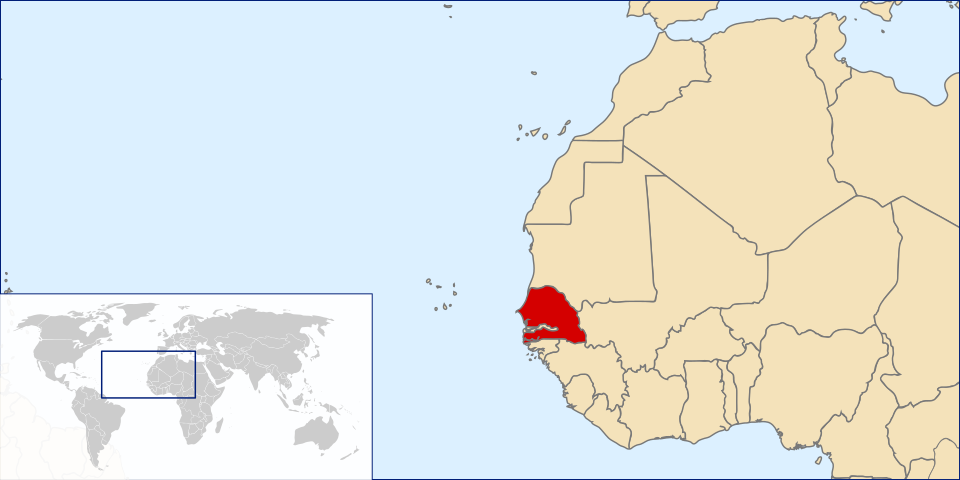
Senegal is a country on the westernmost edge of Africa, bordered by the Atlantic Ocean. The majority of its population practices Islam. Before gaining independence in 1960, Senegal was a French colony, and its capital, Dakar, served as the main center for all of French West Africa. This context is important for the local history of homosexuality: it was precisely in the mixed, port city of Dakar that Europeans most often noticed same-sex relationships and men who adopted female roles.
The key word in this history is góor-jigéen (literally “man-woman”). It comes from Wolof, the language spoken by Senegal’s largest ethnic group and the country’s main lingua franca. In the 20th century, this term was used for a man who dressed and acted like a woman and played a special role at festivals. Over time, however, the meaning of the word changed. By the end of the century, it had become a harsh insult for any gay man. This shift reflects how attitudes toward LGBT people have changed in Senegal.
Early European Observations
Written evidence of same-sex relationships in Senegal begins to appear in the late 19th century. Local residents, even those who could write, rarely documented such practices. Therefore, most of what we know about the past comes from the records of French doctors, colonial administrators, and ethnographers.
One of the earliest descriptions was left in 1894 by French naval doctor Armand Corre. In northern Senegal, he encountered men in women’s clothing:
“I met in Saint-Louis blacks adorned in the manner of women and adopting corresponding postures; I was told that they earn their living through prostitution. In Boké, at the court of a Fulani prince, I saw a griot [singer] whose voluptuous dances conveyed well the more intimate role he must have played in the household of this nobleman. The customs of pederasty do not extend beyond the Muslim milieu. In the Wolof language, the expression to designate them seems to have appeared recently, and in most African languages, it does not exist.”
- – Armand Corre, 1894*
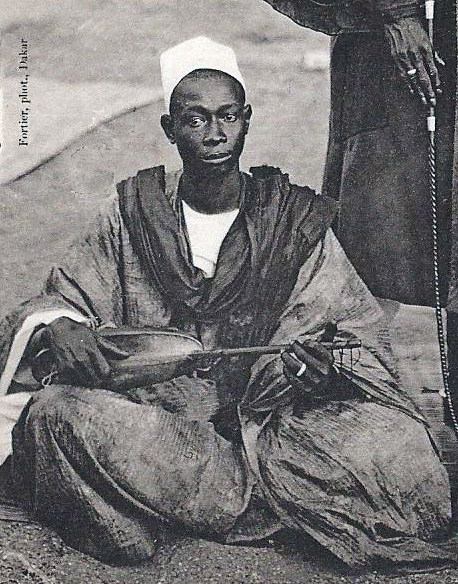
In 1935, British anthropologist Geoffrey Gorer described this social role in more detail. He was surprised by how openly these people lived and how calmly society treated them:
“It is said that homosexuality among the Wolof is a recent phenomenon, at least on any significant scale; however, it now enjoys, and has enjoyed for some years, such exceedingly high and almost publicly demonstrated patronage that passive homosexuals are a common sight. In the Wolof language, they are called ‘men-women’, gor-digen, and they try in every way to earn this name through their manners, clothing, and makeup; some even wear hairstyles like women. Socially, they do not suffer in any way, although Muslims deny them a religious burial; on the contrary, they are sought after as the best conversationalists and the best dancers.”
- – Geoffrey Gorer, 1935*
Who Were the Tapèt?
In 1931, French ethnographer Michel Leiris witnessed a different scene in Dakar. In a local dance club, he described “black pederasts dancing together in small fitted jackets; a white pederast looking like an office clerk, dancing with a flower in his mouth with a black sailor wearing a red pompom.”
This describes simple same-sex attraction without the pronounced femininity characteristic of the góor-jigéen. This indicates that different forms of homosexuality existed in colonial Senegal: from public cross-dressing to ordinary parties for men.
A 1955 account left by French teacher Charles Béart explicitly distinguishes between these two groups:
“The problem of the Wolof ngor-digen is more complex. There are tapèt – homosexuals quite similar to their European counterparts and quite often associated with them in the port stops where they are present; but there are also ngor-digen, who in some ways make one think of shamanism: dressed as men but in a feminine way, with effeminate gestures, or even completely in women’s clothing, leading the women, swaying their hips, to the tam-tam de fanal [lantern festival] or faux-lion [fake lion].”
- – Charles Béart, 1955*
The word tapèt was borrowed from French slang, where tapette literally means “faggot.” In French, it is derived from the verb taper (to hit, to slap) and the feminine suffix -ette. It degraded homosexuals by equating them with weak women.
In Senegal, the word caught on but acquired a narrower meaning. While the góor-jigéen were public figures occupying a special place at women’s festivals, the tapèt behaved closer to the European model. They engaged in same-sex relations – often with European sailors in the port – but maintained an ordinary masculine appearance.
This hidden yet vibrant life is well conveyed by English journalist Michael Davidson, recalling the Dakar of the late 1940s and 1950s:
“In 1949, Dakar was already the ‘gay’ city of West Africa. When I returned there nine years later, the French rulers had left, and Dakar had become even gayer… For some reasons, deep-rooted in history and ethnography, the Senegalese have a reputation throughout those parts for being homosexuals, and in Dakar you quickly realize they have earned this reputation…”
- – Michael Davidson, 1970 (about 1949 and 1958)*
During his second visit, Davidson attended a party in the suburbs:
“The place was full of African teenagers in women’s clothing. In women’s clothing. I mean that most of them were indeed dressed in girls’ clothes: some in European, others in complex headdresses of West African fashion. It truly was a drag party, and apart from us and perhaps two or three adult African spectators, I would say no one there was over eighteen, and most were around fifteen.”
- – Michael Davidson, 1970*
Dakar as a Center of Attraction
As a major port, Dakar brought together a wide variety of people: Africans, Mauritanians, Europeans. It was here that same-sex connections were most noticeable.
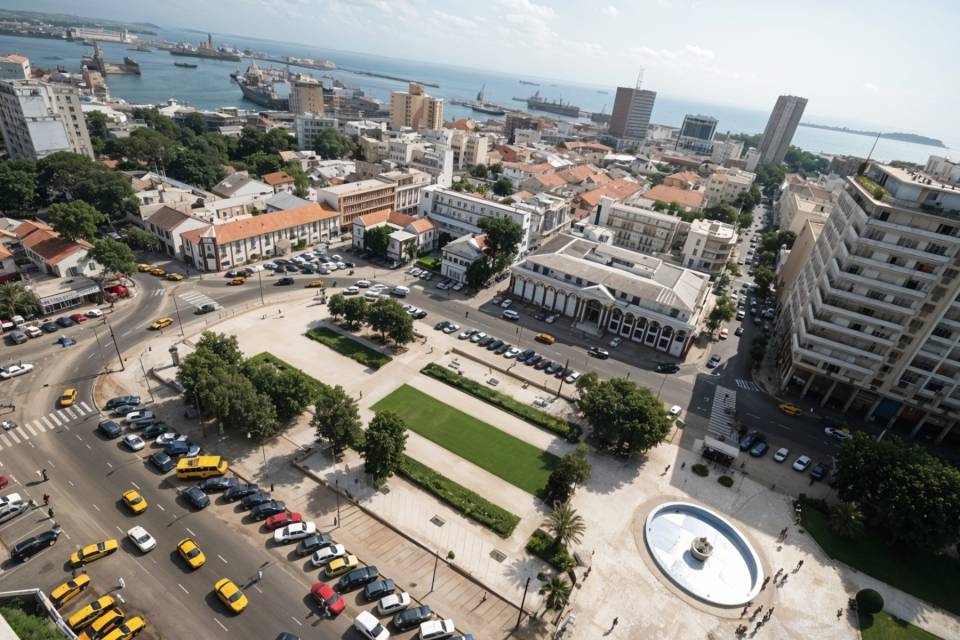
British anthropologist David P. Gamble noted that homosexuality had “taken firm root in the large towns.” Historian Michael Crowder described Independence Square in Dakar, which for decades became the main meeting place for local gay men. He emphasized that society treated them surprisingly calmly:
“Homosexuality enjoyed much greater freedom than prostitution, being widespread among Africans, Mauritanians, and Europeans. Today one can even see Wolof men dressed in women’s clothing. I once met one such man in a small bar near Dakar. He was obviously pathetically effeminate. The Wolof must be used to this, since they even have a word for them – Gor-Digen. Elders and devout Muslims condemn men for this, but typical of African tolerance, the rest of the people largely leave them alone.”
- – Michael Crowder, 1959*
After 1960, when Senegal became independent, mentions in documents became scarce. This pause lasted until the early 1990s. Then, the French gay magazine Gai pied hebdo wrote about the góor-jigéen again, noting their public nature:
“The goor-jigeen can in some respects be likened to those called ‘camp’ in the West. Recognized and accepted by society as such, they are distinguished by an excessive feminization not only of the body and behavior but also of clothing, which almost verges on transvestism.”
- – Mamou Diouf, Gai pied hebdo, 1991*
Who Were the Góor-jigéen Really?
The word góor-jigéen is deeply rooted in the Wolof language. The Wolof make up over 40% of Senegal’s population, and their language is understood by about 80% of the residents. Therefore, the term is known far beyond a single ethnic group. It is used in Gambia and Mauritania, and in Mali, it entered the Bambara language.
Throughout the 20th century, a góor-jigéen was a man who adopted feminine traits. He wore women’s clothes, wore makeup, and sometimes bleached his skin. He moved closely in women’s circles, especially among noble ladies – the diriyanké. Such a person helped organize weddings and christenings, cooked food, and acted as a master of ceremonies. In Senegal, people still say “góor-jigéen sauce,” remembering their culinary talents.
A Dakar teacher recalled their high status in an interview:
“They were truly grand ladies, because I cannot give you advice on clothing or cosmetics today if I myself am not a good example. The góor-jigéen was something of a kingmaker or queenmaker, because he pulled many strings. For instance, for a lady to look good in society, she needed to have her góor-jigéen. And at the same time, the góor-jigéen was also a matchmaker, someone who settles love affairs; he played the role of an intermediary.”
- – Interview with informant A., teacher, Dakar, 2014*
Anthropologist Cheikh I. Niang believes that in colonial times, the góor-jigéen even held political influence. The country’s future first president, Léopold Sédar Senghor, relied heavily on the support of influential women. According to one version, the góor-jigéen from the city of Saint-Louis helped him win the elections: they organized a triumphant entry for him and welcomed him with special slogans.
The magazine Gai pied hebdo called them “scourges of good morals” for their masterful command of irony. In this, the góor-jigéen resembled griots – traditional wandering singers who were allowed to mock society’s vices. They also frequently organized sabar – street dances to the beat of drums.
How a Social Role Became a Stigma
Up until the 1980s, Senegalese people judged the góor-jigéen by their social function. It was a man playing the role of a woman, and society granted him the right to do so. Their sex lives remained in the shadows: people either knew nothing or turned a blind eye to it. Some góor-jigéen even married and had children.
Early Europeans immediately equated the góor-jigéen with homosexuals. But they judged by their own Western standards. The Senegalese themselves viewed it differently.
Everything collapsed when same-sex love began to be openly discussed in the country. Pressure on homosexuals intensified, and this negativity inevitably hit the góor-jigéen. In Dakar, older people might respect traditional góor-jigéen for their help at festivals but simultaneously hate “gays.” Over time, these two concepts merged.
The same Dakar teacher explained this logic:
“The góor-jigéen in Senegalese society was more or less considered an actor. An actor can change costume, can change skin, can play several roles at once, and the homosexual was rather considered an actor, that is, a man who liked playing the woman… It didn’t shock people overly much.”
- – Interview with informant A., teacher, Dakar, 2014*
But as soon as the sexual undertone became obvious, tolerance disappeared:
“And then the average Senegalese began to realize that these people have a sexuality, that it’s no longer a comedy… And that’s exactly when we saw, for example, certain góor-jigéen who were prominent in society, meaning they were accepted in some homes, in some circles – and one fine day they were kicked out… As soon as it was discovered that this was a góor-jigéen, meaning a person having sexual relations with a man, these people were banished.”
- – Ibid.*
A doctor from Dakar confirmed that the former respect was replaced by fear:
“Since it became known, the góor-jigéen disappeared, the góor-jigéen as such – campy, effeminate, and all that… now everyone knows that the góor-jigéen was not just an effeminate person, but a homosexual who had relations with men.”
- – Interview with informant B., doctor, Dakar, 2014*
The harmless or even prestigious word góor-jigéen turned into a crude insult.
The Press, Islamists, and the End of an Era
In the 1990s, research on HIV transmission pathways began in Senegal. Scientists found that in Dakar, the word góor-jigéen had definitively become synonymous with “gay.” Homosexuals themselves began to fear it in panic. In a 2002 study, a local resident recounted:
“This term is like the sound of a siren, after which we expect insults, blows, and stones thrown at us by maddened crowds.”
- – Study by C. I. Niang et al., 2002*
In the 1980s, an independent press emerged in Senegal, and in the 1990s, tabloid newspapers – cheap publications hungry for scandals – flourished. Previously, rumors about someone’s orientation did not leave their neighborhood. Now, the whole country blared about them.
Simultaneously, the Islamic organization Jamra launched a campaign against homosexuality, calling it a “social scourge.” Any man dressed even slightly more femininely came under suspicion. In 1999, a show featuring male transvestites at the Saly resort caused a massive scandal. Jamra managed to get the club closed. The newspaper Le Matin noted at the time:
“In the large colonial urban agglomerations of that era, these effeminate men were tolerated. When these jesters started taking themselves seriously… people handed them over to popular justice. They became ‘goordjiguène,’ whose daily fate since then consists of being stoned and mocked…”
- – Le Matin newspaper, 1999*
The situation worsened in the early 2000s. The fight against AIDS brought gay men out of the shadows: they received help from charitable foundations, but this also attracted the wrath of conservatives. Widespread internet access and cable television exacerbated the conflict. The idea solidified in society that homosexuality was a Western infection threatening Senegalese traditions.
The country passed the point of no return in 2008. The tabloid press published a photo of a secret gay wedding in Dakar. In response, a wave of arrests and prison sentences swept through. For the first time, police began massively applying an old article of the Penal Code punishing an “unnatural act.”
Why the Old Traditions Disappeared
The traditional góor-jigéen disappeared not only because of persecution. The Senegalese homosexuals themselves changed.
Previously, older members took the youth under their wing and taught them the rules of survival. They explained how to behave so that society would turn a blind eye to their lives. But when the witch hunt began, the connection between generations broke. Young guys no longer understood the boundaries of what was permissible:
“They felt attracted to men, found places where men could be found – and off they went! Not even knowing how it works… in any society… there are codes, there are rules of behavior, otherwise you cannot function!”
- – Interview with informant A., teacher, Dakar, 2014*
Furthermore, the youth no longer wanted to be “sauce makers” and bleach their skin. They rejected female roles:
“I knew I was like them, but I didn’t want to go to that extreme… You see a real góor-jigéen on the street – and you immediately know who it is.”
- – Interview with informant B., doctor, Dakar, 2014*
Young gay men wanted to live openly. This horrified the elders: they understood that public embraces would destroy the remnants of tolerance. And they were right. Society responded to the openness with raids and trials. The old tradition, which had allowed men-women to find their place in Senegal, was destroyed, and the word that designated them turned into an insult.
Literature and Sources
- Christophe Broqua. Góor-jigéen: la resignification négative d’une catégorie entre genre et sexualité (Sénégal). Socio, No. 9. 2017.
 Subscribe to our Telegram channel (in Russian): Urania. With Telegram Premium, you can translate posts in-app. Without it, many posts link to our website, where you can switch languages — most new articles are published in multiple languages from the start.