Menaka Guruswamy Becomes the First Openly Lesbian MP in the History of the Indian Parliament. She Was Elected on the Ticket of a Regional-Nationalist Bengali Party
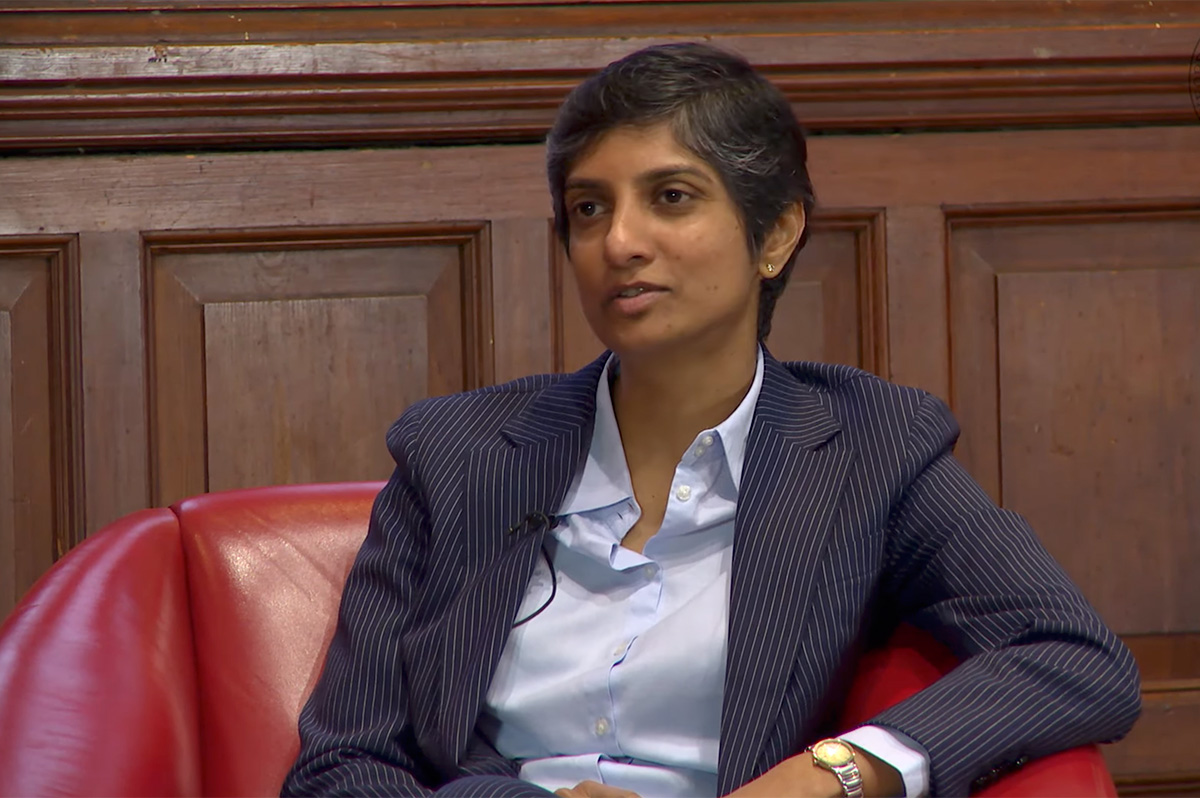
On March 9, constitutional lawyer Menaka Guruswamy was elected to the Rajya Sabha – the upper house of the Indian Parliament – representing West Bengal.
She became the first openly lesbian woman at the national parliamentary level in India and the first openly LGBT representative in Indian parliamentary history. Guruswamy was nominated by the All India Trinamool Congress, a secular nationalist party that governs West Bengal.
The Trinamool Congress emerged in 1998 following a split within the Indian National Congress. The party combines a secular, regionalist, and progressive agenda, advocates social equality, and draws on Bengali nationalism. According to its party constitution, it also seeks to make India a strong world power. In its political vision, Bengal is presented as a community with its own cultural and political identity within federal India. The party emphasizes the importance of the Bengali language and cultural symbols, champions federal autonomy, and criticizes excessive centralization. It currently holds the fourth-largest number of seats in the Indian Parliament.
Guruswamy studied at the University of Oxford, Harvard Law School, and the National Law School of India University. She holds the title of Senior Advocate of the Supreme Court of India – a designation conferred by merit. Guruswamy is widely known for her work on constitutional law, civil liberties, and LGBT rights.
Guruswamy was part of the legal team that in 2018 successfully challenged Section 377 of the Indian Penal Code – a colonial-era law that criminalized consensual same-sex relations. The ruling in Navtej Singh Johar v. Union of India marked a turning point for LGBT rights in the country. Guruswamy’s partner, lawyer Arundhati Katju, was also part of the case. In 2019, both were named to the Time 100 list of the world’s most influential people.
In 2023, Guruswamy represented the plaintiffs in the marriage equality case Supriyo v. Union of India. On October 17, 2023, the Supreme Court ruled 3–2 against recognizing same-sex marriages, stating the matter fell within Parliament’s domain, but acknowledged that LGBT people face discrimination.
“This is significant not because Parliament needed a queer person, but because a queer person needed Parliament,” Ankit Bhupatani, an LGBT activist, told the Washington Blade.
“For too long, we have fought our battles only in courtrooms and on the streets. Now, there is a seat at the table where laws are written,” Bhupatani added.
In India, LGBT representation in elected office has existed at the state and local levels but remained limited. In 2000, Shabnam Mausi was elected to the Madhya Pradesh Legislative Assembly from the Sohagpur constituency, becoming one of the first openly transgender women to hold public office in India. However, no openly LGBT candidate had been elected to the national Parliament before Guruswamy.
According to Bhupatani, Guruswamy’s election should not be seen as an immediate shift toward legislative change on LGBT rights. He noted that her presence in Parliament could sustain the discussion in a way that had not happened before, but that large-scale legal change would take time.
“The 377 decriminalization seemed impossible until it wasn’t. Partnership rights will follow the same pattern eventually,” Bhupatani said.