A Woman Leads the Anglican Church for the First Time. What Is Her Stance on LGBT Issues?
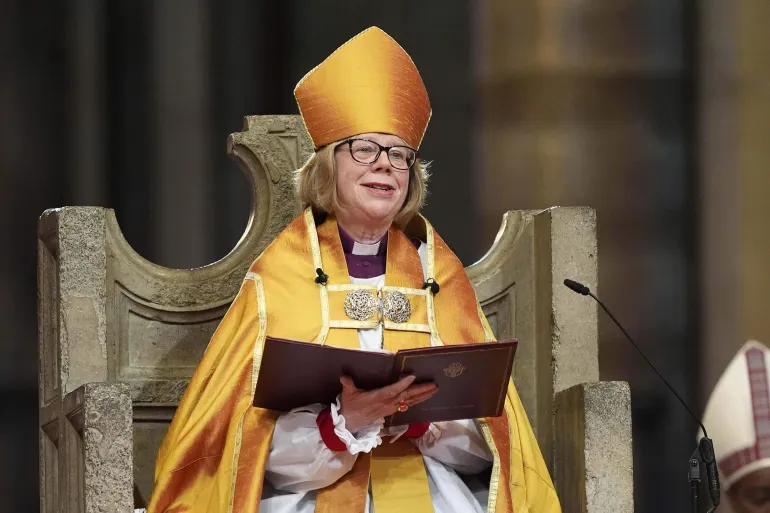
On March 25, Sarah Mullally was formally installed at Canterbury Cathedral as the 106th Archbishop of Canterbury – the spiritual leader of the Church of England and the symbolic central figure of the worldwide Anglican Communion. Mullally became the first woman to hold the position in 1,400 years. Around two thousand guests attended the ceremony, including Prince William and Princess Catherine.
The Anglican Communion unites approximately 85 million believers in more than 165 countries. Within Anglicanism, there is a broad spectrum of views – from conservative to liberal – which is why debates over women in the episcopate, blessings for same-sex couples, and church discipline are particularly intense.
For many LGBT Christians, Mullally’s election has been a sign of hope. As Bishop of London, she led the church’s Living in Love and Faith process and supported the introduction of Prayers of Love and Faith – prayers of thanksgiving, dedication, and blessing for same-sex couples. During the 2023 synodal debates, Mullally openly acknowledged the harm caused by the church:
“Our eyes have been opened to the harm that we have done, especially to LGBT people.”
That same year, the bishops of the Church of England issued a collective apology:
“We realize that this behavior has not reflected the universal love of God for all people.”
The Church of England’s official doctrine, however, continues to define marriage as the union of one man and one woman. Mullally supported blessings for same-sex couples but has not promised a revision of the marriage doctrine. Her election is seen more as a signal of greater pastoral openness than as a guarantee of radical doctrinal change.
In her first sermon, Mullally focused on the church’s accountability to those who have been harmed:
“We must not overlook or minimize the pain experienced by those who have been harmed through the actions, inactions, and failures of those in our own Christian churches and communities.”
She pledged to serve “a church for the whole nation and for the world.” These words carried particular weight: Mullally succeeded Justin Welby, who resigned in November 2024 after an independent investigation found that he had failed to take adequate action in a case of systematic abuse within the church.
Mullally’s appointment was announced on October 3, 2025, and she formally took office on January 28, 2026, following the confirmation of her election at St Paul’s Cathedral in London. Before entering the church, Mullally spent over 35 years in Britain’s National Health Service, serving as Chief Nursing Officer for England from 1999 to 2004. She was made a Dame Commander of the Order of the British Empire for her contributions to healthcare. Ordained as a priest in 2002, she became Bishop of Crediton in 2015 and the first female Bishop of London in 2018.
Conservative Anglican churches, primarily in Africa and Asia, reacted sharply to Mullally’s appointment. GAFCON – a fellowship of conservative Anglicans – issued the following statement:
“Canterbury has relinquished its authority to lead.”
In March 2026, at an assembly in Abuja, the capital of Nigeria, the GAFCON movement officially barred its leaders from attending Lambeth Conferences and meetings of primates, that is, the heads of the self-governing Anglican churches, if those gatherings are convened by the Archbishop of Canterbury. GAFCON, which brings together the conservative wing of the Anglican world, opposes women in the episcopate and at the same time rejects Mullally’s stance on LGBT issues.
The fastest-growing Anglican churches are in Africa, and many hold more conservative positions on gender, marriage, and church authority. The Archbishop of Canterbury serves simultaneously as the leader of the Church of England within British society and as a figure tasked with maintaining the symbolic unity of a diverse global communion. Mullally’s election has sharpened this tension.