Italian Bishop of Aosta Affirms Church's Open Doors to LGBT People Following Rainbow Swastika Controversy
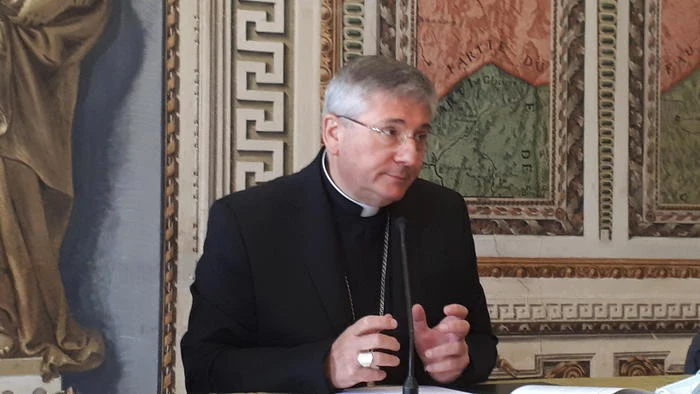
In early October 2026, public controversy erupted in Italy’s northwestern region of Valle d’Aosta surrounding the Catholic Diocese of Aosta: Bishop Franco Lovignana issued an extensive clarifying statement after his personal secretary, Gilbert Turcotti, posted an image on his private WhatsApp status on the day of the local Aosta Pride parade depicting four crossed rainbow flags forming a visible swastika. While the bishop emphasized that the post did not represent the diocese and affirmed that the Church’s doors are open to everyone regardless of sexual orientation, LGBTQ+ advocates described his response as delayed and evasive.
According to a report by the Italian news agency ANSA, Bishop Lovignana clarified in an interview with the diocesan newspaper Il Corriere della Valle that the official stance of the bishopric is communicated solely through public preaching, pastoral letters, and the diocesan press office. “People, all people, regardless of their sexual orientation, know that in the Church they find open doors, even if the Church does not cease to teach what it considers a path of truth and life,” Lovignana stated. He noted that over the years he has frequently hosted homosexual individuals and civil activists at the bishop’s residence for respectful dialogue, cautioning against reducing people to labels and categories while reiterating Christian teachings on human dignity, chastity, and marriage.
However, as highlighted by the Italian Christian LGBTQ+ portal Progetto Gionata, the bishop’s intervention arrived only after the Aosta Pride organizing committee expressed outrage and demanded accountability. Commentator Massimo Battaglio criticized the diocesan communication as an attempt at conflict mitigation that stopped short of explicitly condemning the Nazi symbol or imposing institutional consequences. Battaglio also challenged the Church’s doctrine demanding strict chastity (abstinence) from queer believers, arguing that such demands cause significant psychological and spiritual distress. Turcotti had earlier offered a vague apology to anyone offended, maintaining that he had no intention to demean the marchers.
The autonomous Alpine region of Valle d’Aosta, bordered by France and Switzerland, has a population of approximately 125,000 residents. The Diocese of Aosta, part of the ecclesiastical province of Turin, has been led by Bishop Franco Lovignana since 2011. In recent years, public discussions surrounding queer civil rights and religious hospitality have grown increasingly prominent across northern Italy.
The events in Aosta mirror broader discussions across Italian Catholicism regarding inclusion: previously, Urania reported on an open pastoral dialogue between the Bishop of Aversa and local pride organizers, the Diocese of Bolzano’s initiative establishing pastoral support for queer believers during coming out, and a historic prayer vigil in the Diocese of Chiavari marked by an institutional church apology to the LGBT community.