Canadian Poet and Translator of Ancient Queer Classics Anne Carson Wins Nobel Prize in Literature
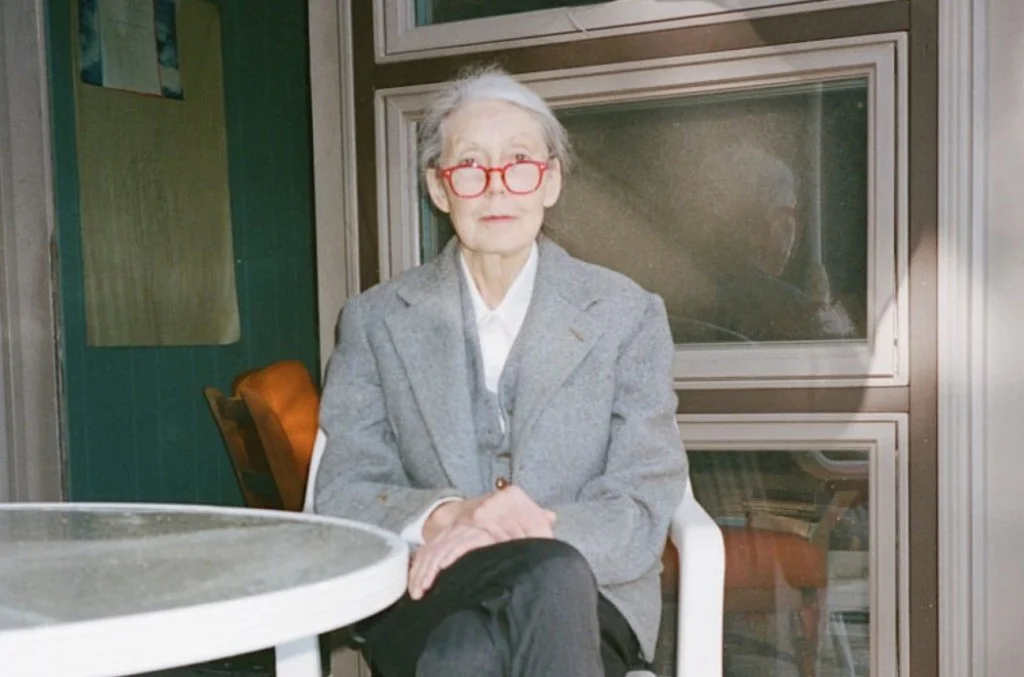
On Thursday, October 8, 2026, the Swedish Academy in Stockholm announced that the 2026 Nobel Prize in Literature has been awarded to 76-year-old Canadian poet, essayist, translator, and classical scholar Anne Carson. According to the official press release of the Swedish Academy, the award was conferred “for her bold and inventive oeuvre that, in playful dialogue with the classical tradition, has created new forms for contemporary literature.”
Born in Toronto in 1950, Carson earned her doctorate in classical philology and taught ancient Greek language and literature at major universities across Canada and the United States. Throughout her career, she has consistently dissolved boundaries between literary genres, combining poetry, philosophical essays, dramatic dialogues, and critical commentary. Her work has earned broad international acclaim; in the late 1990s, American writer and intellectual Susan Sontag remarked that Carson was one of the very few contemporary English-language authors whose every published line she felt compelled to read.
Carson gained widespread recognition for her innovative engagements with classical antiquity, notably her translation of the surviving lyrics of Sappho, a foundational figure in ancient queer poetry. In her 2002 volume If Not, Winter: Fragments of Sappho, Carson reconstructed the physical condition of damaged papyri on the printed page, using brackets and white space to represent missing or illegible lines. The work prompted debate in academic and cultural circles. Many queer theorists and literary scholars praised the collection as an important intervention that expanded the classical canon, allowing contemporary lesbian and queer readers to engage with Sappho through their own lived experience and embodiment. Conversely, some classical philologists criticized the work for prioritizing personal aesthetics and performative gestures over literal fidelity, observing instances where ambiguous or gender-neutral Greek phrasing was rendered selectively in the masculine.
Carson’s best-known original work is Autobiography of Red (1998), a novel in verse inspired by the fragmentary Geryoneis of the ancient Greek poet Stesichoros. In Carson’s reimagining, the mythical red-winged monster Geryon becomes an introverted gay teenager growing up in rural Canada, navigating familial trauma, discovering photography, and experiencing a painful coming-of-age romance with a young man named Herakles. The book has since achieved classic status within contemporary queer literature for its intricate examination of vulnerability, difference, and artistic maturation.
In Russia, a translation of Autobiography of Red was previously released by the independent publishing house No Kidding Press, but was subsequently withdrawn from distribution amid escalating state prohibitions on LGBTQ+ content and the designation of the “international LGBT movement” as extremist. Previously, Uránia reported on Russian court orders blocking online libraries carrying LGBTQ+-themed titles, as well as the closure of independent publishers following criminal proceedings against book industry professionals.