“We Must Document Ourselves Now” — Stephanie Andrea Allen's book on Black lesbian literature, film, and self-representation
A monograph examining Black lesbian creative practice, community care, and cultural visibility.
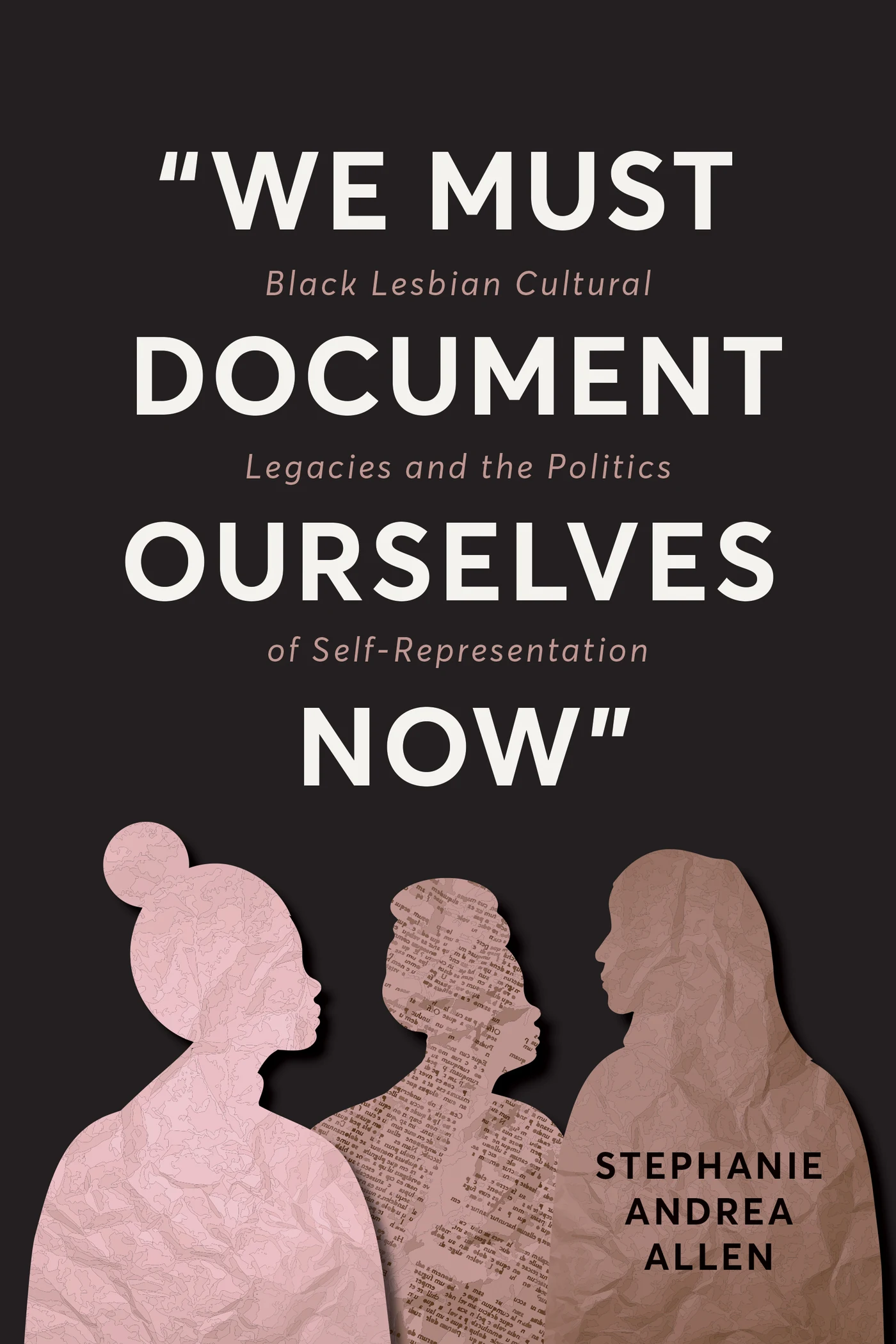
In July 2026, The Ohio State University Press published the monograph “We Must Document Ourselves Now”: Black Lesbian Cultural Legacies and the Politics of Self-Representation as part of its “Digital Media, Feminist Resistance” series. The book was authored by American literary scholar and cultural theorist Stephanie Andrea Allen.
Stephanie Andrea Allen is an interdisciplinary humanities scholar and Assistant Professor of Gender Studies at Indiana University Bloomington. After earning her Ph.D. in American Studies from Purdue University, she focused her research on the literature, cinema, and media culture of Black queer women, as well as Afrofuturism and speculative fiction. Allen combines academic scholarship with creative writing and independent publishing: she has authored two short story collections, co-edits the literary journal Serendipity, and founded BLF Press in 2014, an independent Black feminist press dedicated to publishing works by Black women, Indigenous women, and queer women of color.
The title of the monograph draws on a 1978 imperative issued by feminist thinkers and Black women’s liberation activists Barbara and Beverly Smith: “We must document ourselves now.” Analyzing cultural production from 1974 to 2020, Allen argues that Black lesbian creative expression represents more than artistic reflection; it constitutes a radical form of self and community care designed to counter systematic erasure from public life. The study identifies three central objectives of these texts and visual works: laying bare the lived realities of Black lesbians navigating racism, sexism, class oppression, and homophobia; dismantling the notion that open lesbian identity is marginal or forbidden; and sustaining emotional and historical continuity through creative witness.
The book reconstructs key moments in cultural history beginning in the 1970s, when a distinct Black lesbian literary tradition emerged. Allen pays particular attention to poet Stephanie Byrd and essayist Anita Cornwell, author of Black Lesbian in White America (1983), the first single-author collection of essays by an African American lesbian. The study demonstrates how these writers waged a dual struggle: resisting the conservative, heteronormative gender roles promoted within the Black Power and Black Arts movements, while concurrently exposing the racism, paternalism, and class insensitivity within the predominantly white feminist and lesbian spaces of the era.
In subsequent chapters, Allen examines Black lesbians’ contributions to the institutionalization of academic lesbian studies and chronicles the boom in queer and feminist publishing during the 1980s and 1990s. The emergence of collectives such as Kitchen Table: Women of Color Press brought Black women’s voices into national prominence. Allen critically assesses not only these triumphs but also the subsequent crisis: the closure of independent feminist bookstores, market consolidation by major retail chains, and the commercialization of LGBTQ+ literature, which once again pushed Black lesbian writing to the distribution margins.
The concluding sections focus on independent cinema and twenty-first-century digital media. Tracing a lineage from Cheryl Dunye’s groundbreaking film The Watermelon Woman (1996) to contemporary web series produced by Alexander King Films and the independent platform OpenTV, Allen develops a framework for understanding the precarity of Black queer media-making. Drawing on archival research and interviews with cultural workers, she underscores that safeguarding Black lesbian cultural memory continues to require institutional persistence, independent infrastructure, and the recognition of creative practice as a vital instrument of liberation.