"To Have and to Hold" — Horace Griffin's Book on Same-Gender Marriage, Theology, and Equality
An Episcopal priest examines the evolution of marriage and theological cases for marriage equality.
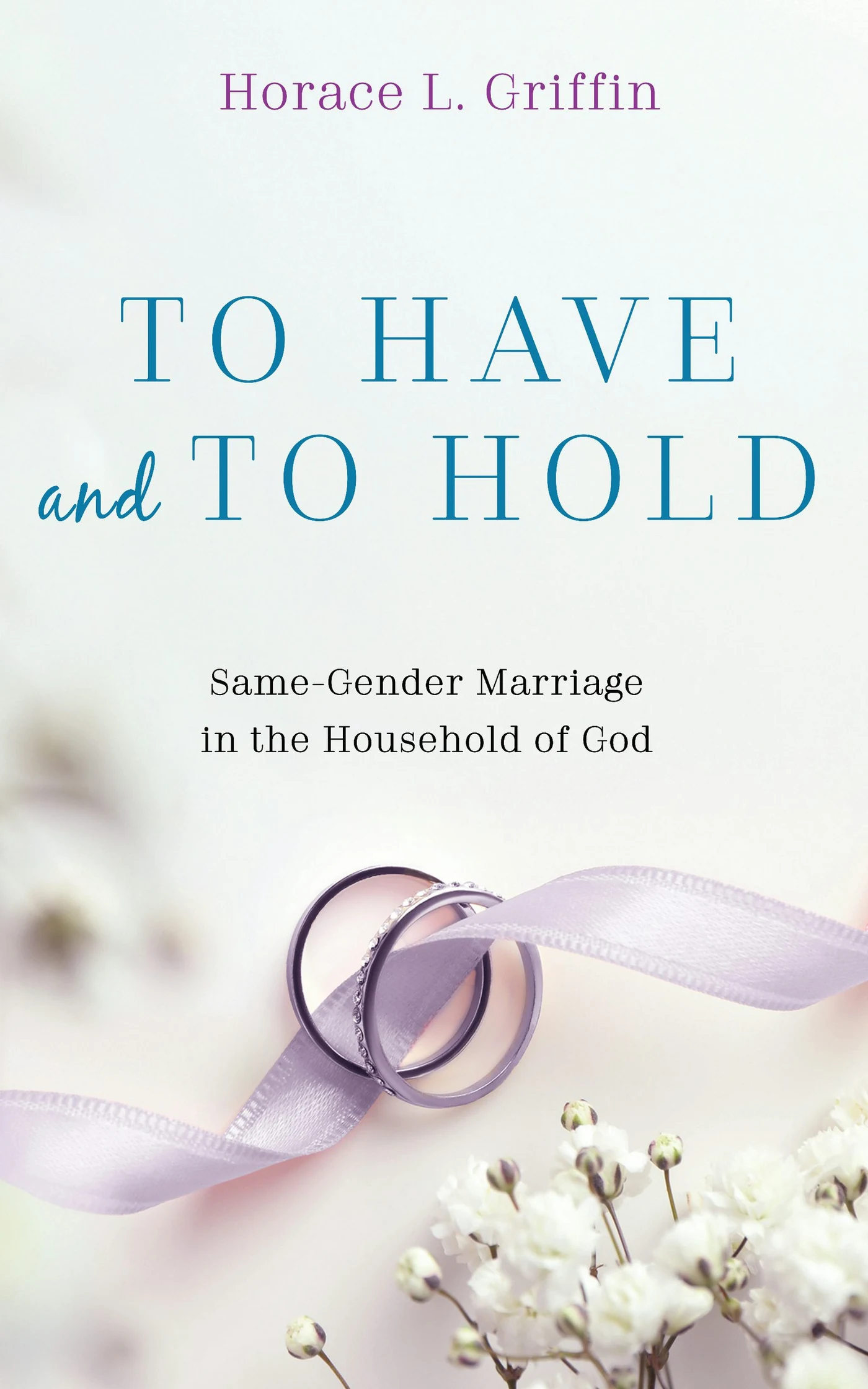
On August 3, 2026, the American publishing house Cascade Books, an imprint of Wipf and Stock Publishers, released the book To Have and to Hold: Same-Gender Marriage in the Household of God. Written in English by theologian and Episcopal priest Horace L. Griffin, the work presents a comprehensive analysis of the institution of marriage within Christian tradition, critiques theological arguments against same-sex unions, and mounts a defense of marriage equality amid a rising tide of legal and political conservatism in the United States.
The author, the Reverend Dr. Horace L. Griffin, is an African American theologian, an openly gay priest of the Episcopal Church, and a veteran educator. He earned his bachelor’s degree from Morehouse College, a Master of Divinity from Boston University, and a PhD from Vanderbilt University. For over twenty-seven years, Griffin taught pastoral theology and religious studies at leading American seminaries and universities, including The General Theological Seminary in New York and the Pacific School of Religion in Berkeley. Within the Episcopal Church, he has served as associate rector for pastoral care at St. Luke’s Episcopal Church in Atlanta and as a hospital chaplain in Tennessee; he currently serves as chaplain at Canterbury Court in Atlanta. His influential 2006 book, Their Own Receive Them Not: African American Lesbians and Gays in Black Churches, was a groundbreaking examination of the intersection of race, faith, and sexuality, earning a Lambda Literary Award.
In his new volume, Griffin dismantles the fundamentalist assumption of an unchanging, singular “biblical marriage.” Drawing on biblical scholarship and socio-historical analysis, he demonstrates that marital arrangements in biblical times bore little resemblance to contemporary partnerships between equal companions. Ancient marriage was fundamentally patriarchal, grounded in women’s subordinate status as family or spousal property, and frequently took the form of polygyny, concubinage, or transactional dynastic alliances. Griffin draws direct historical parallels between current ecclesiastical resistance to same-sex unions and the centuries-long Christian defense of slavery and anti-miscegenation laws in the United States, pointing out that in each era conservative authorities weaponized proof-texted scriptures to legitimize existing power hierarchies as divinely ordained.
A major focus of the book is the deconstruction of natural law arguments and literalist biblical interpretations commonly deployed against LGBTQ+ people. Griffin argues that ancient biblical prohibitions reflected the cultural anxieties of patriarchal societies and have no moral relevance to loving, mutual, and monogamous contemporary partnerships. Grounding his theological reflections in decades of pastoral counseling with queer Christians and their families, he exposes the profound psychological and spiritual harm inflicted by religious rejection, identifying it as a form of spiritual abuse that causes familial estrangement and deep trauma. In contrast, Griffin affirms that sexuality and the capacity for intimate love are divine gifts, contending that the blessing and recognition of same-gender marriages strengthens social fabric and fulfills the gospel call to justice, compassion, and solidarity.
The urgency of the book is heightened by the current political climate in the United States. Following the Supreme Court’s 2022 decision overturning federal abortion rights, conservative legal groups and religious fundamentalists have openly signaled ambitions to overturn Obergefell v. Hodges (2015), the landmark ruling establishing nationwide marriage equality. In this contentious context, Griffin’s work stands not only as rigorous theological scholarship but also as an urgent manifesto for Christian liberation. He calls on faith communities and clergy to move beyond passive acquiescence toward active public advocacy for same-sex couples, reclaiming the institution of Christian marriage as a celebration of enduring love, mutual care, and human dignity.