“The Lens of Eternity” — A Book by Janet Mason on Berenice Abbott, Art, and Queer Love
A hybrid memoir on photographer Berenice Abbott and art critic Elizabeth McCausland.
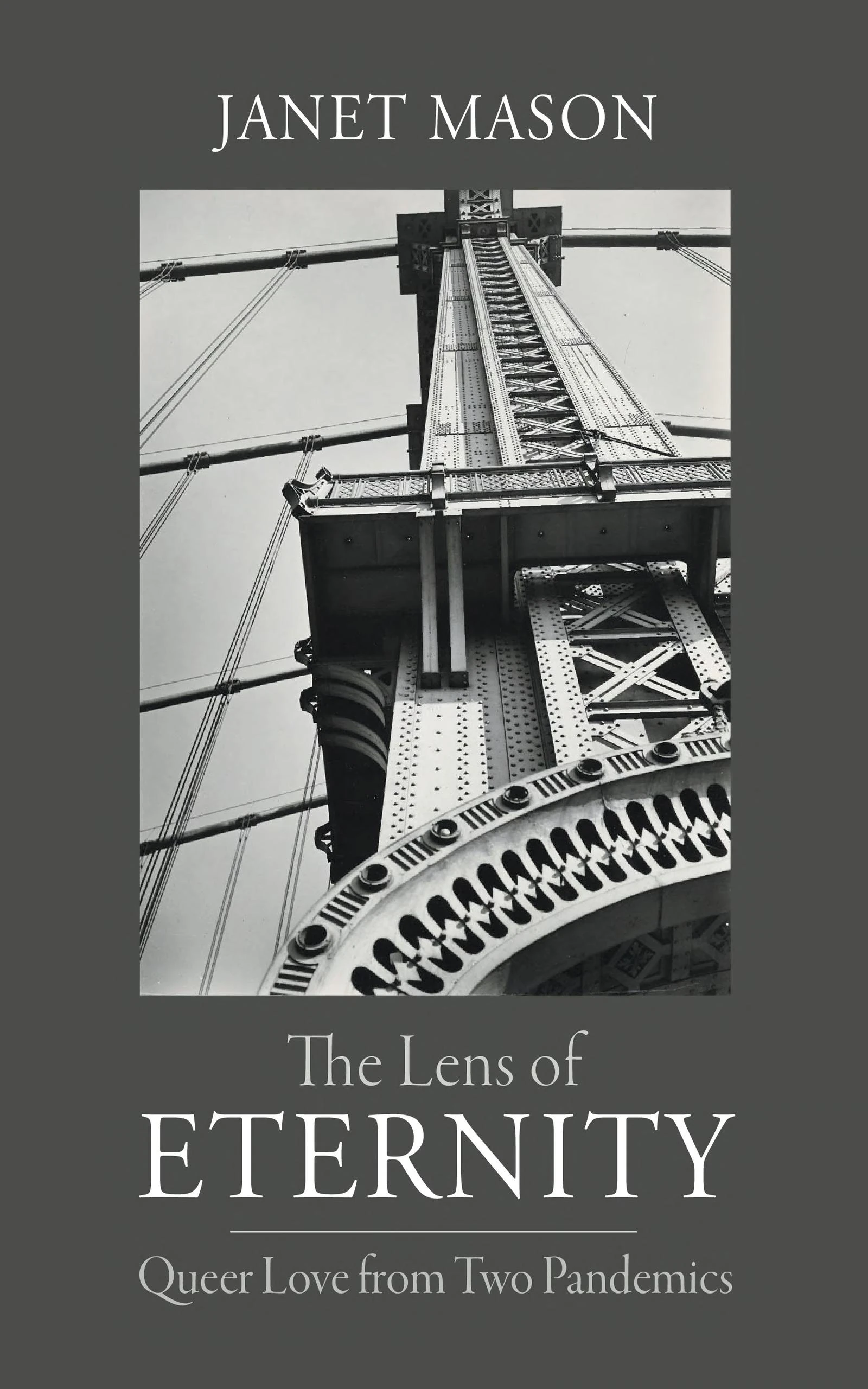
On August 26, 2026, American academic publisher Resource Publications, an imprint of Wipf and Stock Publishers, released the non-fiction volume The Lens of Eternity: Queer Love from Two Pandemics in English. The book was authored by American writer, essayist, and poet Janet Mason.
Based in Philadelphia, Janet Mason is an award-winning author known for literary works exploring queer history, women’s liberation, and the ethics of compassion. Her 2012 memoir Tea Leaves: A Memoir of Mothers and Daughters received a Goldie Award and was selected by the American Library Association for its 2013 Over the Rainbow List. Mason’s bibliography includes the novels THEY: A Biblical Tale of Secret Genders, The Unicorn, The Mystery, Loving Artemis: An Endearing Tale of Revolution, Love, and Marriage, and Cinnamon, and her writings have repeatedly been nominated for a Pushcart Prize. Alongside her writing, she is an educator and an advocate for animal welfare, plant-based living, and mindfulness.
Her new publication is a hybrid memoir that interweaves intimate personal reflection with art history and cultural biography. The historical narrative centers on the life of pioneering American modernist photographer Berenice Abbott (1898–1991) and her three-decade domestic and creative partnership with noted art critic and historian Elizabeth McCausland (1899–1965). Having survived the 1918–1920 influenza pandemic as a young woman in New York’s Greenwich Village, Abbott relocated to Paris in the 1920s. Beginning as a darkroom assistant to Man Ray, she went on to establish her own studio, producing iconic portraits of modernist literary and queer figures, including Djuna Barnes, Sylvia Beach, and James Joyce. Abbott was also instrumental in rescuing and preserving thousands of negatives by French documentary photographer Eugène Atget, cementing his reputation as a master of photographic art. Upon returning to the United States, Abbott and McCausland collaborated on the landmark New Deal documentary project Changing New York, which paired Abbott’s architectural images with McCausland’s critical and historical commentaries.
Mason bridges this history with her own contemporary experiences of quarantining with her longtime partner Barbara during the COVID-19 pandemic in 2020. The book draws striking parallels across two global health crises separated by a century, illuminating how crisis clarifies personal priorities and deepens relational intimacy. Mason pays special tribute to Elizabeth McCausland, whose incisive art criticism and advocacy for social realism were frequently overshadowed during her lifetime by Abbott’s prominent public reputation.
A central strength of the volume is its candid exploration of long-term lesbian partnership—a theme seldom accorded comprehensive literary reflection. Mason examines the daily architecture of enduring love: the necessary compromises, mutual forgiveness, caregiving during illness, and the shared dignity of growing older in a heteronormative culture. Combining archival inquiry with vignettes of quarantine life—such as adopting a plant-based diet, sharing books, and walking city streets—the memoir celebrates generational queer continuity and the resilient power of enduring love.