"The Disappearers" — Marlon James's Novel on Violence, Memory, and Jamaica's Queer Community
The novel examines a Kingston tragedy, erasure of memory, and gay men's fight for survival.
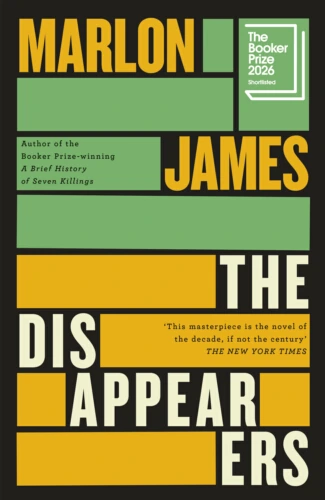
On September 3, 2026, the British publishing house Hamish Hamilton (an imprint of Penguin Books) released the novel The Disappearers in English. Its author is the Jamaican novelist Marlon James, winner of the 2015 Booker Prize for A Brief History of Seven Killings.
Marlon James was born in Jamaica, graduated from the University of the West Indies and Wilkes University, teaches creative writing at Macalester College in Minnesota, and lives in the United States. He is among the most prominent contemporary Anglophone authors of Caribbean origin. In past years, James has repeatedly addressed his experience of growing up in Jamaica and his forced emigration due to the island’s violently homophobic climate. While his previous works explored eighteenth-century plantation slavery, the Cold War political conflicts of Kingston, and African mythologies, this new novel places the systemic oppression and everyday realities of queer people in the Caribbean at the very center of its inquiry.
The narrative begins in Kingston in 1988. Eight gay men gather for the first time for a casting call and covert rehearsals of an openly queer theatrical play—an unprecedented, perilous initiative amid the fierce social intolerance of late twentieth-century Jamaica. During one rehearsal, a violent mob storms the building: one participant is killed instantly, all others suffer severe injuries, and two subsequently vanish without a trace.
Spanning several decades, the storyline tracks the diverging fates of both survivors and perpetrators. James examines the social mechanics of violent erasure: some characters attempt to suppress the trauma, others channel their lives into rage and vengeance, while still others retreat permanently underground or leave the island. The plot develops as a multi-layered investigation in which the pursuit of the missing persons is inseparable from confronting institutional hypocrisy and entrenched impunity.
The book traces the historical roots and persistence of Jamaica’s culture of shame and homophobia, reinforced by rigid religious moralism and colonial-era anti-sodomy statutes that governed the island for generations. The novel is deeply polyphonic: James weaves standard English with Jamaican Patois, reflecting the authentic rhythms and cadence of Caribbean street speech. He demonstrates that in the face of forced erasure and bodily destruction, preserving collective memory and personal solidarity remains the ultimate form of resistance.