“Queer Theologies: The Basics” — Chris Greenough’s Book on Christianity, Gender, and Trans Theology
A British scholar explores how queer experience reshapes Christian thought and biblical theology.
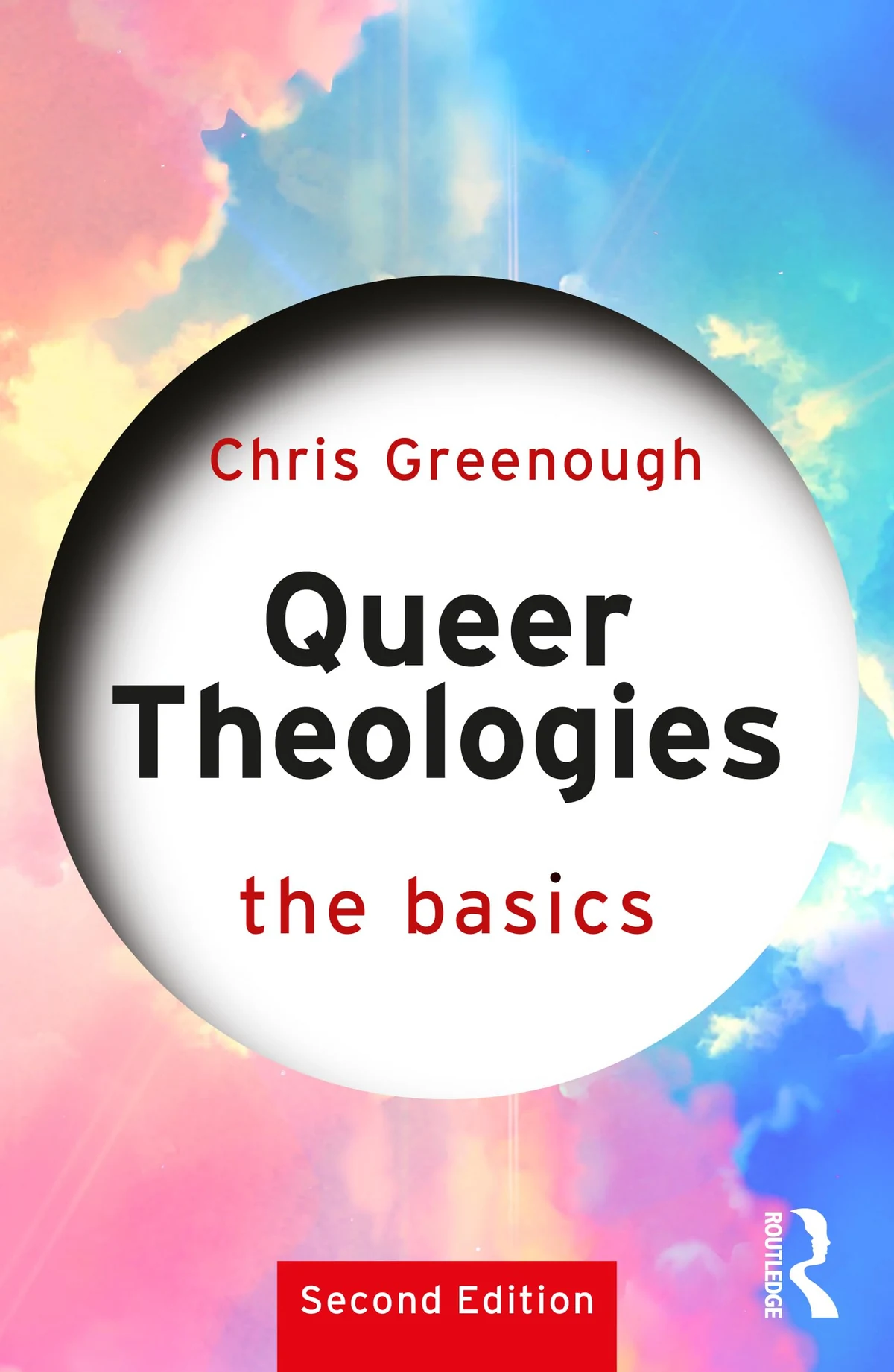
On July 20, 2026, British academic publisher Routledge released the second, revised and expanded edition of Queer Theologies: The Basics as part of its acclaimed The Basics series. The volume is authored by Chris Greenough (Christopher Greenough), a British scholar specializing in the sociology of religion, gender studies, and theology.
Chris Greenough is Professor of Social Sciences and Education and Head of the School of Education at Edge Hill University in the United Kingdom. He earned his doctorate (PhD) at the University of Birmingham. Greenough’s research focuses on the intersections of religion, queer theory, gender, embodiment, and sexual violence. He is the author of Undoing Theology: Thinking Christianity Through Flesh (2018) and The Bible and Sexual Violence Against Men (2020), as well as co-author of Drag: The Basics (2025).
The book deliberately employs the plural form — Queer Theologies — to emphasize that queer theological thought is not a monolithic doctrinal system, but an expansive and diverse tapestry of critical engagements with faith and religious traditions. Greenough charts the genealogy of the discipline, tracing its roots from liberation theology, feminist theology, and womanist thought of the 1960s and 1970s through the gay and lesbian theologies of the 1970s and 1980s. The emergence of queer theory in the 1990s revolutionized theological enquiry: drawing on Judith Butler’s concept of gender performativity, alongside insights from Eve Kosofsky Sedgwick, Adrienne Rich, Audre Lorde, and Susan Sontag, theologians moved beyond mere pastoral inclusion toward a radical deconstruction of normality, sin, binary thinking, and institutional power.
A central portion of the monograph is dedicated to “queering” orthodox Christian doctrine, including Christology, Trinitarian theology, concepts of God, and sacraments. Greenough engages extensively with the pioneering work of Argentine-Scottish theologian Marcella Althaus-Reid and her framework of Indecent Theology, which revealed how bourgeois and sanitized depictions of the divine historically concealed economic exploitation and sexual regulation. The author examines queer Christology, presenting Christ not as an imperial monarch, but as a figure of profound solidarity with marginalized, stigmatized bodies, while reimagining the Trinity as a non-hierarchical, dynamic communion of mutual relational love.
In the section on sacred texts, Greenough details the interpretive practices of queer biblical hermeneutics. Rather than confining debate to defensive apologetics over isolated “clobber passages” historically weaponized against LGBTQ+ people, the book promotes an intersectional and historically contextual reading of the biblical canon. Greenough analyzes narratives such as the covenant between David and Jonathan, the devotion between Ruth and Naomi, and the presence of eunuchs in the Gospels and the Book of Acts as figures living outside patriarchal marriage and reproductive obligations.
Challenging Eurocentric perspectives, the volume investigates queer theologies across the Global South, including Latin America, Asia, Africa, and Indigenous communities. Greenough illustrates how European colonial expansion imposed rigid Victorian gender binaries and criminalized sexual diversity, systematically suppressing Indigenous spiritual and cultural traditions. Decolonial queer theologies work to untangle theological reflection from colonial subjugation, restoring marginalized voices to the forefront of faith discourse.
The book also highlights grassroots theological reflection emerging directly from queer communities rather than academic lecture halls. Greenough discusses the creative religious activism of the Sisters of Perpetual Indulgence, who mobilize camp, drag, and parody as forms of pastoral care and ministry. He explores theological understandings of asexuality and celibacy liberated from compulsory heterosexuality, as well as the spiritual journeys of Christians in BDSM and kink communities, where vulnerability, radical trust, and consensual power exchange illuminate aspects of grace and embodiment.
A significant addition to this second edition is a dedicated new chapter on Trans Theologies. Drawing on contemporary trans theologians and the lived experiences of transgender and non-binary people of faith, Greenough frames gender transition and bodily modification not as deviations from divine order, but as sacred acts of co-creation that mirror the ongoing generative work of God. The chapter provides a theological critique of cisnormativity and challenges anti-trans religious rhetoric, emphasizing that bodily transformation sits at the core of Christian teachings on incarnation and resurrection hope.