"Queer Intersectionality" — A Book by Nizara Hazarika and Namrata Pathak on LGBTQ+ Lives, Caste, and Culture in South Asia
An exploration of queer communities in South Asia across caste, religion, gender, and culture.
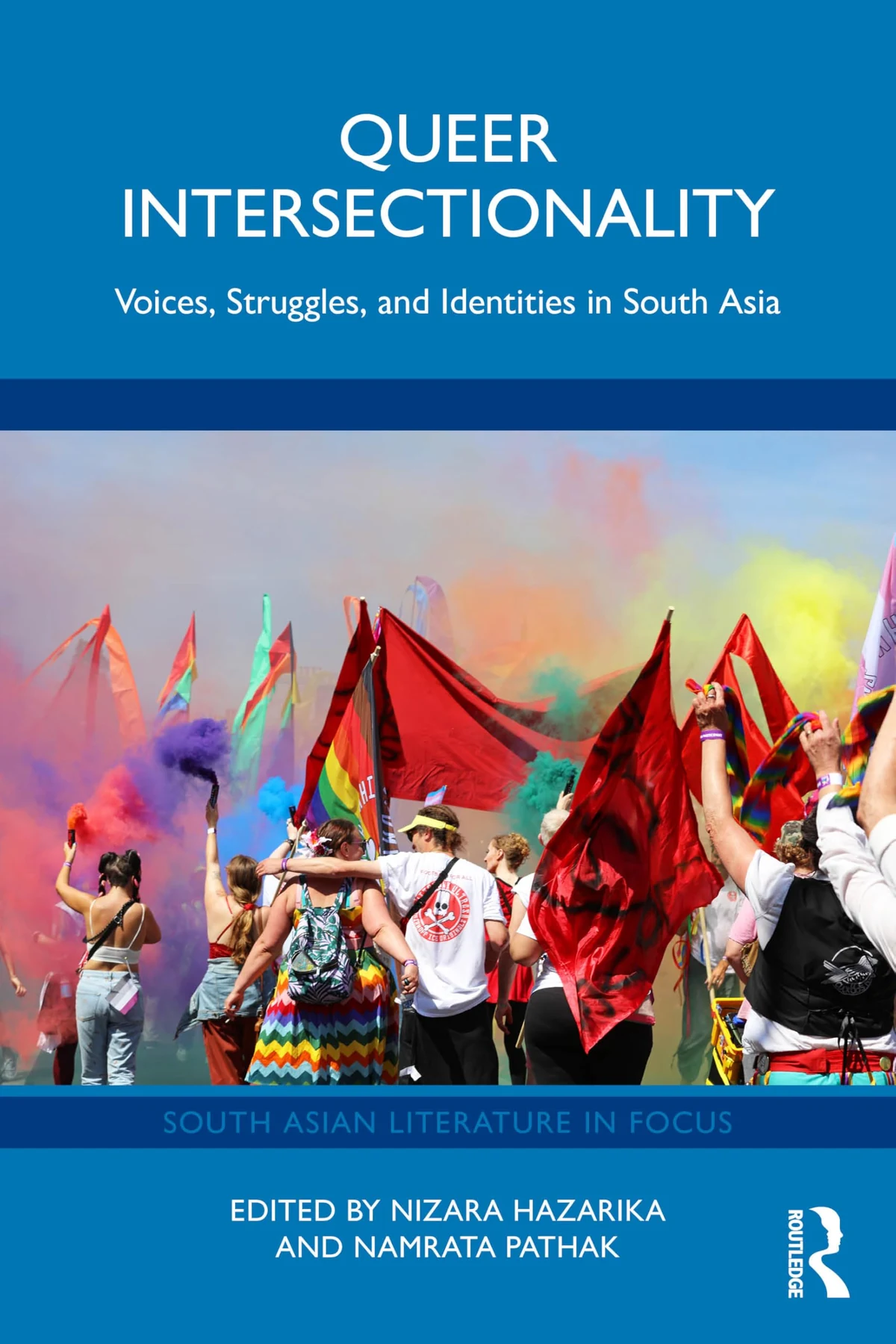
On July 19, 2026, British academic publisher Routledge published in English the collective volume Queer Intersectionality: Voices, Struggles, and Identities in South Asia. The collection was co-edited and co-authored by Indian scholars Nizara Hazarika and Namrata Pathak. The volume was released as part of the academic series South Asian Literature in Focus.
Nizara Hazarika is an associate professor in the Post-Graduate Department of English at Sonapur College in Assam, specializing in gender and sexuality studies, women’s writing, and disability studies. Namrata Pathak is an associate professor in the Department of English at North-Eastern Hill University (NEHU) in Meghalaya, author of studies on Northeast Indian literature, and a former Charles Wallace India Trust Fellow at SOAS University of London. The editors define their primary goal as the decolonization of queer theory: moving beyond Eurocentric epistemological frameworks to examine non-heteronormative desire and identity through the specific historical realities of South Asia, where gender is inextricably entwined with caste hierarchies, religious traditions, class divisions, and regional geography.
The volume examines queer life experiences and cultural narratives across India, Bangladesh, Pakistan, Nepal, Sri Lanka, and Afghanistan, combining literary criticism, digital humanities, cultural analysis, and ethnographic fieldwork. In the first part, the contributors revisit pre-colonial texts and mythologies to illustrate the deep historical roots of gender fluidity in the region. Authors examine sex-change narratives in Pali Buddhist scriptures (principally the Vinayapiṭaka monastic code) as well as the metaethics of transgender embodiment in Hindu epics, focusing on figures such as Ila in the Ramayana and Shikhandi in the Mahabharata. Special attention is devoted to indigenous South Asian identities, such as hijras in India and Bangladesh and the bacha posh custom in Pakistan and Afghanistan, cautioning against the uncritical application of Western clinical definitions of “transgender” that flatten local spiritual and kinship arrangements.
The second section investigates contemporary representations and political resistance within the public sphere. Applying computational text mining across textual corpora, contributors identify key themes and terminology shaping LGBTQIA+ self-representation in South Asia. The chapters trace the precarious evolution of queer digital counter-publics amid rising majoritarian conservatism and post-truth media environments, highlighting the resilience of Bangladeshi activists who turned to covert networks following the targeted assassinations of the editors of Roopbaan magazine in 2016. In the field of visual culture, the book critiques commercial queerbaiting strategies in Malayalam cinema from Kerala and explores the evolving portrayal of lesbian subjectivities in post-2000 Bengali cinema that challenge compulsory motherhood and heterosexual monogamy.
The final section explores the disruption of normative spaces, boundaries, and bodies. It analyzes grassroots interventions for everyday safety, such as the #NoMoreHoldingMyPee campaign for gender-neutral public sanitation in Assam, alongside a diverse corpus of contemporary regional fiction. Contributors analyze queer themes in the works of Shyam Selvadurai (Funny Boy), R. Raj Rao (The Boyfriend), Devdutt Pattanaik (The Pregnant King), Nemat Sadat (The Carpet Weaver), and the memoir of Nepali writer Niranjan Kunwar. These studies address the vulnerability of masculine bodies subjected to war and migration, confront the silenced realities of intimate partner violence within queer relationships, and propose constructive avenues for dialogue between LGBTQ+ activism and South Asian faith traditions.