“Lavender Sounds” — Stacey Copeland’s Book on Lesbian Radio History and Queer Feminist Podcasting
A study of grassroots lesbian radio broadcasting and contemporary feminist podcasting.
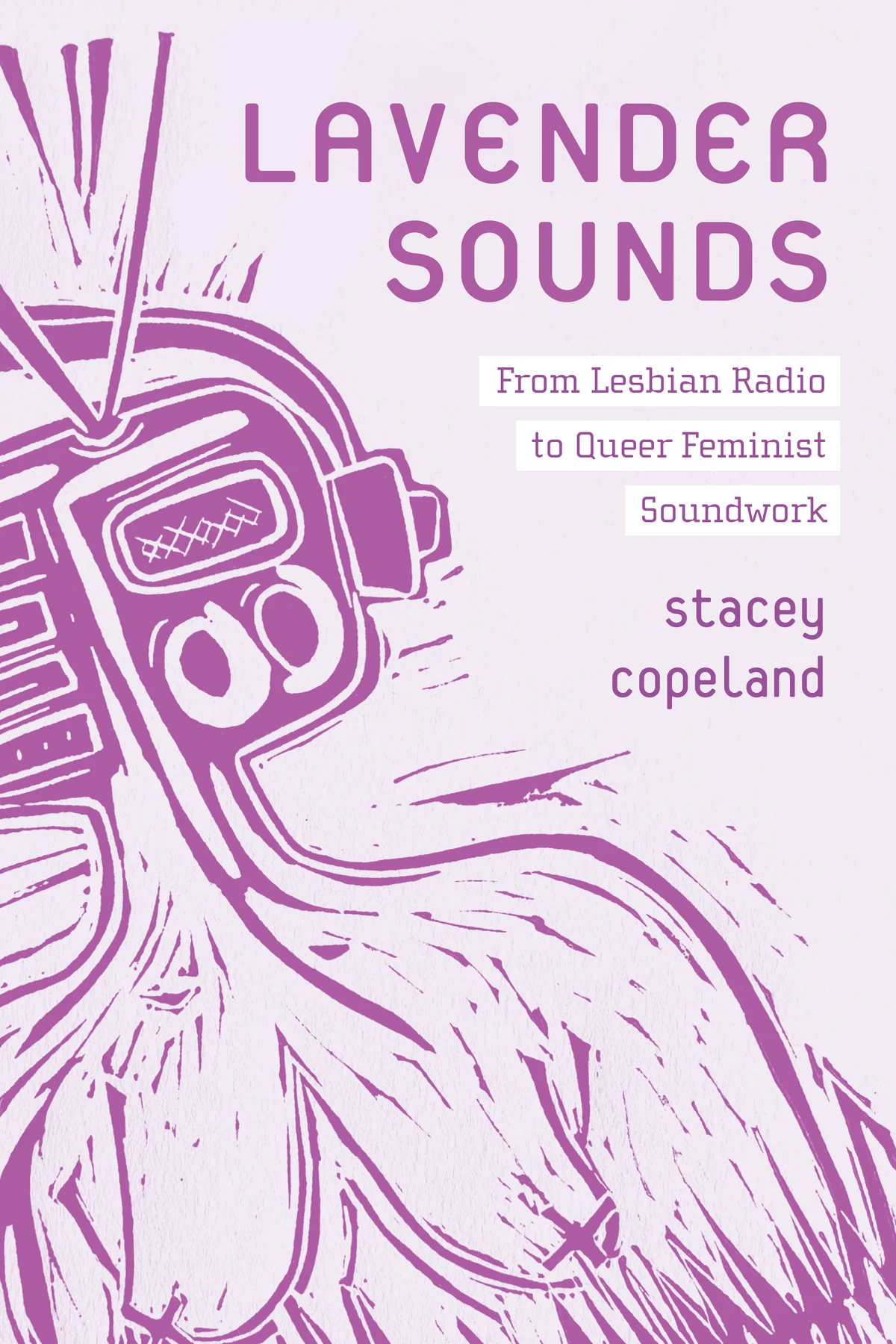
In July 2026, the University of Michigan Press published Lavender Sounds: From Lesbian Radio to Queer Feminist Soundwork by media scholar and audio producer Stacey Copeland. Released as an open-access volume supported by the Eugene B. Power Fund, the book is the first comprehensive interdisciplinary examination tracing a half-century genealogy of audio activism, bridging grassroots lesbian community radio from the 1970s and 1980s with contemporary queer feminist podcasting in Canada and the United States.
Stacey Copeland is an Assistant Professor of Cultural Heritage and Identity in the Centre for Media and Journalism Studies at the University of Groningen in the Netherlands. Holding a PhD in Communication from Simon Fraser University in Vancouver, she combines scholarly media analysis with professional audio production. She serves as co-director of the Amplify Podcast Network and co-chair of the Radio, Audio Media, and Podcasting Special Interest Group within the Society for Cinema and Media Studies (SCMS). Her doctoral research on the political phenomenology of lesbian radio radicals laid the groundwork for this monograph.
At the conceptual core of the book is the notion of “soundwork” — an integrative framework encompassing audio recording, editing, broadcasting, and collective listening as tangible modes of cultural activism and political resistance. Copeland argues that feminist and queer historiography has predominantly prioritized print and visual culture, such as zines, periodicals, and protest posters. In contrast, she champions a “feminist-embodied ear,” theorizing sound as a tactile, visceral experience that connects generations across temporal static.
The empirical foundation of the study draws on extensive archival research within the Archives of Lesbian Oral Testimony (ALOT) and independent community radio archives. Copeland closely analyzes foundational broadcasts, including Vancouver Co-op Radio’s The Lesbian Show (CFRO-FM), which first aired in the late 1970s, Montreal’s Dykes on Mykes (CKUT-FM), and queer programming on the Pacifica Radio network. In an era marked by legal repression, community airwaves served as a lifeline that pierced the geographic and social isolation experienced by lesbians across North America.
The monograph investigates “audibility activism” — the struggle of marginalized groups to claim acoustic public space — and the crafting of sonic intimacy. Examining ambient studio noise, live phone-ins, and tender sign-offs (“kisses through the static”), Copeland reveals how radio broadcasts provided a confidential, domestic sanctuary for listeners who were forced to remain closeted in their daily routines.
In the book’s concluding chapters, Copeland connects historical radio transmissions to digital podcasting, evaluating conversational “chumcasts,” investigative audio documentaries, and experimental sound art. Drawing on interviews with award-winning queer and feminist podcast creators, the author addresses issues of discoverability, corporate platform algorithms, and the affective labor required to sustain independent queer audio networks today.